To understand Amsterdam through the refined lens of a museum curator is to recognize that a historical city is never merely a collection of picturesque gable facades and quiet urban waterways, but a living archive where every era leaves an indelible material artifact. As you approach this historic maritime delta, before the chime of bicycle bells and the gentle rhythm of canal ripples become your ambient soundtrack, consider how the Dutch have historically transformed natural vulnerability into visionary design. Centuries ago, the surrounding waters represented both an unpredictable environmental hazard and an open portal to distant continents; today, that very water reflects an urban landscape dedicated to historic preservation, rigorous scientific inquiry, and intellectual openness. When we explore a cultural capital with family, we are essentially passing down a method of seeing, guiding younger minds to observe how human ingenuity sculpts lasting beauty and civic order out of marshland and sea.
Consider the quiet revolution that unfolds when a progressive society decides that knowledge belongs to all citizens rather than a privileged few. In Amsterdam, this democratic ethos manifests not as dry academic instruction, but as a rich material culture that invites hands-on discovery across generations. Long before modern interactive museum spaces existed, seventeenth-century cartographers in this merchant city were mapping unfamiliar constellations and distant ocean shorelines with astonishing scientific precision, while master painters were catching the subtle nuances of northern daylight on stretched linen canvases. The tangible objects handed down across centuries—from intricate wooden ship models and pioneer microbial studies to expressive post-impressionist canvases—tell an ongoing story of restless curiosity. As a curator, I view these collections not as passive items under display glass, but as active dialogues across time, prompting adults and children alike to interrogate how we comprehend the natural and artistic world.
The Architecture of Curiosity and Legacy
Every artifact preserved in a museum collection carries the invisible fingerprint of human devotion, and Amsterdam’s leading cultural institutions exist because courageous individuals refused to let transformative ideas fade into obscurity. When the painter Vincent van Gogh died in relative isolation, it was his sister-in-law Johanna van Gogh-Bonger who painstakingly cataloged his drawings, preserved his intimate letters to his brother Theo, and mounted international exhibitions that eventually formed the bedrock of his dedicated national museum. Similarly, when nineteenth-century civic leaders sought to establish a grand green sanctuary for public recreation, architect Pierre Cuypers designed an imposing stone pedestal for a statue of seventeenth-century poet Joost van den Vondel, inspiring citizens to affectionately name the surrounding grounds Vondelpark. History is built through such deliberate, visionary acts of cultural stewardship.
As you travel toward these historic quarters today, remember that museum architecture is carefully crafted to cultivate contemplation, curiosity, and wonder. Whether you are gazing at the green copper hull of a contemporary science center rising from the old naval docks or walking beneath the soaring brick vaults of a grand nineteenth-century art gallery, notice how light, spatial volume, and historical narrative converge. This voyage through Amsterdam is an invitation to witness how a nation preserved its maritime courage, illuminated the invisible universe of micro-nature, and transformed public spaces into shared cultural treasures. Let your wanderings be guided by quiet observation, as we step together into an urban space where history is not simply archived, but continuously lived, questioned, and explored.
Want to walk it yourself? Plan a trip with these places
The walk
On site, play just that chapter
- 1 min · on site
The Vessel of Inquiry on Oosterdok
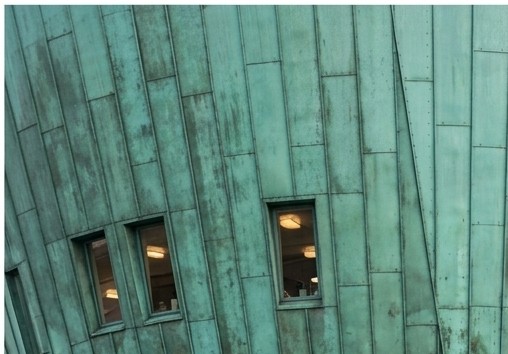
AI-generated image · may differ from the real place Standing at the edge of the Oosterdok harbor, gaze up at the rising copper-green structure designed by architect Renzo Piano to resemble the bow of a massive ship emerging from the water. This institution traces its lineage back to nineteen twenty-three, when artist Herman Heijenbrock established the Museum of Labor to honor human ingenuity and industrial craftsmanship. Step inside and ascend toward the upper levels, where hands-on exhibits transform abstract physics into tangible phenomena. On the second floor, observe the intricate ball factory circuit where visitors sort and dispatch colorful spheres through automated paths, while the third floor opens into a working laboratory dedicated to chemical tests and chain reactions. Look out through the expansive glass walls to see how the building itself bridges the historic naval harbor with modern scientific exploration for inquisitive minds.
Walk east along the waterfront walkway toward the historic naval docks to reach the massive timber structure of the maritime museum.
- 1 min · on site
Maritime Valor and Cartographic Mastery
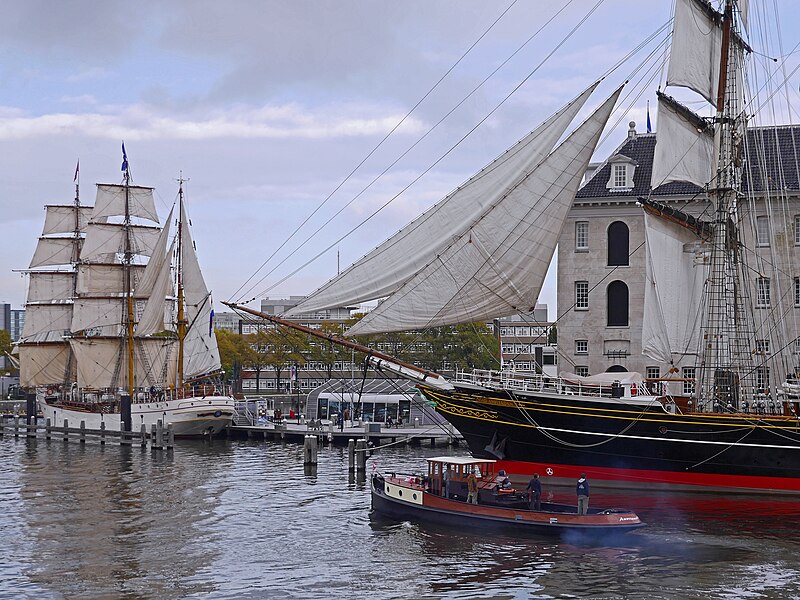
Photo · Wikimedia Commons Pause before the grand seventeenth-century facade of the former naval storehouse, engineered by architect Daniel Stalpaert in sixteen fifty-six to store rigging, sails, and cannons for the Dutch fleet. Step into the central courtyard, now covered by a soaring glass canopy inspired by nautical compass lines, and direct your attention toward the rare map galleries. Here lie exquisite sea atlases crafted by master cartographers Willem and Joan Blaeu, alongside rare early editions describing global voyages of discovery across unknown oceans. Step outside to the jetty to board the full-scale replica of the eighteenth-century merchant vessel Amsterdam. Walk across the weathered timber deck and descend into the hold to feel the enclosed spatial reality experienced by sailors who traversed ocean trade routes centuries ago in search of distant horizons.
Head south away from the harbor through the quiet residential streets of the Plantage district until you reach the verdant entrance of the zoo garden.
- 1 min · on site
The Unseen Realm of Microscopic Life
Photo · Wikimedia Commons Located adjacent to the historic zoological garden, Micropia opened in twenty fourteen as the world’s first museum dedicated entirely to microbiology. Enter the darkened exhibition hall where glowing glass displays reveal the vibrant, invisible organisms that sustain global ecosystems. Notice how the curated exhibits shift public perception away from disease toward a profound appreciation for microbial ecology and natural balance. Pause before the interactive kiss meter, which calculates the millions of harmless microbes exchanged during a simple embrace, or examine the live culture displays where professional microbiologists work behind glass panels. The museum demonstrates with calm authority that even the smallest living entities on our planet possess an intricate elegance, rich structural diversity, and essential biological function comparable to any classical masterpiece exhibited in the grandest art galleries of Europe.
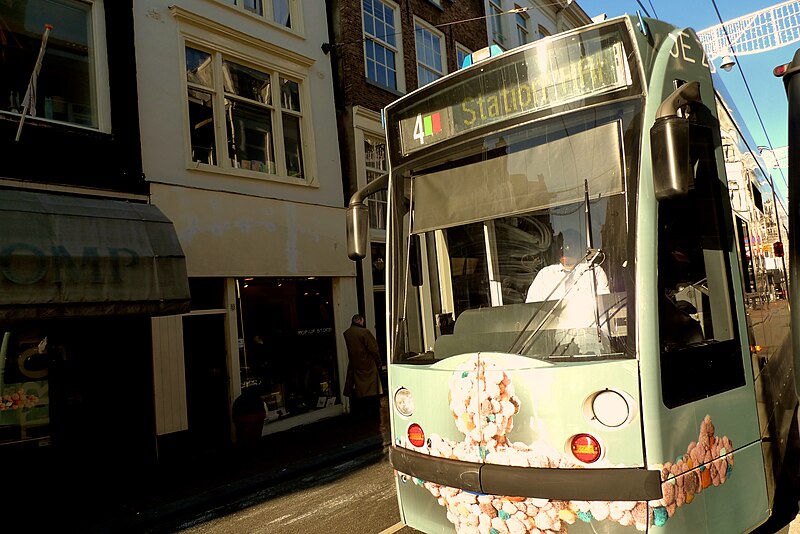
Take a short streetcar ride or pleasant stroll southwest toward the grand cultural grounds of Museum Square.
- 1 min · on site
The Monument to Dutch Art and Identity
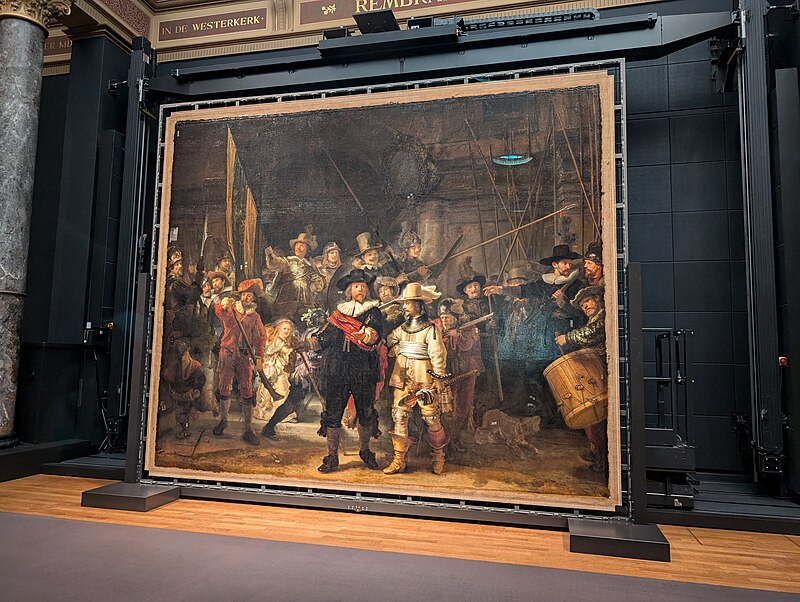
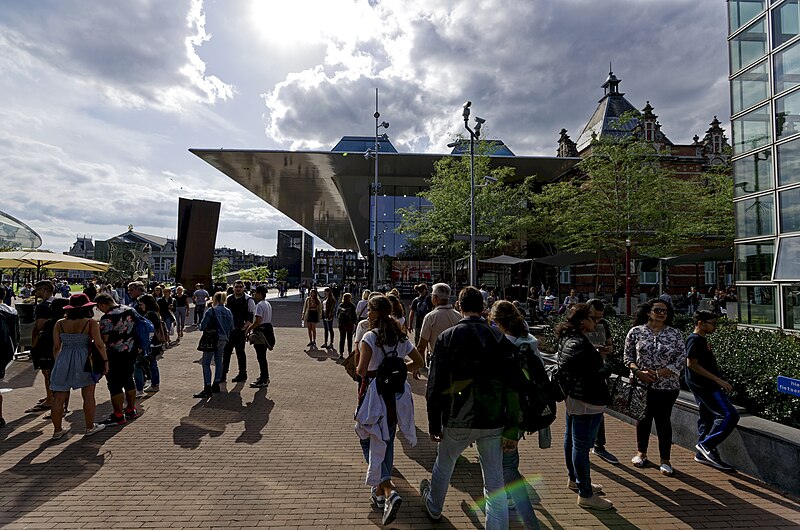
Photo · Wikimedia Commons Approach the towering entrance of the national museum, designed by architect Pierre Cuypers and opened in eighteen eighty-five as a majestic architectural fusion of Gothic and Renaissance styles. Walk through the central vaulted passage, listening to the echoes beneath the brick arches, before ascending to the Gallery of Honor on the main floor. Look straight down the grand hall to view Rembrandt's masterwork, The Night Watch, displayed in its dedicated hall where directional light brings the dynamic militia group to vivid life. Take ample time to examine the delicate interior daylight and quiet domestic scenes painted by master Johannes Vermeer, alongside magnificent national historical artifacts including carved ship sterns, historic weapons, and intricate silverwork that chronicle the political and cultural rise of the Dutch Republic across two centuries.
Exit the main hall into the open plaza of Museum Square and walk a few steps west toward the geometric lines of the neighboring gallery.
- 1 min · on site
The Devotion Behind a Modern Master
Photo · Wikimedia Commons Stand before the striking modern museum complex, combining Gerrit Rietveld’s clean structural design with Kisho Kurokawa’s curved exhibition wing. Inside, the world’s largest collection of Vincent van Gogh’s art unfolds chronologically across four floors. Look closely at his early canvas, The Potato Eaters, noting the earthy tones and rugged human textures, before following his artistic transformation in Paris and Arles toward brilliant yellow sunflowers and radiant almond blossoms. This extraordinary national collection exists because Vincent's sister-in-law, Johanna van Gogh-Bonger, devoted long decades of her life to cataloging and safeguarding his unsold paintings, drawings, and intimate family letters after his tragic death, ensuring that his passionate emotional vision and revolutionary brushwork would reach and inspire future generations of art lovers across the globe.
Stroll west past the green lawn of Museum Square into the welcoming tree-lined avenues of Amsterdam's most famous urban park.
- 1 min · on site
The Civic Sanctuary of Greenery and Poetry
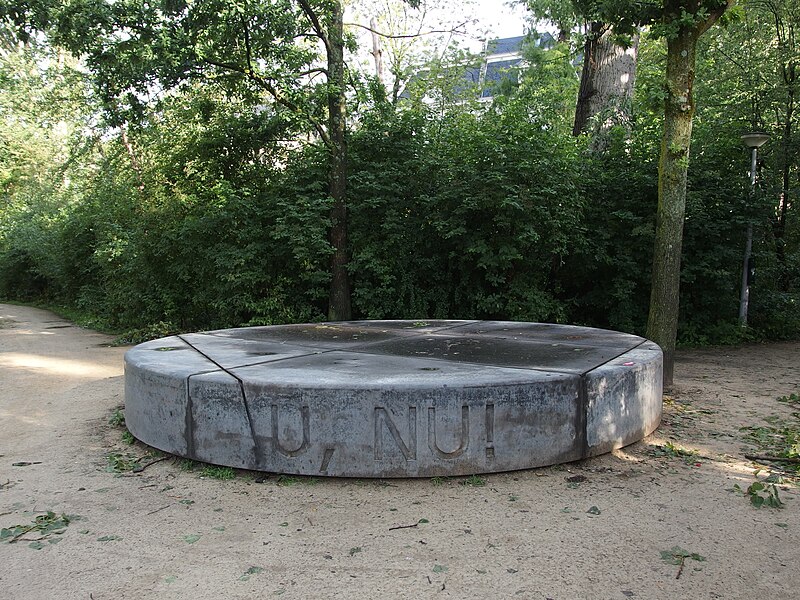
Photo · Wikimedia Commons Enter the park from the eastern gates and follow the winding pathways laid out in the nineteenth century by landscape architects Jan David Zocher and his son Louis Paul. Pause beside the bronze statue of seventeenth-century playwright Joost van den Vondel, set upon its intricate stone pedestal created by Pierre Cuypers. Notice how the surrounding lawns, rose garden, and serene winding streams provide a tranquil counterpoint to the busy city streets. Look toward the distinctive circular structure of the Blue Tearoom, built in nineteen thirty-seven, where families gather beneath the shade of mature trees. Here, outdoor public art, serene natural beauty, and vibrant civic recreation harmoniously coalesce into a timeless urban sanctuary where generations of residents and visitors gather to reflect upon the enduring literary and cultural heritage of Amsterdam.
As your journey through these historic sites concludes, remember that a city's true depth is revealed in how it treasures its material culture and passes it to the next generation. From the copper bow of NEMO to the quiet shade of Vondelpark, Amsterdam invites us to look closer, ask deeper questions, and cherish the enduring dialogue between past and present.
Take it further
Open the tour in the appThe tour in the app
Amsterdam Family Cultural and History WalkThis curated walking route guides families through Amsterdam's rich historic center, connecting the interactive scientific discoveries at NEMO and maritime treasures at Het Scheepvaartmuseum to the microbial wonders of Micropia, before culminating at Museum Square's world-class galleries and the peaceful parklands of Vondelpark.
+ Add the tour to your planIf you have the app the tour opens right away; otherwise you go to the store.FAQ
- How can families best navigate between these cultural landmarks?
- The route is structured in a logical walking order, moving from the waterfront Oosterdok district to the Plantage area, and continuing toward Museum Square, which is easily accessible on foot or by short streetcar rides.
- What makes this narrative suitable for young listeners?
- The guide weaves historical context and architectural details into engaging stories about objects, cartography, and artistic dedication, encouraging children to observe details with curiosity.