Imagine stepping out onto a sunlit Atlantic boulevard where the cool salt spray mingles with the dry, warm breeze drifting off the Souss plains. Broad avenues lined with slender date palms cut through rows of low-slung, whitewashed buildings, glowing pale gold beneath an immense and cloudless sky. While iconic Moroccan destinations like Marrakech or Fez draw travelers into dense, shadowed medinas and labyrinthine alleys paved with centuries of mud brick, Agadir greets you with panoramic space, oceanic openness, and striking geometric clarity. The atmosphere feels less like an antique outdoor museum and more like an effortless midcentury coastal retreat reimagined for contemporary slow living. Sunlight washes over cantilevered concrete balconies, ocean rollers crash in an unhurried rhythm along the sandy crescent, and stylish locals gather on breezy cafe terraces to share sweet mint tea. Along the wide sidewalks, street musicians tune acoustic guitars while surfboards rest against whitewashed walls. On social feeds and cultural radars today, an attuned new generation is rediscovering Agadir not merely as an easy winter beach escape, but as an unexpected design capital where resilience, midcentury architecture, and vibrant Amazigh creativity meet in effortless harmony.
A City Reborn From Salt and Concrete
To understand why Agadir hits with such a distinct creative energy, you have to look back at the dramatic event that wiped the canvas clean. In late February nineteen sixty, a devastating fifteen-second earthquake obliterated the historic hilltop kasbah and flattened the ancient quarters of Talborjt, shattering centuries of stone and taking thousands of lives. Yet rather than abandoning the coastal bay, Morocco orchestrated one of the most visionary urban reconstruction projects of the twentieth century. Progressive architects associated with the modernist collective GAMMA, drawing direct inspiration from the master planning principles of Le Corbusier, converged on this shore to create a new urban future centered on public parks, orthogonal street grids, and seismic integrity. Long before that modernist rebirth, Agadir had repeatedly found itself at the center of international intrigue. In nineteen eleven, the arrival of the German gunboat Panther in the bay provoked the famous Agadir Crisis that brought European superpowers to the edge of war. In a memorable diplomatic comedy of errors, German commercial envoy Hermann Wilberg, dispatched to provide the official pretext for intervention, arrived three days late due to a transportation miscalculation while the warship floated silently in the bay.
Airmail Pioneers and Effortless Coastal Cool
By the nineteen thirties, Agadir had become an indispensable stop for the intrepid aviators of the French airmail line Aeropostale. Literary legends like Antoine de Saint-Exupery and pioneering pilot Jean Mermoz landed their biplanes on these coastal sands between grueling flights across the Sahara and the South Atlantic, resting beside ocean waves and gathering poetic reflections on isolation, desert stars, and human brotherhood. Three decades later, in nineteen fifty-nine, Greek shipping magnate Aristotle Onassis anchored his legendary mega yacht in Agadir harbor, hosting Winston Churchill on deck for relaxed afternoons under the Atlantic breeze just months before the old town fell. Today, that rich legacy of daring aviation, cosmopolitan glamour, and fearless architectural renewal gives Agadir a fresh, magnetic charisma. As you travel into the city, let go of ordinary expectations. Pay attention to how midcentury concrete embraces the coastal light, how contemporary Amazigh identity shapes daily style, and how the ocean dictates the pace of life. Agadir shows us that true soul emerges when a city boldly reimagines its own horizons.
Want to walk it yourself? Plan a trip with these places
The walk
On site, play just that chapter
- 1 min · on site
Sensory Geometry and Berber Woven Threads
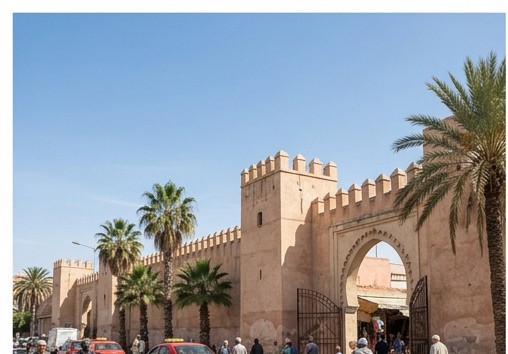
AI-generated image · may differ from the real place Walk through the towering arched ramparts of Souk El Had and you will instantly feel the electric pulse of the largest urban marketplace in the entire region. This walled trading universe sprawls across thousands of vibrant stalls along Rue Deux Mars, offering an exhilarating sensory antidote to predictable modern retail. Follow your nose through the labyrinth of aisles toward the spice section, where vibrant pyramids of golden turmeric, saffron, and freshly ground cumin perfume the air alongside dark bottles of hand-pressed argan oil. In the craft quarter, local weavers unroll heavy wool Berber carpets patterned with bold, ancient tribal geometry. For an effortless visit, keep small paper bills ready in your pocket, take time to chat warmly with the shopkeeper, and settle on a mutually agreeable price before completing your trade. It is an authentic living tradition where hospitality and commerce blend together seamlessly.
Step outside through the bustling market gates and follow the sunny boulevards northwest toward Passage Ait Souss.
- 1 min · on site
Silver Adornments and Living Heritage
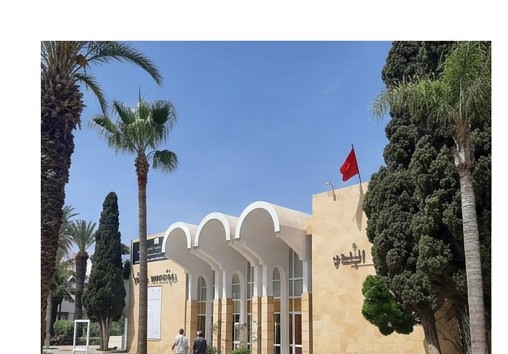
AI-generated image · may differ from the real place Tucked into the pedestrian calm of Passage Ait Souss just off Avenue Hassan II, the Museum of Amazigh Culture offers an illuminating sanctuary of indigenous Moroccan artistry. Agadir stands proudly as the cultural heartland of the Amazigh people, and this beautifully curated space reveals why their visual legacy continues to inspire modern fashion and design. Stroll through the quiet exhibition halls and take a close look at the masterfully crafted silver pectoral necklaces, heavy fibula brooches, and amber trade beads worn across the surrounding Souss valley. The intricate geometric motifs in the woven rugs and carved wooden panels carry ancestral stories that feel surprisingly contemporary. Pair your gallery visit with a slow walk through the adjacent downtown avenues, taking note of how the historic Tifinagh script appears proudly on city street signs and civic plazas all around you.
Exit the museum courtyard into Avenue Hassan II and walk several blocks northward into New Talborjt until you meet Avenue President Kennedy.
- 1 min · on site
Portuguese Tiles and Morning Botanical Calm
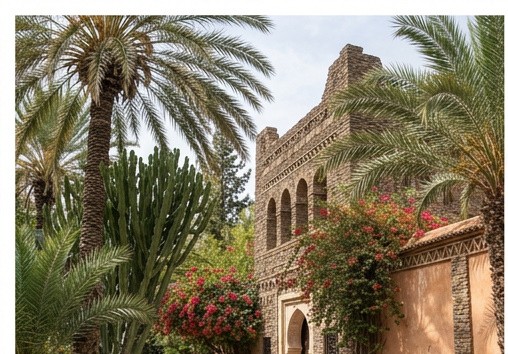
AI-generated image · may differ from the real place Step through the modest garden gate along Avenue President Kennedy into Jardin d Olhao, a lush green refuge nestled inside the New Talborjt district. This peaceful enclave honors Agadir's sister-city friendship with Olhao, a historic coastal port in southern Portugal, weaving a subtle connection back to the sixteenth century when Portuguese navigators first built their wooden coastal fortress here. Stroll the quiet gravel paths in the cool morning light, when leafy eucalyptus, fragrant date palms, and flowering bougainvillea cast long shadows over red terracotta paving. The standout feature here is the delicate mosaic fountain work, where cool water splashes softly against glazed Moorish tile patterns. Find a shady stone bench to soak up the tranquil stillness and take in the small memorial museum on site, reflecting on how two rival seafaring nations turned centuries of maritime conflict into a calm botanical sanctuary.
Head west from the garden gate and wander down the sloping avenues toward the open Atlantic shoreline and the harbor.
- 1 min · on site
Harbor Promenades and Yachting Heritage

Photo: AyourAchtouk · CC BY-SA 4.0 · Original file As the avenues spill out onto the coast, you arrive at Agadir Marina, where sleek white pleasure yachts sway gently against the blue Atlantic swell. Nestled right at the foot of the dramatic Kasbah hill, this polished waterfront promenade captures the maritime glamor that has enchanted global voyagers for decades. It was right along this sheltered bay in nineteen fifty-nine that shipping magnate Aristotle Onassis docked his famous private yacht with Winston Churchill on board, savoring the mild sea breeze and golden evening light. Time your stroll for the late afternoon and evening, when the seaside cafes and ice cream parlors fill with lively conversation. Find an open table at a seafront terrace, order a freshly brewed coffee or a chilled citrus drink, and watch the luxury sailboats return to their berths against a backdrop of pastel ocean clouds.
Stroll across the back edge of the marina promenade toward Avenue Mohammed V, right before the residential terrace of Bel Riv.
- 1 min · on site
Golden Hour Over the Ocean Rebirth
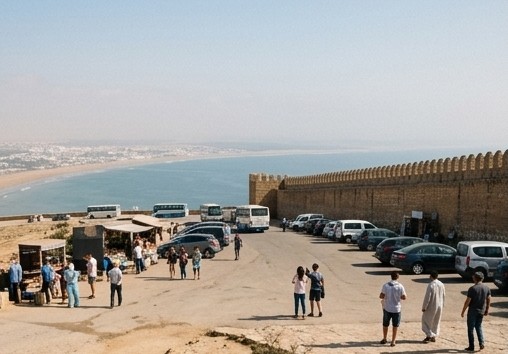
AI-generated image · may differ from the real place Climb up to the scenic overlook opposite the marina along Avenue Mohammed V, fronting Residence Bel Riv, for the most striking panoramic vantage in the city. From this elevated stone viewpoint, the full geometry of Agadir reveals itself in one breathtaking vista. Look across the bustling marina docks, the wide curve of golden sandy beach stretching for miles southwards, and the whitewashed modernist skyline rising gracefully beyond the shoreline. Above you on the hillside, the ancient kasbah wall stands proudly, crowned by the luminous Arabic inscription proclaiming God, Nation, and King. The golden hour just before dusk is the absolute magic time to visit, when the fading sun turns the Atlantic waters into liquid bronze and streetlamps begin to flicker across the coastline. It is a moment of pure perspective, celebrating a city rebuilt with astonishing grace.

Agadir is an invitation to experience Morocco through a distinctly modern prism. Standing between the deep blue Atlantic and the timeless desert plains, the city reminds us that history is not just about preserving the past, but having the courage to build anew with light, purpose, and community spirit.
Take it further
Open the tour in the appThe tour in the app
A Walk Through Agadir's Rebuilt SplendorThis curated five-stop walking route guides you from the aromatic, bustling alleys of Souk El Had through the refined Amazigh museum and peaceful Portuguese gardens, concluding along the sleek yacht marina and an unforgettable golden hour sunset viewpoint over the entire crescent of Agadir Bay.
+ Add the tour to your planIf you have the app the tour opens right away; otherwise you go to the store.FAQ
- What makes Agadir's architecture so different from other Moroccan imperial cities?
- Following the nineteen sixty earthquake, Agadir was master-planned under modern seismic guidelines by architects affiliated with the modernist GAMMA collective, adopting orthogonal grids, wide avenues, and Le Corbusier inspired concrete aesthetics rather than traditional medina walls.
- Why is Agadir celebrated as the capital of Amazigh culture?
- More than half of Agadir's population speaks the regional Tachelhit variety of Tamazight, and the city hosts premier Berber cultural events such as the New Amazigh Year, the Issni N'Ourgh film festival, and traditional musical celebrations.
- When is the ideal time of day to experience the waterfront and bay viewpoints?
- Late afternoon through golden hour is the most enchanting time, when the coastal breeze softens, the Atlantic bay takes on a warm bronze glow, and the Kasbah hill illuminates across the water.