The salt air of Agadir does not arrive alone. When the morning ocean breeze rolls in over the wide Atlantic curve, it collides immediately with the dry heat of the fertile Souss plain, carrying the unmistakable perfume of toasted cumin, charred eucalyptus wood, and sourdough flatbread rising on earthenware. Most modern travel brochures treat family holidays as an exercise in anxious avoidance, steering parents toward sterile resort buffets and predictable dishes where nothing challenges or surprises the palate. That is an insult to both the child and this resilient coastal capital. The young possess an instinctive, uncorrupted sensory honesty that adults too often discard in favor of comfortable habit. Children judge a dish not by Michelin stars or pretentious plating, but by the immediate physics of texture: the audible shatter of a blistered semolina crust, the unctuous glide of stone-pressed argan oil, and the clean, sweet burst of sea brine from a grilled sardine pulled from the water just hours before dawn. To bring your children to Agadir is to offer them an authentic education of the senses, grounded in honest wood fires, vibrant gardens, and cooks who work with quiet mastery.
The Stage of the Open Hearth
The culinary and human spirit of this bay has always drawn wanderers in search of elemental truths. Around nineteen thirty, when pioneering airmail aviators like Antoine de Saint-Exupéry and Jean Mermoz touched down their fragile Aéropostale biplanes upon the wind-scoured coastal sands, Agadir offered them a necessary sanctuary. Before braving the lonely, perilous expanse of the southern desert, they broke coarse bread, drank intensely sweet mint tea steeped with fresh spearmint leaves, and found renewed courage in simple harbor food. Decades later, in nineteen fifty-nine, Greek shipping magnate Aristotle Onassis sailed into this very harbor aboard his yacht with Winston Churchill, savoring the exceptionally mild winter air and the abundant Atlantic catch that made Agadir the undisputed sardine capital of the region. Yet the deepest soul of local hospitality belongs to figures like the legendary Moroccan rhythm and blues singer Vigon, born Abdelghafour Mouhsine to a hardworking market vegetable vendor. After conquering famous Parisian concert halls alongside icons like Otis Redding, Stevie Wonder, and the Rolling Stones, Vigon chose to return home to Agadir in nineteen seventy-eight. For more than two decades, he sang at the Tan-Tan Club and held court every single day at the restaurant Le Jardin d'Eau, greeting traveling families with booming laughter while clay tagines bubbled with caramelized onions and tender prunes. Vigon understood what every great chef knows: the truest luxury is an open dining room where generations break bread together without velvet ropes.
The Honest Memory of Taste
Watch the deliberate movements of an Agadir cook behind the counter, whether at a roadside stall or inside the shaded walkways of the market. There is no affected performance for cameras here, only the fluid muscle memory of Amazigh domestic craft passed down across centuries. When a child dips torn bread into warm amlou for the very first time, tasting that velvety emulsion of roasted almonds, rich argan oil, and mountain honey ground between rotating granite millstones, their eyes widen in pure, unprompted discovery. It is rich, nutty, and subtly complex, yet deeply soothing to a tired traveler. Agadir teaches us that family dining should be an adventurous conversation, not a catered compromise. As you step out through the city's sun-drenched squares and aromatic avenues, follow the sweet plumes of charcoal and citrus blossom, and let your family discover the genuine taste of Morocco together.
Want to walk it yourself? Plan a trip with these places
The walk
On site, play just that chapter
- 1 min · on site
A Garden of Cool Leaves and Morning Bread
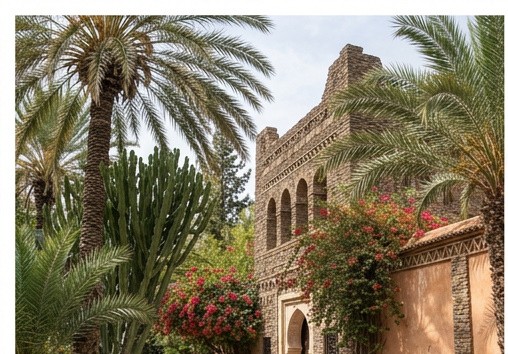
AI-generated image · may differ from the real place Step into the shaded sanctuary of Jardin d'Olhao, where the blinding glare of the Agadir morning dissolves beneath olive branches and purple jacaranda canopies. Named in honor of the southern Portuguese coastal sister city, this park is where the city breathes before the midday heat mounts. For an epicurean, it is a masterclass in restorative calm. Local families spread lightweight blankets across the manicured lawns, unpacking wicker baskets laden with crisp sweet pomegranates, glossy black olives cured with wild thyme, and warm flatbreads wrapped in linen. Look for the Moorish terracotta brick archways near Avenue President Kennedy and find a stone bench near the trickling fountain. The gentle rustle of citrus leaves masks the traffic beyond, allowing children to clamber freely across wooden play areas while adults savor the herbal fragrance of fresh spearmint steaming from silver thermos flasks. It is an unhurried, pastoral pause in the heart of Talborjt.
Stroll south along Avenue President Kennedy toward the city centre, where the quiet garden gives way to the cultural pulse of the Amazigh Museum.
- 1 min · on site
The Ancient Utensils of the Berber Hearth
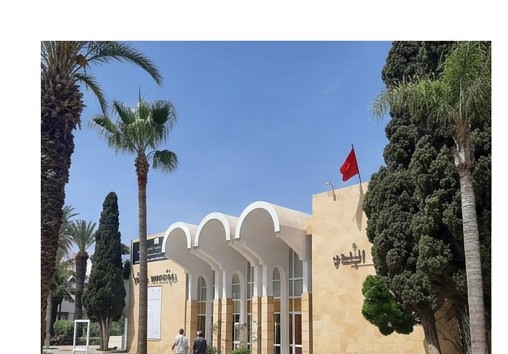
AI-generated image · may differ from the real place A true critic knows that a cuisine cannot be understood without the vessels and customs that cradle it. Inside the Museum of Amazigh Culture, tucked within the pedestrian arcade of Passage Ait Souss, the aesthetic soul of the Souss region reveals its domestic roots. Notice the heavy carved wooden grain bowls, porous terracotta oil jars, and stone grinders that once sustained Berber homesteads through drought and winter. Even the dazzling silver fibulae and enamelled chest ornaments tell a tale of celebration: these were the ceremonial heirlooms worn by matriarchs when presiding over grand wedding couscous feasts. Guide your family toward the softly lit glass vitrines in the central gallery to admire the intricate geometric motifs hammered into ancient silver. There is a profound dignity in knowing that the simple wooden spoon a child holds at dinner today shares its silhouette with utensils crafted centuries ago.
Head south past the bustling cafes of Boulevard Hassan II until the monumental ochre ramparts of Souk El Had rise up before you.
- 1 min · on site
The Grand Alchemy of Spices and Fire
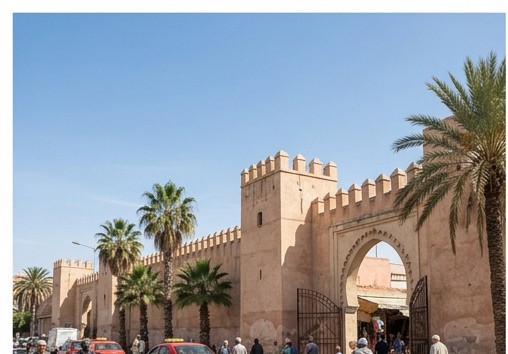
AI-generated image · may differ from the real place Souk El Had is not merely a market; it is the grandest sensory kitchen in North Africa, sprawling across thirteen hectares behind fortified ochre walls. Enter through Gate Six into the spice quarter, where the air turns thick with the sharp perfume of ground cumin, scarlet paprika, and saffron threads glowing like embers. Watch the spice merchants work behind their counters, scooping powders into paper cones with the effortless balance of seasoned pharmacists. Stop near the central bakeries where round loaves of crusty khobz emerge blistering from open deck ovens. Order a warm square of layered msemmen pastry drizzled with wildflower honey, and let the children watch the cook fold the translucent, oiled dough on an iron griddle with lightning-fast wrist flicks. The sheer abundance of olives, herbs, and simmering street tagines teaches a young palate that real food is born of honest labor.
Make your way west toward the Atlantic shore, where the dense aroma of market spices yields to the crisp ocean breeze of Agadir Marina.
- 1 min · on site
The Brine of the Atlantic and the Sardine Grill

Photo: AyourAchtouk · CC BY-SA 4.0 · Original file Agadir Marina sits right at the watery edge where the modern pleasure harbor meets the enduring maritime grit of the Atlantic. Decades ago, this bay was celebrated as the greatest sardine capital on earth, and that salty spirit still lingers beneath the white apartment promenades. Watch luxury catamarans rock gently beside sturdy painted wooden skiffs, their hulls glistening with sea spray. Walk along the wide waterfront jetty toward the breakwater, keeping the illuminated ramparts of the historic Kasbah hill directly in your sightline. Along the docks, open-air charcoal braziers send up fragrant plumes of fat-kissed smoke. Order a platter of fresh sardines, blistered over coals with coarse sea salt, cumin, and a squeeze of sharp lemon. Hand a warm fillet to your child: the meat is firm, intensely savory, and free of pretension, tasting purely of cold Atlantic tides.
Leave the ocean shoreline behind and drive eastward along the national highway to the tranquil suburban landscapes of Drarga to visit Crocoparc.
- 1 min · on site
Patience beside Water Lilies and Stone Giants
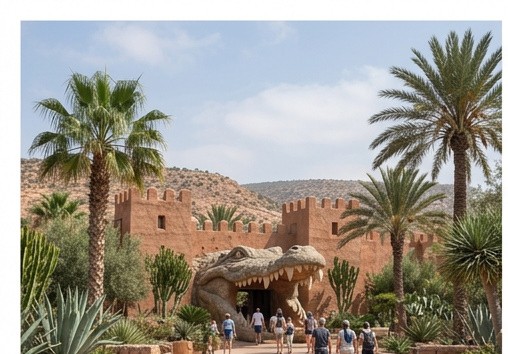
AI-generated image · may differ from the real place Out in the Drarga valley along the inland highway, Crocoparc reveals that a wildlife sanctuary can also be a botanical marvel. Over three hundred Nile crocodiles bask along the sunbaked gravel banks, their ancient, scaly bodies motionless beside freshwater pools like sun-cured leather. But an observant diner will find equal delight in the surrounding flora: aromatic groves of papyrus, rare water lilies, and medicinal herbs cultivated along shaded, winding boardwalks. Guide your children across the wooden footbridges to the central observation deck, watching the giant tortoises lumber through the succulents with peaceful indifference. The sheer patience of the reptiles offers a refreshing lesson in an era of hasty dining and hurried travel. Savor the earthy scent of wet soil and blooming jasmine, letting the slow, primordial rhythm of the park wash over your senses.

As the golden afternoon sun dips toward the Atlantic line, Agadir leaves a family with something far more lasting than souvenir trinkets: the shared memory of genuine flavors. When your children recount this journey years from now, they will not speak of curated museum placards or hotel lobbies. They will recall the sizzle of sardines over hot beach coals, the deep amber warmth of wildflower honey and argan oil, and the quiet dignity of cooks who turn daily sustenance into an art of generous living.
Take it further
Open the tour in the appThe tour in the app
A Sensory Walking Circuit Through AgadirThis epicurean family itinerary begins amid the peaceful shade of Jardin d'Olhao, explores Berber domestic crafts at the Amazigh Museum, dives into the sensory labyrinth of Souk El Had, and strolls past fresh sardine grills at Agadir Marina, before concluding among ancient reptiles and lush gardens at suburban Crocoparc.
+ Add the tour to your planIf you have the app the tour opens right away; otherwise you go to the store.FAQ
- How can parents introduce traditional Moroccan spices to children without overwhelming them?
- Start with dishes centered on sweet and earthy seasonings rather than chili heat, such as freshly baked msemmen layered with butter and honey, or a gentle chicken tagine simmered with sweet onions, raisins, and a pinch of ground cinnamon.
- What should families look for when selecting fresh seafood along the harbor promenade?
- Seek out grill stands where local families gather and the fish is displayed on clean crushed ice. Choose sardines with bright, clear eyes and taut, iridescent silver scales, grilled directly over hot lumpwood charcoal with nothing more than coarse sea salt and lemon.
This piece was newly written based on the Wikipedia articles ‘Agadir’, ‘Vigon’ · CC BY-SA 4.0