Amman is a mountainous capital in Jordan where ancient trade corridors meet contemporary urban life inside a dramatic limestone valley. For thousands of years, merchant caravans crossed these rugged hills along the King's Highway to trade between Egypt, Syria, and Mesopotamia. The city was originally founded upon seven steep hills around the deep seasonal stream of the Amman valley. A museum curator approaches this city as an open archaeological archive. Every public marketplace here preserves physical evidence of human survival, community exchange, and daily domestic rituals. Down in the ancient valley, called Wasat Al-Balad or Downtown Amman, small stone stalls stand beside Roman columns. Merchants display hand-hammered brass coffee pots, fragrant dried herbs, and bright glass beads on simple wooden tables. The morning air carries the clean aroma of toasted sesame, freshly ground cardamom seeds, and warm melted goat cheese. People in Amman do not visit a market simply to acquire material goods. They arrive to converse with neighbors, exchange family news, and honor centuries of personal hospitality.
Chronicles of the Desert Haven
The commercial traditions of the valley are documented in precious historical manuscripts. Tenth-century Arab geographer Al-Maqdisi described Amman as a desert port where nomadic Bedouin travelers traded grain and fresh honey. This early chronicle matters because it proves that Amman served as a central trading sanctuary for over a thousand years. Al-Maqdisi admired a beautiful stone market mosque that featured colorful floor mosaics at the edge of the bustling stalls. Four centuries later, deliberate municipal planning preserved the mercantile character of the valley. In 1357, fourteenth-century Mamluk ruler Emir Sirghitmish purchased the entire town of Amman to fund a prestigious school in Cairo. Sirghitmish relocated regional courts, judges, and merchant families from the town of Hisban into the sheltered Amman valley. His bold administrative decision matters because it revived civic commerce during a long era of regional decline. Later in 1890, French Dominican scholar Marie-Joseph Lagrange traveled across Jordan to document historic landscapes. Lagrange observed ancient Roman bridges jumbled together with new stone houses built by Circassian settlers to form a remarkable market town. His vivid record matters because it shows how nineteenth-century immigrants revived everyday commerce along the old Ottoman frontier.
The Tactile Memory of Goods
Today the commercial geography of Amman expands across nineteen residential hills and modern western districts. The steep hills are known locally as jabals, while the dry riverbeds between them are called wadis. At the beginning of the twentieth century, the Hejaz Railway transformed this quiet settlement into a bustling regional trading hub. Merchants arrived from Damascus, Jerusalem, and Nablus, establishing family enterprises along King Faisal Street. Yet whether you explore a rustic open-air bazaar or a modern department store, the essential merchant etiquette remains completely intact. A local merchant always invites you to share hot sweet sage tea in a small clear glass before discussing any transaction. In this city, material objects function as tangible vessels of shared regional memory. You touch hand-woven wool rugs, cold-pressed olive oil soaps from northern olive groves, and delicate silver jewelry fashioned in old workshops. Every physical object reflects a specific landscape and a lineage of regional craft. These handmade goods connect you directly to the living trade heritage of the Levant. Take your time to listen to the shopkeepers as you wander through the streets. In Amman, an ordinary morning purchase is an enduring gesture of civic friendship and cultural continuity.
Want to walk it yourself? Plan a trip with these places
The walk
On site, play just that chapter
- 1 min · on site
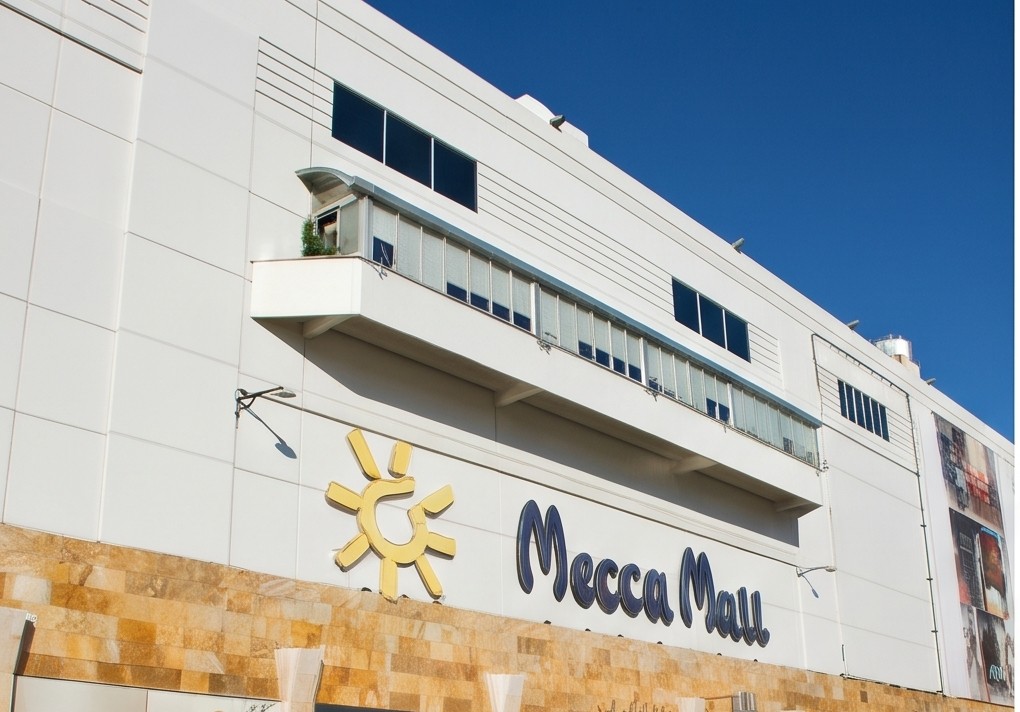
Modern Horizons on Mecca Street
AI-generated image · may differ from the real place Mecca Mall is a prominent modern retail complex located on Mecca Street in West Amman. It anchors the contemporary commercial life of the capital. This vast center reflects the westward growth of Amman over recent decades. To find the cultural heart of the building, head directly to the dedicated upper exhibition hall. Here, curators organize rotating seasonal fairs that gather artisans from every corner of Jordan. Notice the wide stalls displaying embroidered textiles, hand-carved olive wood utensils, and organic honeycomb from northern valleys. The environment offers a striking contrast to the ancient stone markets of the valley floor. Families gather here across multi-tiered levels to browse local inventions and modern household goods. It demonstrates how Jordanian commerce continually adapts without losing its community foundation. Before departing, observe how contemporary designers incorporate traditional geometric patterns into modern packaging.
Leaving West Amman, travel east toward the historic ridge of Jabal Amman to discover Souk Jara.
- 1 min · on site
The Artisan Terrace on Rainbow Street

Photo: Producer · CC BY-SA 3.0 · Original file Souk Jara is an open-air seasonal craft market located on Rainbow Street in Jabal Amman. It celebrates regional material heritage and preserves traditional artisan trades. The word souk means a traditional Arab marketplace. Arrive early in the morning when the stone lanes are calm and carry small cash notes for local purchases. Wander along the wooden stalls to examine handmade silver rings, antique brass keys, and framed calligraphy. Local independent craftspeople travel here from across the kingdom to sell hand-stitched leather bags and colorful ceramic bowls. Notice how antique domestic objects from past generations sit beside modern paintings created by young Jordanian artists. The scent of brewing Turkish coffee mixes with the dry mountain wind along the ridge. Every stall offers a direct conversation with the maker who fashioned the piece.
Walk briefly down Rainbow Street and turn onto Omar Bin Al Khattab Street where Books at Cafe awaits.
- 1 min · on site
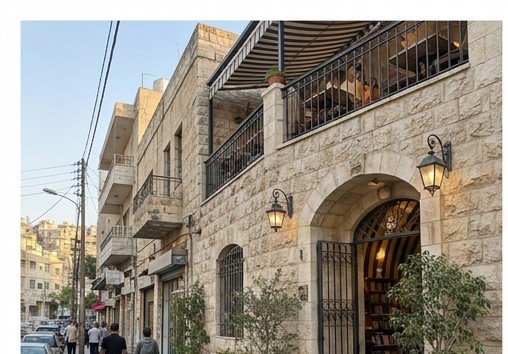
Literary Sanctuary above the Hills
AI-generated image · may differ from the real place Books at Cafe is a cultural landmark located on Omar Bin Al Khattab Street in Jabal Amman. It combines independent book browsing with welcoming cafe hospitality. Housed in a converted mid-century stone residence, it holds historic significance as Amman's first internet cafe and progressive literary salon. Step through the bright doorway and browse the quiet ground-floor bookshelves before ordering refreshments. The shelves display regional poetry, Middle Eastern history, and international philosophy in both Arabic and English. Notice the restored arched stone windows and colorful vintage floor tiles that recall old residential architecture. After selecting a volume, climb the interior staircase to the terrace to settle in with a cup of spiced black tea. The quiet seating area offers expansive panoramic views across the pale limestone houses of the surrounding hills. Here, literature and coffee nurture the intellectual life of the capital.
Follow the historic stone stairs down into Downtown Amman to find Habibah Sweets on Al Azhar Street.
- 1 min · on site
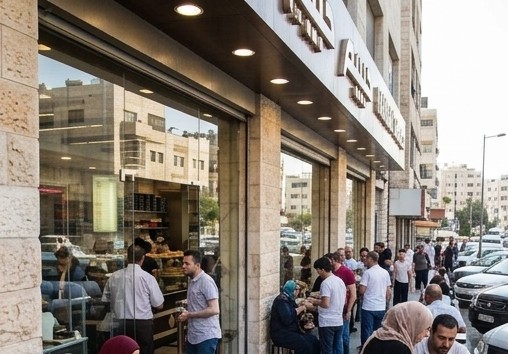
The Sweet Memory of Al Azhar Street
AI-generated image · may differ from the real place Habibah Sweets is a revered confectioner located on Al Azhar Street in Downtown Amman. It has anchored local food culture and downtown street life for generations. Look for the narrow pedestrian alleyway beside the Central Bank where a lively crowd gathers from morning to evening. Order a portion of hot knafeh to eat warm on site rather than taking it away in a box. Knafeh is a traditional Levantine dessert made with melted goat cheese, shredded pastry dough, and fragrant sugar syrup. Watch the skilled confectioners slide vast circular brass platters over glowing flames with practiced precision. They scatter crushed bright green pistachios across the steaming orange crust before handing you a steaming plate. Take your metal fork and taste the crisp crunch paired with mild cheese. Eating here connects you directly to the living heart of Amman street culture.

A journey through the markets of Amman reveals that commerce is an act of cultural preservation. From the expansive halls of West Amman to the ancient stone stairways of the valley floor, every transaction carries deep mutual respect. The objects you hold in your hands are not mere souvenirs of travel. They are living fragments of Levantine history that continue to connect distant homes and shared communities.
Take it further
Open the tour in the appThe tour in the app
Curator Route: From Modern Hall to Historic ValleyThis curated itinerary begins at Mecca Mall in West Amman to view regional artisan exhibits. Next, travel east to Jabal Amman for the open-air crafts of Souk Jara and literature at Books at Cafe. Finally, descend the historic stone stairs into Downtown Amman for warm knafeh at Habibah Sweets.
+ Add the tour to your planIf you have the app the tour opens right away; otherwise you go to the store.FAQ
- What is the historical origin of the downtown marketplace in Amman?
- The downtown marketplace developed inside the central valley of Wadi Amman around the ancient seasonal stream. During Roman times, public baths, colonnaded streets, and theaters lined this valley, which later revived as a vibrant trading bazaar connecting surrounding residential hills.
- How should visitors approach shopping and bargaining in Amman markets?
- In local markets, commerce is centered on personal hospitality and conversation. Shopkeepers typically offer hot tea before transactions begin, and visitors are encouraged to browse unhurriedly and ask makers about the origins of their craft.
- What traditional culinary specialty is associated with the downtown markets?
- The signature dessert of the downtown market is knafeh, a warm Levantine sweet made from melted white cheese topped with shredded pastry crust and orange sugar syrup, traditionally served on large circular brass trays.
This piece was newly written based on the Wikipedia articles ‘Downtown Amman’, ‘Amman’ · CC BY-SA 4.0