As twilight settles over the river Arno, the golden light of Tuscany retreats from the grand marble facades of Santa Maria del Fiore, drawing the discerning traveler away from the crowded thoroughfares into the quiet stone labyrinth of the Oltrarno. Crossing the river is not merely a geographic transition, but a subtle calibration of temporal perception. Here, in the narrow shadow of medieval towers, rustic craft shops, and secluded squares, Florence reveals its true architectural soul. It is a sanctuary carved from dark pietra serena sandstone, preserved not as a static museum of monumental achievements, but as an intimate, living canvas shaped by centuries of human passion, quiet devotion, and artistic audacity. To understand this city deeply is to listen to the whisper of flagstones beneath your feet, to sense the cool air drifting through secluded cloister arches, and to acknowledge that the Renaissance was born in the quiet corners of neighborhood workshops long before it captured the grand public plazas.
Walking through these stone corridors before arriving at your destination offers a rare perspective on how revolutionary vision took root in daily life. In these hidden neighborhood squares, history feels immediate and tactile. The stone benches outside modest family chapels still hold the memory of sculptors, scholars, and merchants who gathered to debate humanism, philosophy, and civil governance. The city was built layer upon layer, with ancient Etruscan foundations resting beneath Roman streets, medieval guildhalls, and private Renaissance palaces. Every door frame, weathered coats of arms, and low iron lantern tells a story of craftsmanship that refused to compromise on beauty.
The Geometry of Sacred Light
Consider the transformative moment in fourteen twenty-four when two master painters, Masolino and the younger Masaccio, mounted the wooden scaffolding inside the quiet Brancacci Chapel at Santa Maria del Carmine. Commissioned by the wealthy silk merchant and diplomat Felice Brancacci, who would soon be driven into bitter political exile by Cosimo de Medici, they embarked on decorating the chapel walls with scenes from the Life of Saint Peter. Masaccio cast aside medieval decorative conventions, introducing a revolutionary understanding of natural light, spatial depth, and unsparing human emotion.
In his tragic depiction of the Expulsion from Paradise, the anguish of Adam and Eve is rendered with such visceral weight and shadows that it fundamentally altered the course of Western painting. Decades later, during a nineteen thirty-two restoration led by scholar Ugo Procacci, hidden preparatory sinopie drawings were uncovered beneath marble altar slabs, proving that true artistic genius leaves an indelible mark beneath the surface that time, fire, and political ruin cannot erase.
Voices Carved in Stone
Higher up on the windswept ridge of Fiesole, looking back over the entire valley, the spirit of intellectual inquiry took physical flight. It was among those ancient Etruscan slopes that Leonardo da Vinci tested his pioneering flight machine models on Monte Ceceri, daring to master the atmospheric winds over the Arno basin. Nearby, in formal villa gardens overlooking the distant city spires, Giovanni Boccaccio set the frame narrative of The Decameron, imagining ten young Florentines seeking refuge from the black plague of thirteen forty-eight by sharing stories of wit, romance, and human resilience.
As you walk these historic paths today, moving from shaded chapels to hilltop terraces, allow the narrative of the city to unfold naturally around you. Florence does not demand hurried admiration, but thoughtful contemplation. Each archway, quiet garden path, and neighborhood market square invites you to slow your pace, observe the fine details carved into ancient masonry, and appreciate how the past continues to illuminate the living present.
Want to walk it yourself? Plan a trip with these places
The walk
On site, play just that chapter
- 1 min · on site
The Awakening of Human Shadow

Photo: sailko · CC BY 2.5 · Original file Inside the quiet transept of Santa Maria del Carmine lies the Brancacci Chapel, where Renaissance art cast aside medieval flat symbolism to discover raw human reality. Commissioned around fourteen twenty-four by silk diplomat Felice Brancacci, who was later exiled by Cosimo de Medici, painters Masolino and Masaccio crafted frescoes depicting the Life of Saint Peter. Masaccio painted Adam and Eve expelled from Eden with agonizing sorrow and tangible physical weight, introducing revolutionary shadows that transformed European painting forever. Decades later in nineteen thirty-two, scholar Ugo Procacci uncovered hidden sinopie drawings beneath marble altar slabs, proving how deep artistic truth remains buried. To experience this masterwork fully, step inside the cool side chapel, stand directly before the upper left wall, and observe how the natural light entering from the high window perfectly mirrors the painted shadows cast by the figures within the sacred scene.
Leaving the quiet chapel, walk east along the stone lanes toward the lively neighborhood square of Santo Spirito.
- 1 min · on site
The Living Hearth of Oltrarno
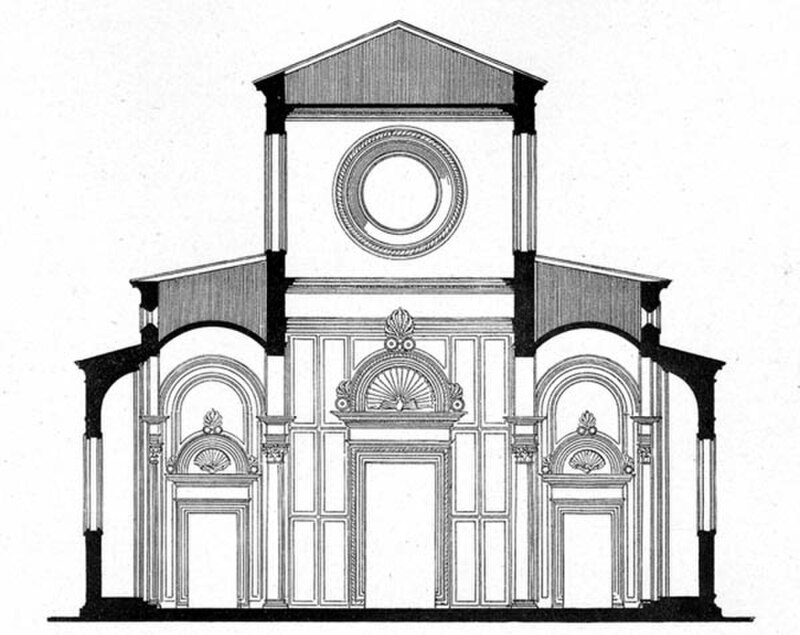
Photo · Wikimedia Commons Piazza Santo Spirito has served as the pulsing heart of the Oltrarno since the thirteenth century, when Augustinian friars gathered crowds in the open field before their great basilica. Designed by Filippo Brunelleschi in fourteen forty-four, the church facade presides over a square rich with historical drama, including a famous fourteen seventy-one night pageant for Galeazzo Maria Sforza that accidentally sparked a historic fire. The square remains an authentic meeting ground where neighborhood markets thrive alongside centuries of civic memory. As you wander into the central plaza, pause beside the octagonal stone fountain crafted in eighteen sixty-nine. Turn your view south toward the bronze statue of agronomist Cosimo Ridolfi facing down Via delle Caldaie, then glance at the corner wall near number twenty to spot the small sixteen thirty-nine marble bando prohibiting lawn bowling games.
From the open plaza, slip into the narrow southward lanes toward the cozy, hidden corner of Piazza della Passera.
- 1 min · on site
The Intimate Geometry of Lanes

Photo: Francesco Bini · CC BY-SA 4.0 · Original file Tucked secretly at the convergence of five narrow stone alleys, Piazza della Passera captures the quiet, domestic intimacy of old Florence. Though officially named by municipal decree only in two thousand five, this tiny triangular square carries centuries of neighborhood lore, historic taverns, and artisan traditions documented by historian Piero Bargellini. Here, away from heavy traffic, the rhythm of daily Florentine life unfolds slowly around small workshop thresholds and neighborhood cafes. To discover this hidden gem, follow the cobblestones along Via dello Sprone until the buildings part into the small opening. Pause near the tiny gelateria on the corner, rest on the stone curb, and admire the weathered wooden shutters and hand-carved workshop doors that reflect the enduring pride of Oltrarno craftspeople who have labored in these quiet stone lanes for generations.
Walk east toward the riverbank lanes, heading toward the shaded garden slopes of Giardino Bardini.
- 1 min · on site
The Collector's Terraced Dream
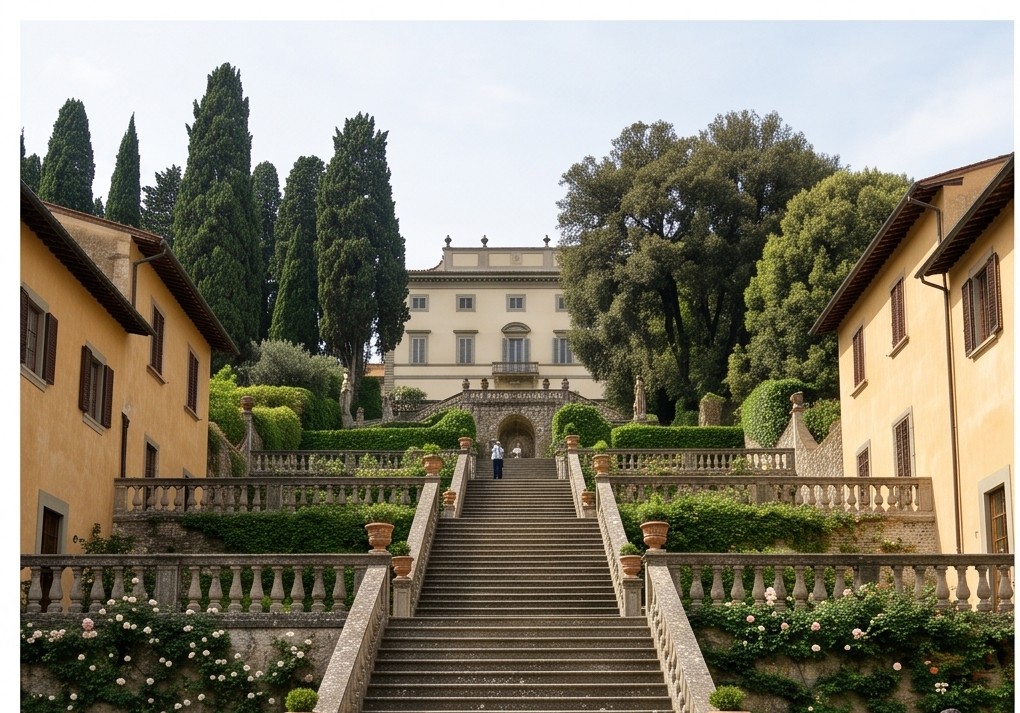
AI-generated image · may differ from the real place Spanning the steep Oltrarno hillside between the ancient Mozzi estate and Porta San Giorgio, Giardino Bardini is a breathtaking testament to landscape artistry. In nineteen thirteen, renowned antiquarian Stefano Bardini acquired the property, orchestrating a masterly restoration that united baroque stone staircases, quiet English woodlands, and vibrant floral terraces. Following years of legal stewardship by his heir Ugo Bardini, the garden was restored as a public treasure overlooking the city. Begin your visit by entering through the lower gates on Via de Bardi. Ascend the grand baroque stone staircase, taking time to pause beneath the sweeping arch of the famous wisteria pergola near the top. Step onto the upper terrace by the Kaffeehaus to behold an unrivaled panoramic view of Florence framed by purple blossoms and historic terracotta tile roofs.
Continue your climb upward along the historic hill trail leading to the summit of Basilica di San Miniato al Monte.
- 1 min · on site
Basilica di San Miniato al Monte
The Romanesque Crown of Florence
Photo · Wikimedia Commons Perched upon one of the highest crests above Florence, Basilica di San Miniato al Monte honors Saint Minias, an Armenian prince martyred in two hundred fifty under Emperor Decius who legend says carried his severed head up the hill to his hermitage. Built with geometric precision, its Tuscan Romanesque facade of green Prato serpentine and white Carrara marble gleams bright against the sky. Inside, medieval mosaics and intricate marble floor patterns create an atmosphere of profound serenity and reverence. Approach the basilica by walking up the quiet hillside path passing the rose garden. Stop on the wide stone platform to admire the striking geometric facade, then step into the cool interior crypt to gaze up at the luminous golden mosaic of Christ hovering in the apse above the ancient high altar.
Descend the scenic hill path toward the Arno river, crossing over to the bustling historic district of Sant Ambrogio.
- 1 min · on site
The Authentic Pulse of Tuscan Tradition
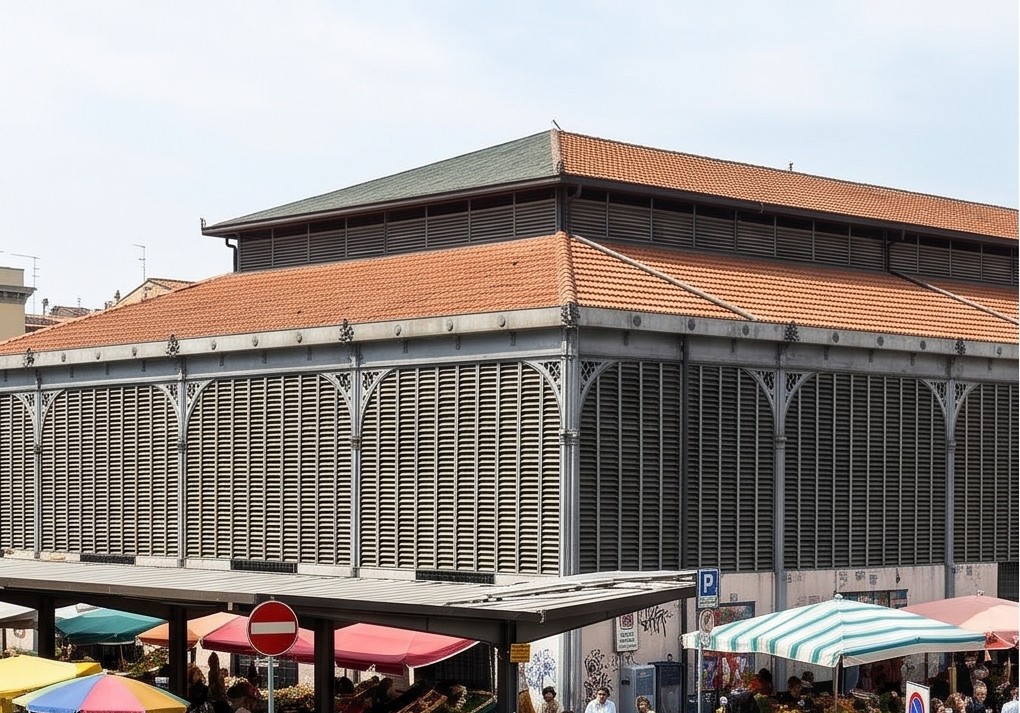
AI-generated image · may differ from the real place Located on Piazza Ghiberti, Mercato di Sant Ambrogio holds the proud distinction of being the oldest historical market in Florence. Designed by architect Giuseppe Poggi in the late nineteenth century as part of urban renewal plans following the demolition of Mercato Vecchio, this vibrant market continues to feed local neighborhood families. Under its iron framework, vendors offer regional cheeses, fresh Tuscan produce, cured meats, and traditional tripe recipes passed down through generations. Experience the market at its morning peak by walking beneath the wrought iron entrance on Piazza Ghiberti. Stroll down the lively center aisle where butchers and produce sellers greet regulars, then stop at a marble counter to order a warm slice of fresh schiacciata bread wrapped in butcher paper, savoring the authentic culinary flavors of daily Florentine life.
Leave the lively market behind and head to the northeast bus stop for the panoramic journey up to the ancient hilltop settlement of Fiesole.
- 1 min · on site
The Ancient Crest Above the Florentine Basin
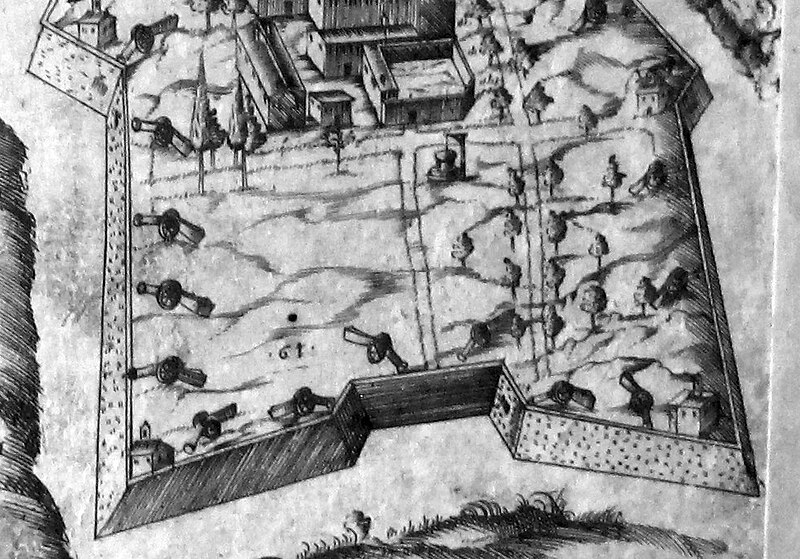
AI-generated image · may differ from the real place High on a scenic ridge above Florence lies Fiesole, an ancient Etruscan city founded in the seventh century before Christ. Here, Roman general Stilicho defeated Germanic invaders in four hundred six, and centuries later, Leonardo da Vinci tested early flying machine models on Monte Ceceri. Fiesole also inspired Giovanni Boccaccio, who set the frame narrative of The Decameron in its hill country villas where young Florentines escaped the plague. Take the winding road up to Piazza Mino da Fiesole. Walk past the ancient Roman theatre ruins and ascend the steep cypress trail to the terrace of the Franciscan monastery of San Francesco. Stand on the stone wall to view the entire Arno valley spreading out below, taking in the sweeping vista of the Renaissance city cradled by rolling Tuscan hills.
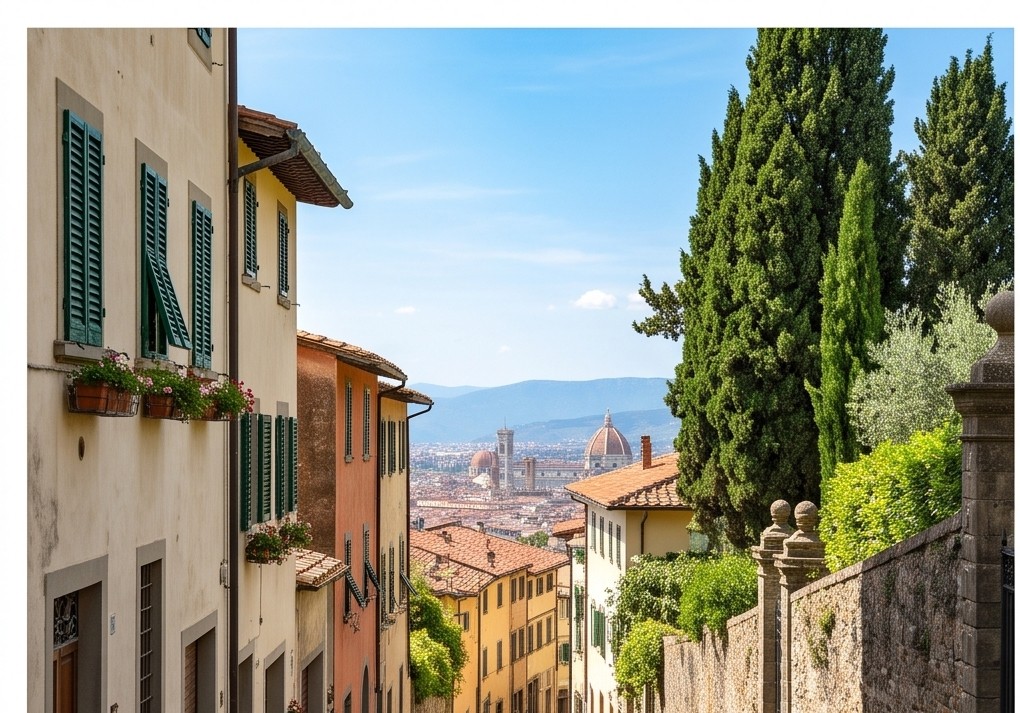


As your journey concludes upon the quiet heights of Fiesole, the city below reveals itself not merely as a collection of famous monuments, but as a living testament to human curiosity and artistic passion. The shadowed lanes of Oltrarno and the quiet terraces of the hills will remain with you long after the journey ends.
Take it further
Open the tour in the appThe tour in the app
Curator's Path Through Hidden FlorenceThis curated walking itinerary guides you through seven hidden historic gems of Florence, moving from the revolutionary Renaissance frescoes of Oltrarno to ancient Etruscan hilltops. Discover secluded neighborhood piazzas, terraced artisan gardens, historic food markets, and breathtaking Romanesque panoramas at an unhurried, contemplative pace.
+ Add the tour to your planIf you have the app the tour opens right away; otherwise you go to the store.FAQ
- What makes the Oltrarno district distinct from the rest of Florence?
- The Oltrarno represents the historic artisan heart of Florence across the Arno river, defined by traditional workshops, quieter residential squares, and profound Renaissance masterworks like the Brancacci Chapel away from main tourist crowds.
- Why is Fiesole included as the finale of this hidden Florence itinerary?
- Fiesole offers the ultimate historical perspective, predating Florence as an ancient Etruscan city on the high ridge above the valley, where figureheads like Leonardo da Vinci and Boccaccio drew inspiration overlooking the city below.