Florence does not offer its culinary soul on a gilded platter; it demands that you listen to the rhythmic thud of a butcher cleaver against worn olive wood and inhale the pungent vapor of simmering offal. Long before Renaissance painters filled grand basilicas with glowing frescoes, Tuscan cooks understood the fierce geometry of iron, fire, and salt. To eat well in this city is to discard theatrical pretense and surrender to an architecture of appetite forged by necessity. As you walk these cobblestone streets before lunch, the morning air carries the intoxicating perfume of toasted rosemary, aging pecorino, and woodsmoke rising from subterranean kitchens. The Florentine table is a rigorous study in restraint, where peasant staples are elevated into unyielding culinary doctrine.
Great cooking here is never about elaborate ornament. It is about the absolute purity of pristine ingredients and techniques honed through centuries of stubborn repetition. Consider how stale bread, soaked in summer tomatoes and verdant olive oil, transforms into Pappa al Pomodoro, or how tripe, braised slowly with crushed garlic and bay leaves, becomes a dish fit for aristocrats and laborers alike. As you move toward your first stop, tune your ears to the cadence of shopkeepers shouting over display counters and the satisfying crunch of salted schiacciata being halved by a marble blade.
The Architecture of Appetite
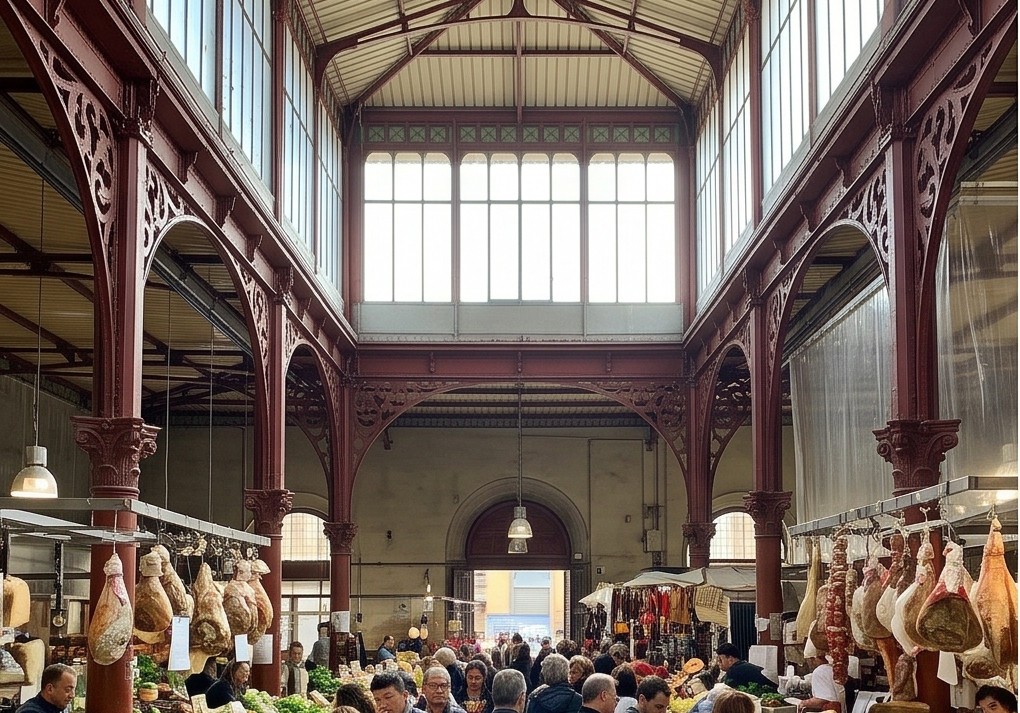
This unyielding dedication to market-driven cooking found its grandest physical home during the nineteenth century risanamento, when Florence briefly stood as the capital of Italy. The urban architect Giuseppe Poggi transformed the city by envisioning modern retail hubs, while Giuseppe Mengoni designed the soaring iron and glass canopy of the Mercato Centrale. Mengoni, who had previously conceived the majestic Galleria Vittorio Emanuele in Milan, brought that same industrial elegance to Florence, crafting a cathedral of food where sunlight filtered through glass panels onto marble counters laden with fresh game and seasonal produce. That architectural ambition forever linked the civic pride of Florence to its daily market rituals.
Inside these soaring iron halls, generations of vendors established a culinary lineage that remains unbroken. Here, the relationship between cook and buyer is intimate and demanding. A market butcher does not merely sell meat; he delivers a precise lecture on the exact muscle cut required for a proper steak, demanding to know how long you intend to rest the beef before it touches hot charcoal. It is this passionate precision, passed down through families, that turns a simple market hall into a sanctuary of flavor.
The Counter and the Legacy
That spirit of fierce independence animated later generations of Florentine food creators. Consider Tommaso Mazzanti, who took over his family small gastronomy shop on Via de Neri in two thousand six. By honoring regional cold cuts and freshly baked schiacciata, he transformed a humble local wine counter into an international street food icon, later joining American restaurateur and MasterChef judge Joe Bastianich on their two thousand twenty four podcast Millions to discuss how Florentine culinary traditions resonate across the globe.
As you approach the market district today, remember that every dish you will encounter on this walk carries this deep historical weight. The crispy crust of a hot sandwich, the velvety richness of slow-cooked ribollita, and the mineral depth of blood-red wine are not mere fuel; they are living artifacts of Florentine culture. Step forward with an open palate, for Florence is ready to reveal its most savory secrets.
Want to walk it yourself? Plan a trip with these places
The walk
On site, play just that chapter
- 1 min · on site
Cathedral of Iron and Artisanal Pasta
AI-generated image · may differ from the real place Standing before the towering cast iron exterior of the Mercato Centrale, you can feel the industrial pulse of late nineteenth century Florence. Step inside and let your gaze rise past the soaring glass roof down to the bustling ground floor. This is where local home cooks and restaurant chefs vie for the freshest cuts of wild boar, aged pecorino, and dark Tuscan kale. To experience the market correctly, skip the tourist lures and navigate directly through the ground floor maze of butcher stalls before heading upstairs to the artisan dining hall. Notice how the butcher cleavers move with rhythmic speed, breaking down whole sides of beef with surgical precision. Order a small plate of hand rolled tagliolini glistening with sage butter, and take a moment to savor the rich perfume of freshly grated truffles wafting through the hall.
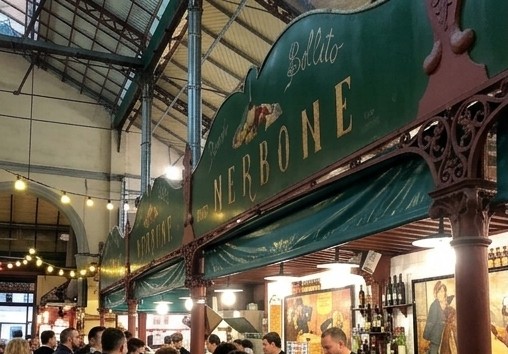
Once you have soaked in the grand energy of the central market floor, slip into the crowded ground floor corner where a legendary counter has cooked offal since eighteen seventy two.
- 1 min · on site
The Century Old Temple of Lampredotto
AI-generated image · may differ from the real place Tucked away inside the ground floor of the market, Da Nerbone serves the undisputed king of Florentine street food. The line of eager diners moves quickly, drawn by the irresistible aroma of spiced broth simmering in massive stainless steel kettles. Look for the marble counter where the counter master slices tender abomasum tripe with effortless speed. You must order the panino con il lampredotto, insisting that the crusty bun be dipped directly into the rich cooking broth and finished with both fiery red chili oil and vibrant green salsa verde. The first bite reveals a remarkable contrast between the crunchy bread and the velvety, gelatinous organ meat. Pair your warm sandwich with a small glass of rustic red wine poured from a straw bottle, and eat standing up alongside local market workers.
Wiping the savory broth from your fingers, exit the market through the western doors and cross Via Rosina to enter an uncompromising shrine of Tuscan home cooking.
- 1 min · on site
No Decaf, No Ice, Pure Tuscan Tradition
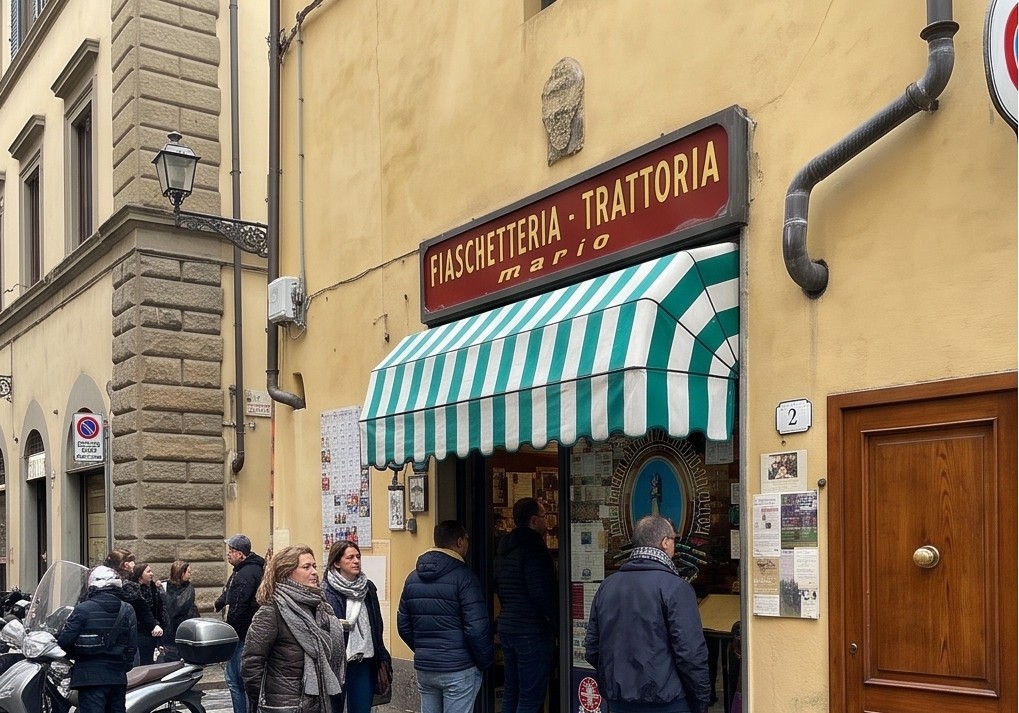
AI-generated image · may differ from the real place Step past the narrow doorway of Trattoria Mario and you enter a loud, unpretentious sanctuary where communal wooden tables dictate the dining rhythm. Opened in nineteen fifty three, this family run kitchen operates with fierce loyalty to tradition. Look up at the handwritten paper menu taped to the wall, where classic dishes change according to daily market availability. To guarantee a seat without waiting on the sidewalk, arrive early for lunch just as the doors swing open. You must order the thick, slow simmered ribollita, a hearty bread and kale stew finished with a generous drizzle of pungent new olive oil, or the massive bistecca alla fiorentina seared rare over hot embers. Watch the cooks in the cramped open kitchen move in sync, tossing pasta and shouting orders with kinetic energy.
After finishing your espresso at Mario, step back onto Piazza del Mercato Centrale and walk a few doors down to a dining institution famous for its vaulted cellars.
- 1 min · on site
Subterranean Vaults and Charcoal Smoke
Located right on the piazza, Trattoria Zà Zà blends sprawling bohemian warmth with serious culinary execution. As you walk inside, ask the host for a table in the lower vaulted brick cellar, where vintage posters and candlelight create a classic trattoria atmosphere. Notice the deep aroma of charred oak floating from the kitchen grills. The kitchen excels at traditional Tuscan game and prime Florentine T-bone steak. Order the bistecca alla fiorentina, cooked rare so the thick crust gives way to tender, ruby red beef seasoned simply with coarse sea salt and cracked black pepper. Pair the meat with stewed white beans bathed in olive oil. Because this room fills quickly with loyal regulars and international visitors alike, reserve your table well in advance for dinner.
Leaving the lively piazza behind, walk south toward the historic quarter near Via Ricasoli where long lines mark Florence most famous sandwich shop.
- 1 min · on site
The Golden Crunch of Schiacciata

Photo: Francesco Bini · CC BY-SA 4.0 · Original file As you turn onto Via Ricasoli, the intoxicating scent of warm baked bread guides you directly to All'Antico Vinaio. What began as a modest wine counter run by the Mazzanti family has evolved into a global phenomenon, yet the core technique remains unchanged. Watch the counter staff split massive sheets of freshly baked schiacciata, releasing clouds of fragrant steam. The crust is blistered and salted, while the interior remains pillowy and soft. You should order La Favolosa, a signature creation overflowing with sliced sbriciolona salami, creamy pecorino cream, artichoke spread, and spicy eggplant. Eat your sandwich while walking down the narrow street, paying attention to how the salty crunch of the bread yields to the rich, savory filling.
From Via Ricasoli, head east through the quiet residential streets of Santa Croce until you reach a neighbourhood market revered by local Florentines.
- 1 min · on site
The Beating Heart of Santa Croce
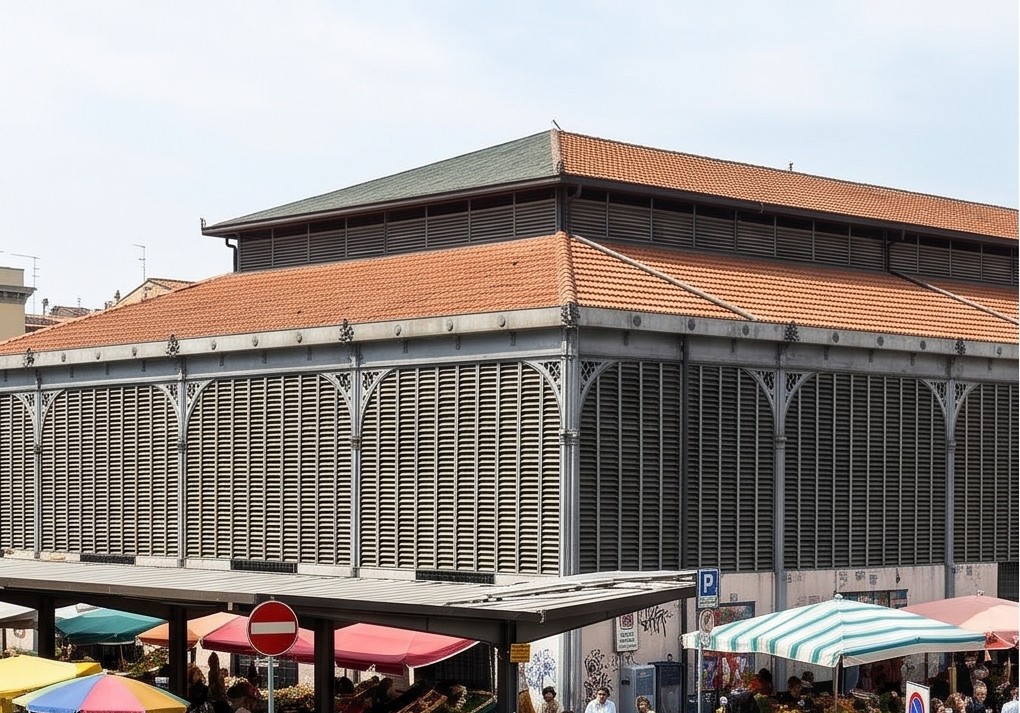
AI-generated image · may differ from the real place Arriving at Piazza Lorenzo Ghiberti, you encounter the wrought iron pavilion of Mercato di Sant'Ambrogio. Smaller and far more neighborhood focused than Mercato Centrale, this market offers an authentic glimpse into daily Florentine culinary life. Visit in the early morning when the outdoor stalls overflow with sun ripened tomatoes, fragrant basil, and wild mushrooms gathered from the Tuscan hills. Walk past the interior butcher counters to notice older residents bargaining over fresh ricotta and pecorino Toscano. You should order a simple market sandwich filled with salty Tuscan ham, creamy pecorino, and grilled vegetables from a corner stall, and sit on a stone bench outside under the warm morning sun. Take time to observe how locals move between stalls with practiced grace. Here, amidst chatting neighbors and the clinking of early morning wine glasses, you taste the true, unadorned culinary soul of Florence.

As evening settles over the Arno, the aroma of seared beef and woodsmoke still lingers in the cool night air. Florence reminds us that true luxury is found not in elaborate garnish, but in the uncompromising honesty of the market counter and the iron grill.
Take it further
Open the tour in the appThe tour in the app
Sensory Walking Tour of Florentine Markets and TrattoriasThis walking tour leads food lovers through historic market halls, legendary street food stalls, and traditional cellar trattorias in central Florence. Experience artisan tagliolini, slow simmered lampredotto, charcoal seared bistecca alla fiorentina, and crispy schiacciata while discovering the deep craftsmanship and architectural legacy of Tuscan gastronomy.
+ Add the tour to your planIf you have the app the tour opens right away; otherwise you go to the store.FAQ
- What makes Florentine lampredotto so unique?
- Lampredotto is made from the fourth stomach of the cow, slow simmered in a spiced vegetable broth until tender, and served on broth dipped crusty bread with green salsa verde and hot chili oil.
- How is Bistecca alla Fiorentina traditionally prepared?
- It is a thick cut T-bone steak from traditional cattle, seared quickly over white hot oak charcoal without seasoning until a dark crust forms, leaving the interior tender and ruby rare.
This piece was newly written based on the Wikipedia articles ‘Mercato Centrale (Florence)’, ‘Mercato di Sant'Ambrogio’, ‘All'Antico vinaio’ · CC BY-SA 4.0