Morning arrives over Florence not with a sudden clamor but as a soft unlocking of light along the Arno, where ancient stone facades and morning river mist dissolve seamlessly into one another. To walk these paved thoroughfares with a child by your side is to experience the Tuscan capital through an entirely altered sense of human scale and wonder. Where an adult eye gravitates toward centuries of heavy patronage, statecraft, and formal Renaissance architectural proportion, a child immediately notices the worn hollows of ancient threshold stones, the curious brass lion gargoyles mounted at eye level, and the rhythmic clatter of morning delivery carts echoing off tall plaster walls. Florence is frequently celebrated as a monumental open-air museum, yet its truest genius has always resided in its domestic intimacy, its extraordinary capacity to translate grand historical ambition into a warm, accessible narrative for the curious mind.
Consider how youthful intellect has flourished in this valley across generations. In the late fifteenth century, a young left-handed boy named Leonardo wandered these exact riverbanks, filling draft notebooks with mirror script and unbridled observations of swirling water and birds taking flight. His grandfather Antonio had meticulously recorded the boy's birth in an ancient notarized family ledger, noting a quiet rural arrival that would eventually reshape human inquiry across Europe. Years later, when Leonardo entered the bustling workshop of Andrea del Verrocchio near the heart of the city, he joined a living tradition of hands-on experimentation where fine art, geometry, and mechanical invention were indivisible. Long before modern scholars categorized the Renaissance into rigid textbook movements, it was simply an atmosphere of daily wonder, a communal workshop where young apprentices ground earth pigments, constructed wooden pulleys, and learned to observe the natural world with untamed clarity.
The Heritage of Young Curiosity
Centuries later, amidst the tranquil woodlands of the Cascine park along the northern bank of the Arno, the romantic poet Percy Bysshe Shelley experienced a parallel awakening during his Florentine stay. Strolling beneath the towering trees near the neoclassic Narcissus Fountain in the former Medici estate, Shelley watched autumn leaves sweep across the open meadows and listened to the tempestuous gale stirring the forest canopy, deriving the direct inspiration for his celebrated Ode to the West Wind. These historical echoes remind us that Florence has perpetually nurtured writers, visionaries, and thinkers who maintained an enduring sense of childhood astonishment when confronting the natural beauty of the world.
In our present era, traveling through Florence with family offers a rare opportunity to step away from the hurried tempo of modern life. The city invites adults and children alike to become co-discoverers, tracing how generations of builders and artists shaped spaces that feel simultaneously grand and welcoming. When exploring Florence as a family, our primary aim should never be a breathless march through endless gallery corridors, but rather the cultivation of a shared rhythm of discovery and quiet reflection.
A Sanctuary of Shared Memory
It is about lingering beneath the graceful arcades designed by Filippo Brunelleschi, observing how morning light illuminates painted vaulted ceilings, and pausing for a quiet scoop of artisanal gelato on a shaded bench while afternoon shadows lengthen across historic piazzas. As you set out together on this walking journey through the historic heart, allow the city to reveal itself at an unhurried pace, transforming every stone alleyway into an inviting classroom of human history and every peaceful courtyard into a lasting sanctuary of collective family memory.
Want to walk it yourself? Plan a trip with these places
The walk
On site, play just that chapter
- 1 min · on site
Under Brunelleschi's Arcades of Compassion

Photo: Francesco Bini · CC BY-SA 4.0 · Original file As you step into Piazza della Santissima Annunziata, the delicate loggia designed by Filippo Brunelleschi opens like an outstretched pair of welcoming arms. Founded in fourteen nineteen as Europe's first Renaissance orphanage under the proud patronage of the Florentine Silk Guild, the Spedale degli Innocenti was constructed to offer dignity, warmth, and sanctuary to vulnerable abandoned infants. Notice the famous sky blue terracotta medallions crafted by Andrea della Robbia depicting swaddled infants along the upper arches of the portico. Upon your arrival at the main front desk, be sure to inquire directly about the scheduled family creative workshops and hands-on art activities available for children. After wandering through the quiet historical exhibition galleries, ascend to the shaded rooftop terrace café where a serene panorama of Florentine terracotta roofs and distant Tuscan hills unfolds before you, offering a peaceful space for parents and children to pause together.
From this quiet sanctuary of care, take a brief three-minute walk down Via del Castellaccio to discover the world of mechanical ingenuity.
- 1 min · on site
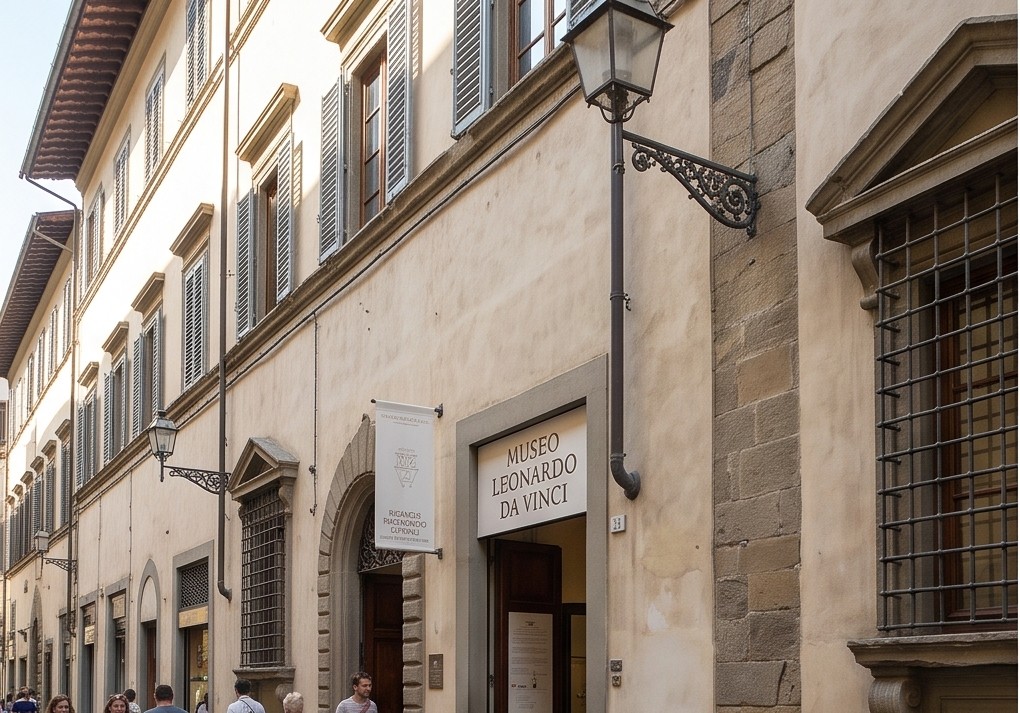
The Workshop of Endless Invention
AI-generated image · may differ from the real place Step inside this dynamic hall where Leonardo da Vinci's visionary engineering notebooks come to life through interactive full-scale wooden models and three-dimensional digital demonstrations. Young minds can touch, crank, and test working flying machines, armored vehicles, and intricate gear mechanics designed by the Renaissance master during his formative Florentine years spent in Andrea del Verrocchio's bustling workshop. Observe how Leonardo converted fundamental physical principles like levers, counterweights, and wooden screws into revolutionary tools of human invention. To enjoy the most seamless and unhurried experience without crowded halls, head directly up to the upper floor upon entering to explore the primary machine galleries before morning school groups fill the exhibition space. Watching your children operate these tactile mechanical devices reveals how natural curiosity transforms abstract geometry into a tangible, joyous game of discovery for the whole family.
Continue south down the narrow street toward Via dell Oriuolo for a nostalgic journey into the realm of childhood imagination.
- 1 min · on site
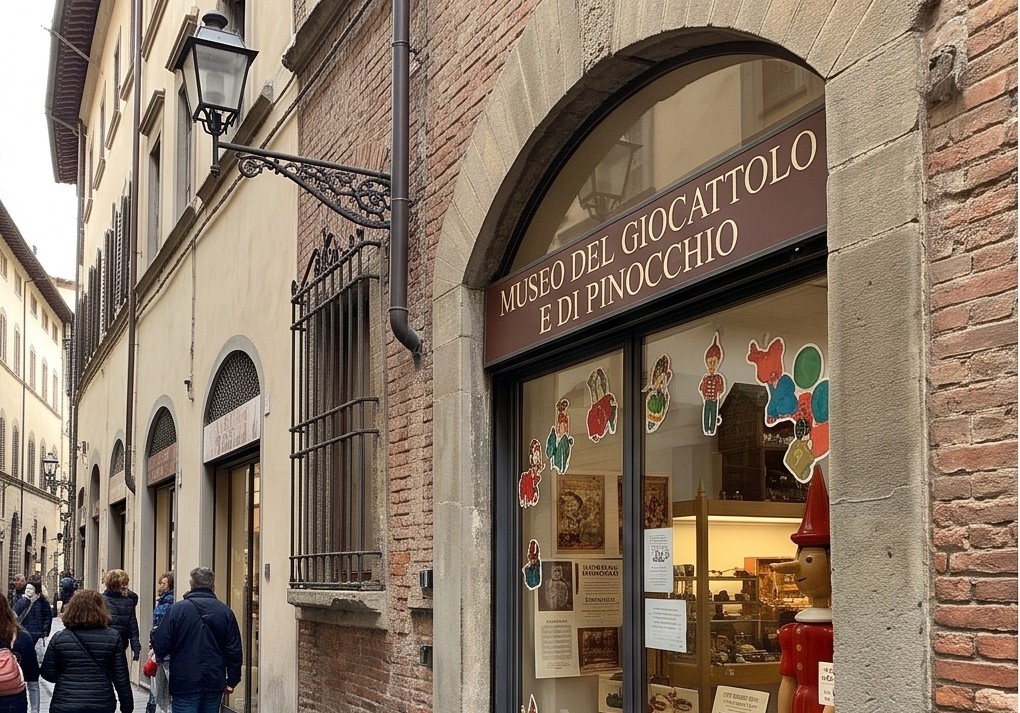
Museo del Giocattolo e di Pinocchio
Whimsical Echoes of Pinocchio and Vintage Toys
AI-generated image · may differ from the real place Nestled along Via dell Oriuolo, this charming museum showcases over seven hundred vintage toys, antique dolls, and rare historic Pinocchio objects spanning multiple centuries of craftsmanship. It offers a gentle, nostalgic look into childhood domestic play before the digital age, illustrating how Italian artisans carved wooden puppets and painted tin toys with meticulous affection. Look closely at the early illustrated book covers and hand-carved marionettes depicting Carlo Collodi's famous wooden puppet whose nose grew longer with every untruth. Because of its quiet scale, warm lighting, and focused layout, this location is ideal for younger children who benefit from a short, engaging museum visit rather than an exhausting exhibition marathon. It serves as a sweet interlude where parents can share fond memories of their own childhood play with their listening children.
Walk south along Via del Proconsolo toward Piazza della Signoria, where the historic heart of Florentine civic power awaits.
- 1 min · on site
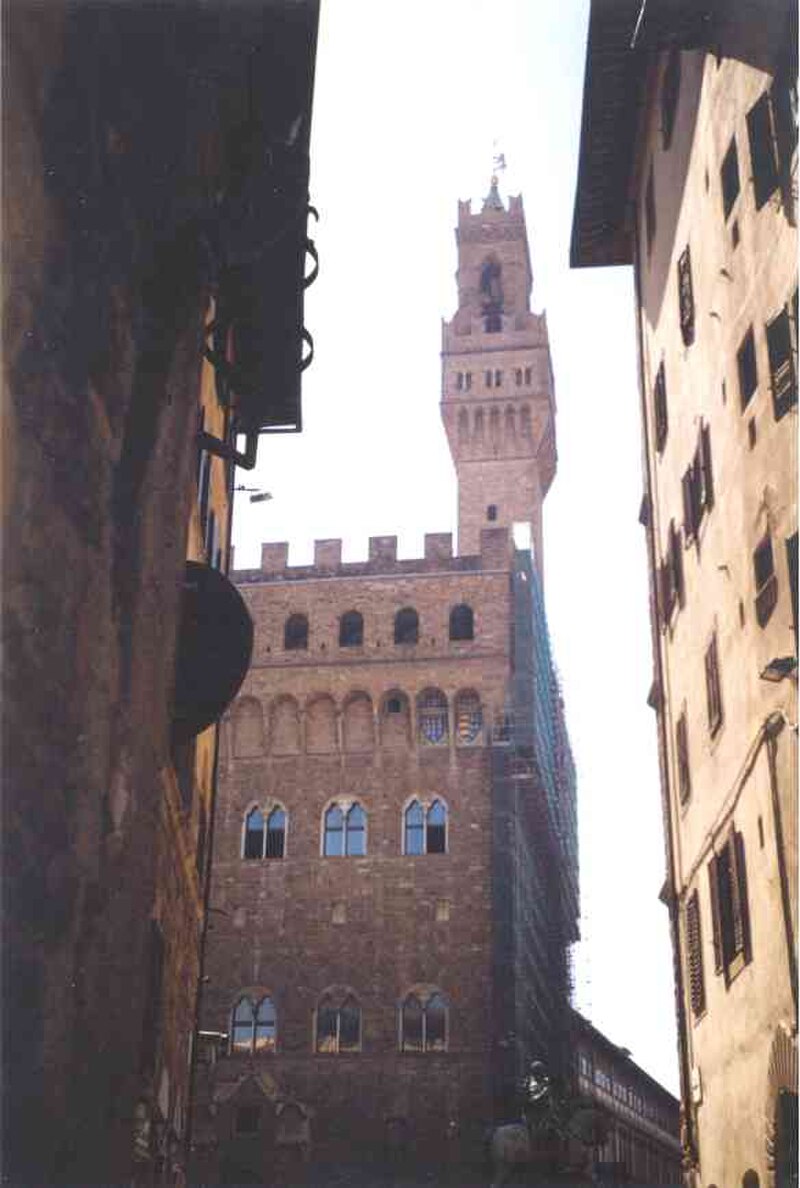
Secret Passages and Tower Heights at Civic Heart
Photo · Wikimedia Commons Rising formidably above Piazza della Signoria, Palazzo Vecchio has stood as the fortified fortress heart of Florentine civic authority since medieval times. Inside, immense reception halls painted with dramatic historical frescoes by Giorgio Vasari recount the political power and cultural ambition of the Medici grand dukes. Look closely for secret door frames cleverly concealed within decorated wall tapestries and carved wooden panels that once allowed secretive rulers to navigate the palace undetected. To maximize your family's engagement and enjoyment, book an official guided family tour rather than wandering the vast palace independently, as expert storytellers unlock hidden secret staircases and share child-friendly tales of castle life. If your children possess extra energy, climb Arnolfo's steep stone tower together for an unforgettable breath of crisp air and sweeping views over the red terracotta roofs.
Stroll just a few paces past the palace toward Piazza dei Giudici beside the Arno river to encounter the dawn of scientific discovery.
- 1 min · on site
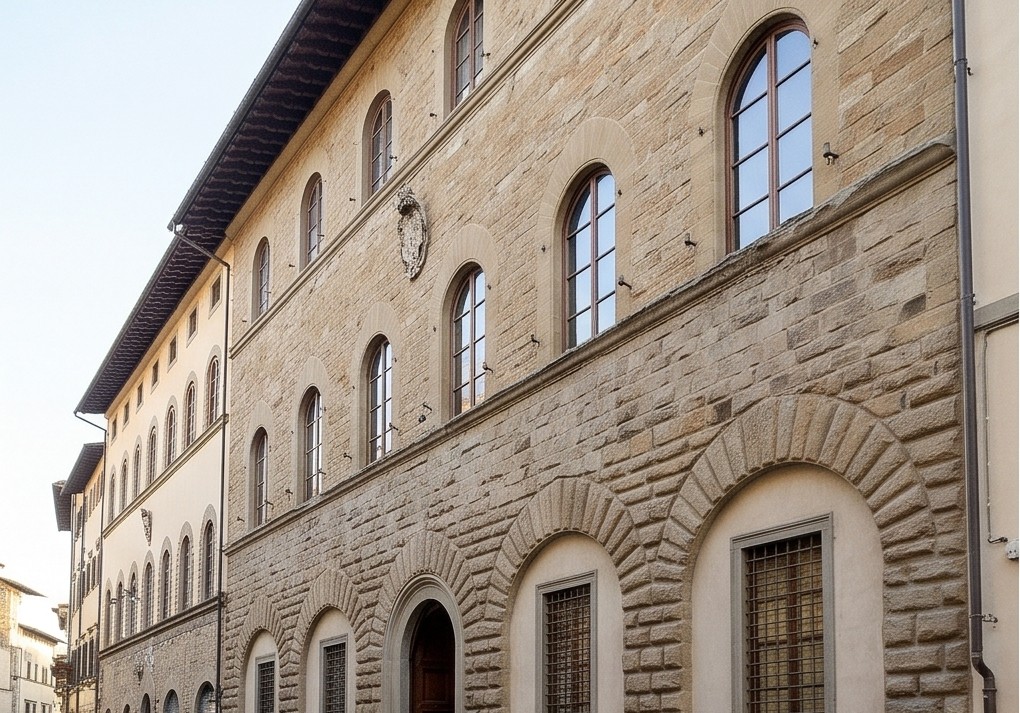
Galileo's Telescopes and the Cosmos
AI-generated image · may differ from the real place Housed within the historic eleventh-century Palazzo Castellani along the scenic river Arno, Museo Galileo preserves the extraordinary scientific heritage of Tuscany and the Italian Renaissance. Here you will find Galileo Galilei's original wooden telescopes, intricate brass astrolabes, armillary spheres, and celestial globes that first revealed Jupiter's moons and the cratered surface of Earth's moon. Examine the delicate glass lenses and hand-turned brass fittings through which Galileo gazed into the cosmos, forever altering humanity's fundamental understanding of our place in the universe. Because dense scientific instrument galleries can occasionally feel overwhelming for younger visitors, pair this museum visit with a brief, relaxing walk along the sunny Arno riverbank immediately afterward to let children recharge their spirits. It is a magical place where scientific wonder and historical storytelling come together in perfect harmony.
Turn away from the river into the welcoming bustle of Via dei Neri to conclude your walk with a quintessential Florentine sweet treat.
- 1 min · on site
A Sweet Florentine Conclusion
AI-generated image · may differ from the real place Conclude your family walking exploration along Via dei Neri at Gelateria dei Neri, celebrated by local Florentine families for its exceptionally smooth, artisanal gelato. This traditional gelateria is famous for signature creations like rich bronte pistachio and velvety salted caramel, churned fresh daily using natural local ingredients. Encourage your children to look through the clear display counter at the vibrant colors and rich textures of the gelato before placing their final order. To help young ones choose easily without feeling overwhelmed by dozens of options, order a small cup first so they can sample one flavor and pick a second complement on top. Take your filled gelato cups outside to sit on a quiet stone bench along the historic paved street, enjoying the sweet reward of your shared Florentine journey together.
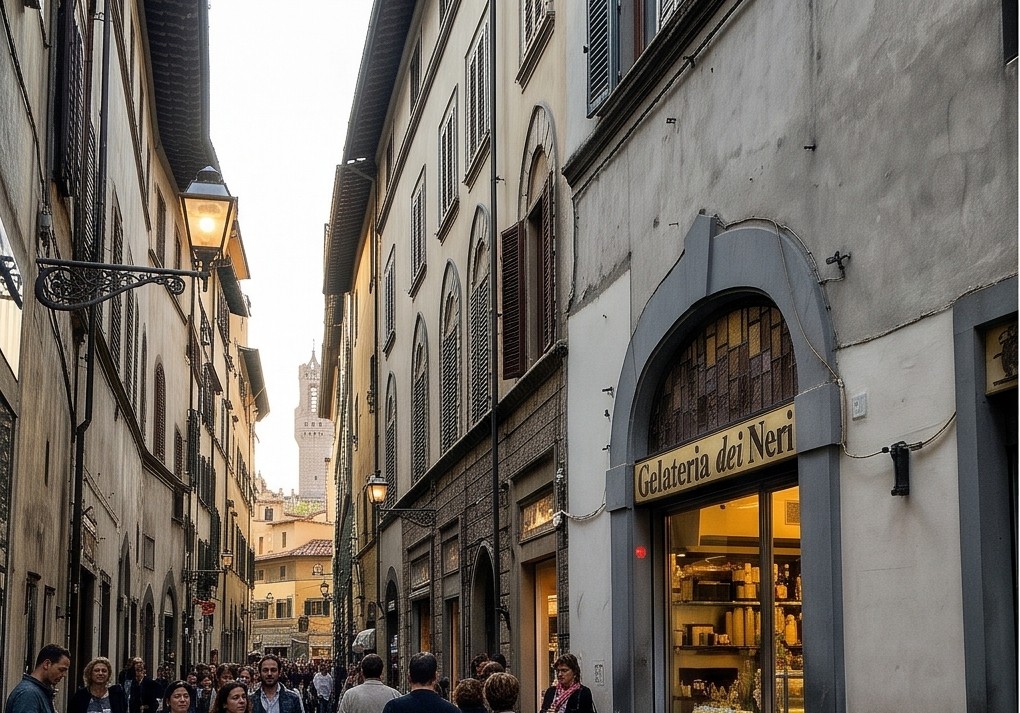

As dusk settles gently across Florence, bathing the stone walls in amber light, the city reveals its final lesson for families. Travel with children is not measured by the number of monuments crossed off a checklist, but by the shared moments of curiosity that linger long after returning home. In the laughter echoed under ancient arches, the tactile wonder of mechanical models, and the quiet sweetness of evening gelato, Florence becomes more than a destination, it becomes an enduring story told together.
Take it further
Open the tour in the appThe tour in the app
Florentine Wonders: A Family Walking DiscoveryEmbark on a gentle family walking tour connecting six historic Florentine treasures. From Brunelleschi's compassionate loggia and Leonardo's interactive machines to Pinocchio's vintage toys, Palazzo Vecchio's secret doors, Galileo's telescopes, and local artisanal gelato, experience Florence at a human pace.
+ Add the tour to your planIf you have the app the tour opens right away; otherwise you go to the store.FAQ
- How can families best navigate Florence museums with young children?
- Plan short museum visits focused on interactive elements, book family guided tours at historical palaces, and intersperse museum stops with outdoor walks along the Arno river and gelato breaks.
- Which Florentine locations offer interactive learning for kids?
- Museo Leonardo Da Vinci offers full-scale working mechanical models to crank and test, while Museo degli Innocenti provides dedicated children's art workshops and rooftop family views.
This piece was newly written based on the Wikipedia articles ‘Parco delle Cascine’, ‘Leonardo da Vinci’, ‘Spedale degli Innocenti’ · CC BY-SA 4.0