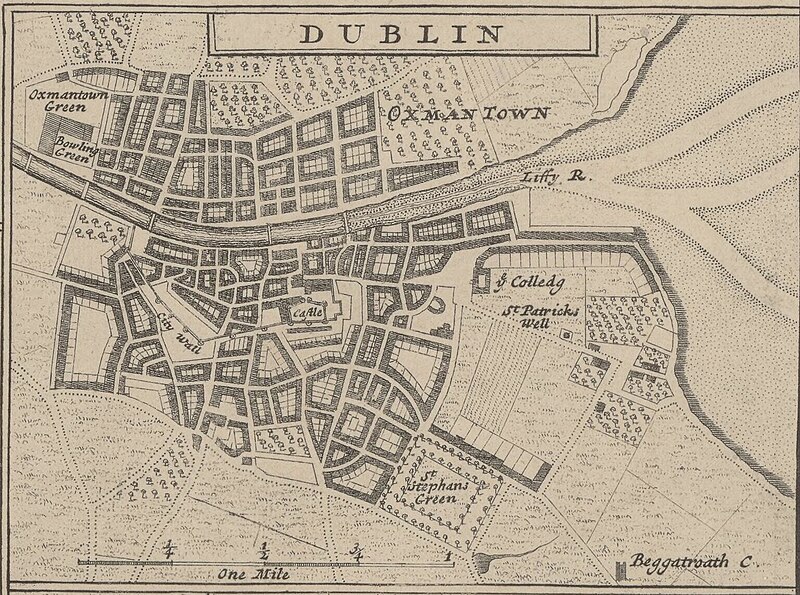
There is an hour in the Dublin twilight, just as the November frost begins to lacquer the slate rooftops and the brackish scent of the River Liffey drifts inland, when the entire city seems to slip backward through its own centuries. To approach Dublin during its winter season is not merely to arrive at an Atlantic capital of grey limestone and sea mists, but to step directly into a living anthology of human voices. Here, the passage of the year has never been measured simply by the falling leaves of the plane trees or the turning tide upon the marshy quays, but by the festive gatherings of minds, the warmth of firelit rooms, and the stubborn impulse to transform the longest nights into theatre, verse, and song.
You hear this impulse in the low hum that rises from the taverns where fiddlers tune their strings against the cold air, and you feel it along the quiet footpaths of the Georgian squares where the wrought iron railings gleam in the rain. Dublin possesses a singular genius for winter, an atmospheric intimacy born of an understanding that cold weather demands company and that darkness requires a telling of tales. The very geography of the city invites this contemplation, bounded on one hand by the dark river where medieval friars once walked, and on the other by broad avenues where statesmen debated the fate of a nation and playwrights paced beneath the tall gaslamps.
The River Shore and the Gilded Courts
Centuries ago, long before the embankments were built, the river ran much further inland, lapping against the soft gardens of Sir William Temple, whose seventeenth-century estate gave a name to the city's most celebrated quarter. That scholar and provost of Trinity College had retired to Dublin after perilous years serving royal courtiers, finding beside the Liffey a tranquil marshland that would, in time, become the resounding stage for Handel's glorious first performance of the Messiah on nearby Fishamble Street. Just up the slope, behind massive Norman curtain walls, Dublin Castle commanded the heights above the dark pool that gave the town its name, hosting the glittering spectacle of the viceregal winter season, even as bold chieftains like Red Hugh O'Donnell slipped into the freezing January night to begin their desperate flight across the snowbound mountains.
This collision of ceremonial grandeur and defiant spirit continues to define the winter air. When you arrive in the capital, you are walking upon reclaimed shores and ancient courtyards where every stone has absorbed an anecdote, every doorway has framed a philosopher, and every draughty wind carries the distant cadence of a chorus.
The Sanctuary of the Squares
Further south, beyond the red-brick arcades and the theatre stalls, the great green commons of Saint Stephen and Merrion open like broad parlours beneath the pale winter sky. Here, amidst the frost-rimed lawns and weeping willows, the city leaves its deepest impressions. One remembers that in 1792 the Duke of Leinster sailed a small boat directly through the flooded river wall into the corner of Merrion Square, a whimsical act that seems entirely at home in a neighbourhood that would later nurture Oscar Wilde and William Butler Yeats. To travel here in the cold months is to discover that Dublin does not hibernate; rather, it gathers its ghosts, draws its curtains against the dusk, and invites the traveler to sit beside the hearth and listen to the pulse of an eternal literary capital.
Want to walk it yourself? Plan a trip with these places
The walk
On site, play just that chapter
- 1 min · on site
Cobblestones of Song and Shadow
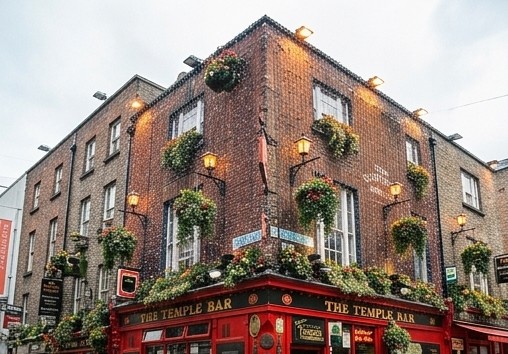
AI-generated image · may differ from the real place To know Temple Bar in the winter is to arrive early, before the evening revellers claim the narrow lanes and while the cobblestones are still dark with morning drizzle. Long before it became a bustling enclave of bohemian cafes, art galleries, and lively taverns, this riverside district was an expanse of marsh where Sir William Temple laid out his gardens in the early seventeenth century. Pause for a moment along Fleet Street and glance down toward the Liffey, imagining the water lapping against the back walls before the stone quays were built. If you wander through on a weekday morning, you will find the alleys peaceful, ideal for capturing the gentle light reflecting off the brick facades. As the midday air warms, the warmth of fiddle tunes begins to spill from open pub doors, offering a timeless seasonal shelter for the solitary wanderer seeking both melody and memory.
When you are ready, stroll southward along Parliament Street and cross Dame Street toward the ancient stone gateway of Dublin Castle.
- 1 min · on site
The Resilient Heart of the Dark Pool
Photo · Wikimedia Commons Stepping into the Upper Castle Yard, the city outside suddenly falls silent, replaced by the solemn grandeur of Georgian facades resting upon Norman foundations. It was near here, beside the dark pool of the River Poddle, that King John commanded a stronghold to be raised in the thirteenth century. In the bitter chill of January 1592, the young rebel Red Hugh O'Donnell slipped through these very walls into the frozen night, enduring an arduous winter flight to the safety of the Wicklow hills. Join a guided tour to walk through the Chapel Royal and descend into the subterranean Viking undercroft, where the ancient stone defenses remain untouched by daylight. Upstairs in Saint Patrick's Hall, gaze upward at the magnificent painted ceiling where viceroys once danced during the winter season, their vanished courtly ceremonies forever absorbed into the fabric of the modern nation.
Exit through the Cork Hill gate, turn south down South Great George's Street, and walk until you see the ornate red-brick arches of George's Street Arcade.
- 1 min · on site
The Victorian Lantern of Stalls

Photo: Tony Webster from Portland, Oregon, United States · CC BY 2.0 · Original file Under the soaring iron roof of George's Street Arcade, the winter chill gives way to the aroma of freshly ground coffee, antique paper, and damp wool. Opened in 1881 as South City Markets, this grand Victorian indoor bazaar was rebuilt with local craftsmanship after a devastating fire swept through its timbered stalls in 1892. Look closely at the warm terracotta brickwork, and ascend to the mezzanine level to discover the smaller vintage stalls and handmade jewellery displays nestled beneath the eaves. Here, away from the biting wind, Dubliners have browsed secondhand books and curiosities for generations. Take a quiet seat near a coffee stall and watch the eclectic parade of artists, students, and merchants carrying on a market tradition that refused to burn away with the passing century, infusing the damp afternoon with warmth.
Step back out into South Great George's Street, continue southward toward South King Street, and cross directly into the Grafton Street entrance of St Stephen's Green.
- 1 min · on site
A Winter Haven of Reflections
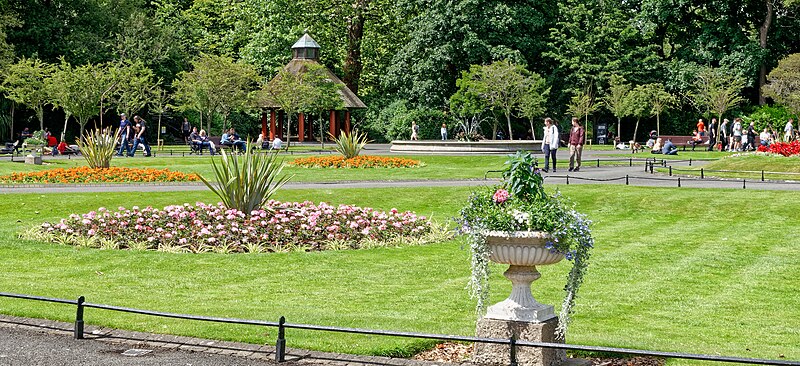
Photo · Wikimedia Commons Entering St Stephen's Green from Grafton Street, the urban clamour instantly recedes into the whisper of winter wind through bare branches. This twenty-two acre common was once a marshy pasture before Sir Arthur Guinness funded its romantic transformation in 1880, planting weeping willows, formal flower beds, and the gentle winding lakes that define its heart today. Follow the curved path along the water's edge, where tufted ducks glide through the mist beneath the stone arch of the bridge. During the Easter Rising of 1916, rebel combatants entrenched within these gardens famously ceased fire each afternoon so the dedicated park groundsman could feed the resident waterfowl. Take a quiet moment on a bench near the bandstand to watch the amber afternoon light filter through the trees, bathing the frozen lawn in a soft, gilded glow.
Leave the park through its southern gate and walk down Earlsfort Terrace until the stately stone portico of the National Concert Hall rises before you.
- 1 min · on site
The Gilded Sanctuary of Symphony
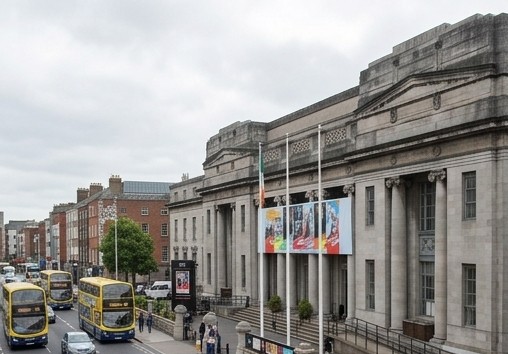
AI-generated image · may differ from the real place Standing before the National Concert Hall on Earlsfort Terrace, one feels the enduring cultural gravitas of a building originally erected as the Exhibition Palace in 1865. Later serving as the heart of University College Dublin, these chambers bore witness to heated debates over the Anglo-Irish Treaty in the winter of 1921 and 1922 before becoming the premier home of classical music in Ireland. Step beneath the imposing columns and look for the afternoon schedule, where lunchtime concerts often offer an accessible, sublime escape from the winter grey. Inside the main auditorium, the National Symphony Orchestra fills the velvet air with seasonal masterworks that reverberate through the hall's historic acoustics. Sitting in this warm expanse of sound, the cold streets of Dublin fade into distant memory, replaced by the resonant cadence of brass and strings.
Head northeast past the Georgian rows of Upper Merrion Street until you reach the tall perimeter railings of Merrion Square Park.
- 1 min · on site
The Twilight Realm of Playwrights
AI-generated image · may differ from the real place Merrion Square Park is the poetic climax of any Dublin winter journey, a grand Georgian expanse surrounded by dignified red-brick townhouses with elegant fanlights. Enter from the east side to follow the winding sculpture trail, where the colorful, languid statue of Oscar Wilde reclines upon a granite boulder, smiling ironically at his childhood home across the street. In the crisp winter evenings, the park transforms into a magical tapestry of Winter Lights, projecting vibrant illuminations against the leafless canopies and historic bronze monuments. It was near this northeast corner that the Duke of Leinster sailed a boat through high-tide floodwaters in 1792, a legendary Dublin escapade that matches the playful theatricality of the square. Here, as dusk deepens into night, the spirits of Yeats and Wilde seem to linger by every lamppost, watching the light dance upon the grass.
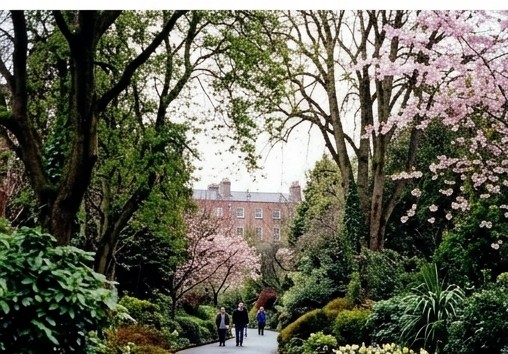

As the winter night settles over the capital, the city's warmth gathers behind glowing fanlights and within the timbered alcoves of its historic halls. To walk these streets in the cold months is to realize that Dublin does not merely survive winter; it transforms it into an enduring literary season where every shadow tells a story and every hearth welcomes a friend.
Take it further
Open the tour in the appThe tour in the app
A Literary Winter Promenade Through DublinThis immersive walking journey traces Dublin's seasonal heart from the cobbled riverside lanes of Temple Bar to the luminous Georgian lawns of Merrion Square. Spanning historic castles, Victorian market arcades, leafy parks, and grand concert halls, the route weaves together centuries of literary memory, revolutionary courage, and festive musical warmth.
+ Add the tour to your planIf you have the app the tour opens right away; otherwise you go to the store.FAQ
- What makes Dublin during the winter season particularly appealing for literary travelers?
- Winter reveals Dublin's intimate character, where chilly afternoons encourage quiet contemplation in historic libraries, unhurried walks through mist-veiled Georgian squares, and warm evenings filled with fireside conversation, traditional music, and theatrical performances.
- How can visitors best experience the festive music and street atmosphere around Temple Bar?
- Wander the cobblestone lanes during a weekday morning for peaceful architectural photography, then return in the late afternoon or early evening when traditional pub sessions begin to fill the air with live fiddle and bodhran melodies.
This piece was newly written based on the Wikipedia articles ‘Merrion Square’, ‘Dublin Castle’, ‘St Stephen's Green’ · CC BY-SA 4.0