Night in Dublin does not arrive with the sudden theatrical curtain drop of Mediterranean skies. Instead, dusk seeps through the damp granite quays like cold mutton broth, turning the surface of the River Liffey into a dark, slow-moving ribbon of unskimmed porter. To understand this city after dark, a serious palate must look past the neon shamrocks, ignore the clamor of roving partygoers, and turn its gaze squarely upon the counter. Notice the collective hush that descends over the oak when a fresh glass is called into being. Observe the deliberate, almost liturgical posture of the barkeeper as the stout cascades into the curved tulip glass, an avalanche of microscopic nitrogen bubbles churning in reverse until ruby black liquid separates cleanly from a firm, velvet cap. Drinking here is never passive recreation or thoughtless indulgence. It is an exacting culinary ritual of cellar temperature, hydraulic pressure, and communal patience, refined through centuries of wet North Atlantic gales and stubborn local habit.
The River Terroir and the Hearth
Centuries ago, long before stone embankments penned the tidal river into tidy quays, the Liffey ran broad and wild across gravel shallows. Its muddy tides lapped directly against the private gardens of Sir William Temple, the Elizabethan scholar and university provost whose family name would unexpectedly christen Europe's most boisterous entertainment district. Walk these narrow alleys when the evening mist rolls in from the Irish Sea, and your senses encounter an intoxicating culinary terroir: roasted malt drifting on the breeze from Saint James Gate, the sweet vanillin of charred oak casks, and the mineral chill of wet river limestone. Nocturnal Dublin was raised in these shadows. Dockers, compositors from print shops, and ballad singers crowded around coal hearths to escape the bone-chilling damp, demanding sustenance that could warm flesh and marrow alike. In centuries past, taverns along the quayside were essentially communal kitchens where steaming iron cauldrons of stew and corned beef simmered beside wooden firkins of ale, nourishing political rebellions and literary masterpieces with equal generosity. The cook behind the counter was as influential as any pamphleteer, fortifying cold bodies with fat, starch, and dark fermented grain.
The Rigor of the Two-Minute Pour
Step through any weathered timber door tonight, and the percussive mechanics of the trade surround you immediately. You hear the sharp ring of heavy boots against brass footrails, the satisfying clatter of ceramic jugs, and the rhythmic compression of beer pumps drawing cold draught from deep flagstone basements. A proper Dublin publican approaches the beer tap with the fastidious rigor that a classical French saucier reserves for an intricate reduction glaze. The glass is held tilted at forty-five degrees, the tap nozzle hovering above the foam without ever dipping beneath the rising meniscus. Then comes the sacred intermission. Two full minutes of absolute stillness, during which the customer must wait while physics and patience complete their work, clarifying the dense column into pitch black and crowned with dense, clotted ivory foam. To rush this pause or demand immediate service is an unforgivable culinary offense that marks an untutored palate. Only when the surface tension forms an unbroken dome does the tender slide the goblet across the counter. In our frantic, hurried world, this enforced stillness is Dublin's finest gift to the nocturnal traveler. It demands that you slow down, smell the warm roasted barley, and listen closely to the murmur of human voices that has echoed between these ancient timbers for generations.
Want to walk it yourself? Plan a trip with these places
The walk
On site, play just that chapter
- 1 min · on site
Peat Hearth and Medieval Braise
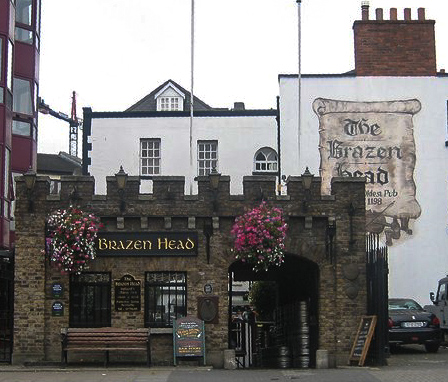
Photo: Harold Strong derivative work: Nikthestunned · CC BY-SA 2.0 · Original file Cross the flagstones into Ireland's oldest recorded tavern, where peat smoke and braised beef have scented the riverbank since the twelfth century. The legendary automaton brazen head of medieval philosopher Roger Bacon gave this house its title, but the real wizardry unfolds behind the kitchen pass. Order the beef and stout stew, presented in deep stoneware bowls. The brisket is braised down into tender, glistening ribbons, its collagen fully surrendered into a velvet gravy laced with roasted barley and sweet root vegetables. To escape the raucous crowd around the front bar, step through the stone archway into the sheltered lower courtyard. Here, beneath whitewashed brick and iron lanterns, the noise of the modern city drops away. Pair your bowl with a cellar-cool pint, letting the bitter malt cut cleanly through the rich animal fat of the braise. It is hearty, unapologetic peasant cooking elevated to pure comfort.
Follow the river embankment eastward past ancient Essex Gate, where the cobblestones turn into the bustling labyrinth of Temple Bar.
- 1 min · on site
Pot Still Whiskeys and River Cobbles
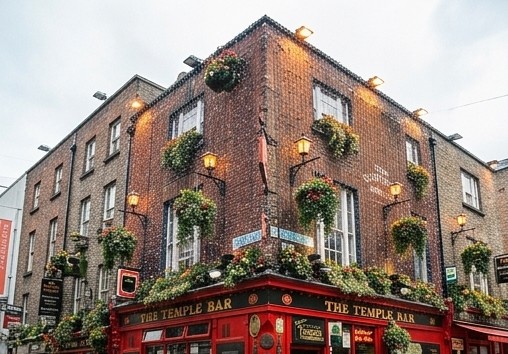
AI-generated image · may differ from the real place Beneath the scarlet facade and radiant glow of gaslamps stands the symbolic nucleus of Dublin nightlife. Named for Sir William Temple, the university provost who once cultivated peaceful gardens along these river shallows, the house today is a sensory storm of polished cedar, brass taps, and soaring fiddle jigs. Weave past the singing revellers to the back parlour, where towering mahogany shelves house an astonishing encyclopaedia of single pot still whiskeys. Ask the barkeeper for a dram of aged pot still spirit, served neat with a small jug of spring water. Notice the rich mouthfeel: toasted oak, baked orchard apples, and a lingering prickle of pot still pepper that warms the throat. Look out through the Georgian style wyatt windows to watch the crowd navigate the wet cobbles. Arrive early to claim a wooden bench beside the musicians before the room packs tight with eager listeners.
Slip around the corner into the narrow shadows of Crown Alley, seeking a discreet doorway with an unadorned brass buzzer.
- 1 min · on site
Hand-Cut Ice and Botanical Chemistry
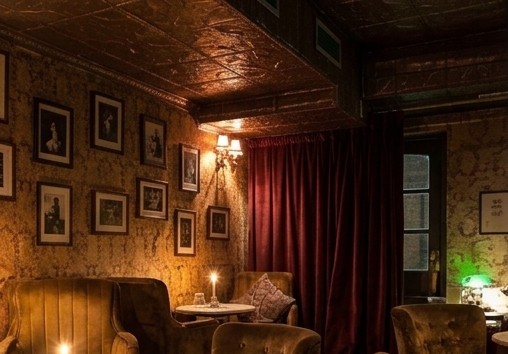
AI-generated image · may differ from the real place Behind a silent black door in Crown Alley, marked only by the letters VCC, lies Dublin's temple of precise mixology. Press the small brass bell, wait for the bolt to slide, and ascend into a world of flickering candlelight, antique velvet, and vintage crystal. Here, drinks are approached with scientific discipline. Watch the bartender carve solid, crystal-clear ice blocks by hand to ensure slow dilution that preserves the integrity of each spirit. Order an almond sour or an espresso martini, shaken until micro-aerated and poured with a silky froth that mimics the city's beloved stout. The balance between tart citrus, botanical amaro, and spiritous warmth is immaculate, showcasing the palate of modern Ireland. Book your table in advance and ask for a seat on the rooftop terrace, where the night sky opens above leather armchairs. It is a masterclass in balance, texture, and refined hospitality.
Step back down into the cool river air and walk east past Trinity College toward the quiet Georgian brick of Poolbeg Street.
- 1 min · on site
The Golden Standard of the Dark Tap
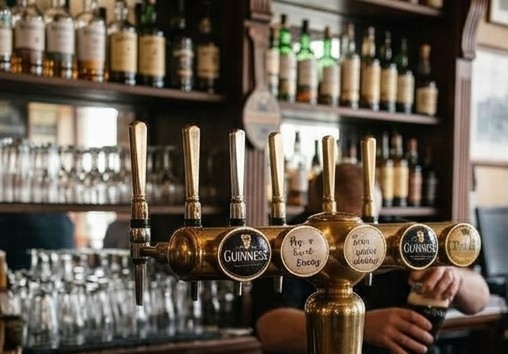
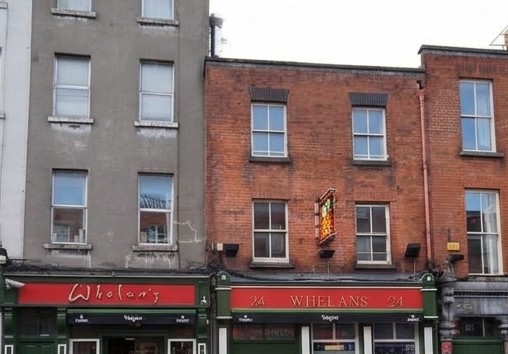
AI-generated image · may differ from the real place On Poolbeg Street, beneath modest brickwork, sits a shrine to conversation and the undisputed benchmark of Irish stout. Licensed since the eighteenth century, Mulligans permits no televisions and no distracting music to disrupt the sacred hum of human debate. Actors from the demolished Theatre Royal, including Judy Garland, once gathered here after curtain calls, and her signed photograph still watches from the timber panelling. Even John F. Kennedy stopped by for a legendary draught. Watch the barman execute the classic two-stage pour with unflinching gravity. The stout arrives pitch-black, capped with ivory cream so dense that a coin would float upon its surface. The initial sip is cold and silky, giving way to profound roasted grain, bittersweet dark chocolate, and clean herbal bitterness. Notice the handsome grandfather clock near the back, reputed to hold the ashes of devoted American patron Billy Brooks Carr.
Turn south past College Green and make your way up Wexford Street toward Dublin's vibrant live music heartland.
- 1 min · on site
Resinous Hops and Resonant Timbers
AI-generated image · may differ from the real place Enter through the battered timber doorway on Wexford Street into the beating heart of Irish alternative music. This venerable room has hosted legendary performances by Jeff Buckley and Townes Van Zandt, its unvarnished pine floorboards resonant with thirty years of amplified bass. The sensory profile here is raw and immediate: the smell of fresh pale ale, cold glass tumblers, and the warm hum of vintage tube amplifiers. Order a pint of local craft pale ale at the long front counter, admiring the crisp hop bite and resinous pine aroma that cuts through the nocturnal humidity. Book your gig ticket in advance, then make your way up the creaking stairs to the intimate balcony overlooking the stage. Lean over the scarred wooden banister as the guitar chords strike up, feeling the room vibrate underfoot. It is authentic, unpretentious, and pulsing with creative vitality.
Stroll a few blocks south along the illuminated tramway into Harcourt Street, where the Georgian terrace shifts into high gear.
- 1 min · on site
The Democratic Midnight Roar
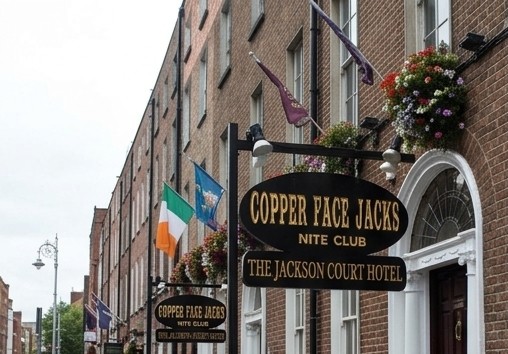
AI-generated image · may differ from the real place Below the Jackson Court Hotel on Harcourt Street lies Dublin's ultimate late-night democratic phenomenon. Founded by a former police officer and named after the notorious eighteenth-century drinking judge John Scott, nicknamed Copperfaced Jack, this cavernous complex defies culinary snobbery through sheer exuberant energy. Across six bars and sprawling dance floors, nurses, teachers, and county sports heroes mingle without pretense. The experience here is kinetic: the cold rush of draft cider in a frosted glass, the floor thumping with anthems, and the sudden chill of the open beer garden. Have your official identification ready at the door, as entry policies are uncompromisingly enforced. Grab a cold beverage from the bar, feel the condensation drip across your fingers, and step into the throng. It represents the unfiltered, joyous release of a city that works hard and dances harder.

As the city quietens and the bells of Christ Church ring out over the dark water, the lingering taste of Dublin is not merely roasted grain or peppery spirit. It is the tactile memory of cold glass against warm timber, of slow conversations born in the pause between pours, and of a nocturnal culture that honors patience above all else. To taste Dublin by night is to learn how to wait, how to listen, and how to savor the craft in every glass.
Take it further
Open the tour in the appThe tour in the app
A Connoisseur's Nocturnal Trail through DublinWalk from the medieval riverbank of The Brazen Head through Temple Bar and Poolbeg Street to the vibrant music rooms of Wexford and Harcourt. Experience expertly braised stew, pristine single pot still drams, award-winning mixology, and the legendary two-minute stout pour across Dublin's finest culinary taprooms.
+ Add the tour to your planIf you have the app the tour opens right away; otherwise you go to the store.FAQ
- What makes the Dublin stout pour so uniquely rigorous?
- A traditional Dublin stout is poured in two stages. The glass is filled three-quarters full at a precise angle and allowed to rest undisturbed for two full minutes so nitrogen bubbles settle into dark obsidian beneath thick ivory cream before being smoothly topped.
- How should one prepare for an evening exploring these historic venues?
- Arrive early at traditional music sessions to secure seating near the players, bring valid photo identification for late-night venues, and always book ahead when seeking seats at intimate cocktail lounges like Vintage Cocktail Club.
This piece was newly written based on the Wikipedia articles ‘Mulligan's’, ‘Copper Face Jacks’, ‘Temple Bar, Dublin’ · CC BY-SA 4.0