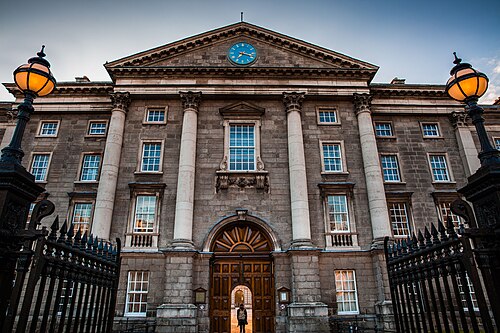
Morning settles over Dublin like a quiet plot twist, damp air wrapping around gray stone facades while cobblestones catch the first pale light of dawn. You step off the busy pavement of College Green and immediately feel it: this city does not merely host history, it curates an ongoing cultural narrative where every ancient doorway holds serious main character energy. Far from being a static museum piece frozen in amber, Dublin is having an undeniable moment right now. It is a capital where centuries-old manuscripts meet vibrant third-wave coffee culture, where rain-slicked alleyways lead to legendary taverns, and where every local you meet carries the effortless poise of a born storyteller. Standing outside the grand front gate before your walking tour begins, you realize that Dublin is not a destination you simply observe from a distance; it is an immersive living atmosphere that captures your imagination long before you take your first steps into its historic core.
The secret to Dublin lies in its extraordinary ability to pair heavy heritage with a youthful, irreverent pulse. Consider Trinity College Dublin, established under royal charter by Queen Elizabeth the First in fifteen ninety-two. Long before eager modern travelers lined up to view the illuminated vellum pages of the Book of Kells in the Old Library, iconic literary figures like Oscar Wilde and Bram Stoker paced these exact quadrangles as ambitious students, refining their razor-sharp wit and crafting Gothic fiction that still shapes global pop culture today. Every brick of this campus feels alive with intellectual ambition and creative reinvention.
A Symphony of Revolutions and Taverns
Wander west toward the River Liffey near Temple Bar, and you will find another layer of Dublin's cultural DNA. In April seventeen forty-two, composer George Frideric Handel premiered his sacred masterpiece Messiah at the Great Music Hall on Fishamble Street. The public anticipation was so immense that concert organizers requested gentlemen to leave their ceremonial swords at home to maximize seating capacity inside the hall. Across the river and down through the old medieval precinct, political history repeatedly reshaped the city landscape. In December nineteen twenty-one, following the signing of the Anglo-Irish Treaty, rebel commander Michael Collins arrived at Dublin Castle to formally receive the keys of executive administration from British authorities, transforming a medieval fortress of royal power into the democratic heart of a sovereign republic.
The Lingering Character of the Capital
Even during periods of intense national conflict, Dublin preserved its whimsical, deeply human character. During the Easter Rising of nineteen sixteen, when Countess Constance Markievicz and the Irish Citizen Army established defense trenches inside St Stephen's Green, active gunfire across the park was voluntarily halted every afternoon for a brief cease-fire so the park groundsman could safely feed the resident ducks. That tender, almost surreal moment reveals the true essence of Dublin. The city understands that grand political drama and everyday warmth belong side by side in the exact same story.
As you prepare to walk this route from university courtyards to riverside bridges and quiet Victorian green spaces, tune your ears to the rhythm beneath your feet. The city invites you to slow down, gaze up at soaring granite arches, and connect with the ghost writers, rebels, and dreamers who walked these cobblestones. Let the mist refresh your spirit, let the lively banter of the locals guide your curiosity, and allow Dublin to demonstrate why its timeless story remains utterly irresistible today.
Want to walk it yourself? Plan a trip with these places
The walk
On site, play just that chapter
- 1 min · on site
Sacred Vellum and Academic Elegance
Photo: Stephen Bergin steve_ · CC0 · Original file As you step through the majestic Front Gate from College Green, the roar of modern Dublin traffic vanishes, replaced by the crisp clatter of shoes on cobbled pathways. You are standing inside Trinity College Dublin, founded in fifteen ninety-two under royal charter by Queen Elizabeth the First. Look up at the soaring wooden doors and the elegant stone quadrangles surrounding Parliament Square. This ground was trodden by legendary literary figures including Oscar Wilde, Jonathan Swift, Samuel Beckett, and Bram Stoker during their formative student years. To your right stands the Old Library, Thomas Burgh's eighteenth-century architectural masterpiece that houses the world-famous Book of Kells, an illuminated manuscript created by Celtic monks around eight hundred. Take a quiet pause near the majestic Campanile bell tower in the centre of the square, look toward the ancient Rubrics building, and notice how centuries of scholarly devotion and creative brilliance linger effortlessly in the cool maritime air.
Walk west along College Green for five minutes toward the stone archway that marks the vibrant entrance of Temple Bar.
- 1 min · on site
Bohemian Alleyways and Sacred Melodies
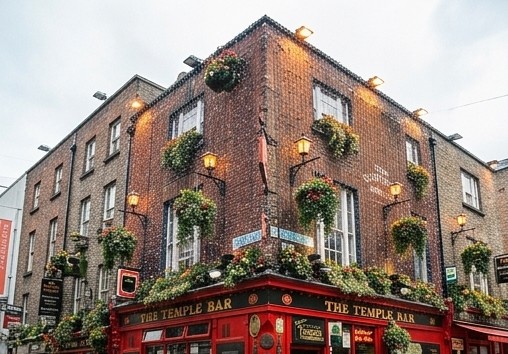
AI-generated image · may differ from the real place Stepping into Temple Bar feels like walking directly onto a lively, brightly painted soundstage where music and history collide. Follow the narrow cobblestone alleyway of Fleet Street until you reach the bustling center surrounded by scarlet tavern facades and hanging flower baskets. While today this quarter is renowned worldwide for its bohemian nightlife and traditional acoustic sessions, its cultural legacy runs remarkably deep. Just a short stroll toward Fishamble Street marks the exact site where composer George Frideric Handel premiered his legendary Messiah in April seventeen forty-two. Look up at the restored vintage brass lanterns and carved wooden pub signs, then step near an open doorway to catch the authentic strains of fiddle and bodhran music floating on the air. Order a refreshing craft cider or traditional soda, lean back against the timber bar, and appreciate how this historic neighborhood seamlessly fuses eighteenth-century musical heritage with modern Dublin energy.
From Fleet Street, head straight north toward the river until the gleaming white ironwork of Ha'penny Bridge comes into view.
- 1 min · on site
The Cast-Iron Span Over the River Liffey
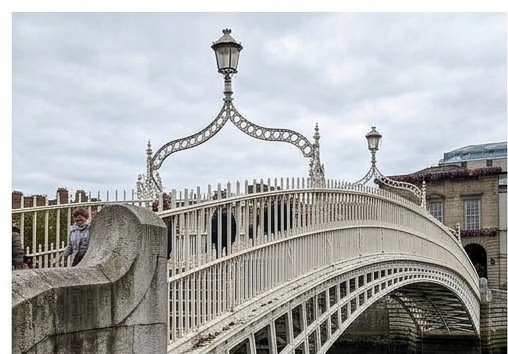
AI-generated image · may differ from the real place Approaching the River Liffey, the sleek white arch of Ha'penny Bridge leaps gracefully across the dark water, forming one of Dublin's most cherished visual icons. Before this cast-iron pedestrian bridge opened in eighteen sixteen, citizens crossed the river on seven creaking wooden ferries operated by William Walsh. When the ferries fell into disrepair, Walsh was granted permission to construct this iron bridge, charging a toll of one halfpenny to match the original ferry fare. For over a century until nineteen nineteen, commuters passed through turnstiles at either end to pay their halfpenny fee. Step onto the wooden deck and pause at the exact midpoint of the arch. Look down at the river current swirling beneath you and scan the historic quays stretching east and west. Notice how the delicate white decorative lamps frame the skyline, offering a perfect vantage point to absorb the romantic rhythm of the city at water level.
Cross to the south bank and walk south up Parliament Street for three minutes until you reach the grand gates of Dublin Castle.
- 1 min · on site
From Medieval Fortress to Republican Dawn
Photo · Wikimedia Commons Passing beneath the archway into the Upper Castle Yard of Dublin Castle, you enter the historic fortress that gave the city its very name, derived from the Irish Dubh Linn, meaning dark pool. For over seven hundred years, this complex served as the formidable nerve center of British royal administration in Ireland. The defining historical moment arrived in December nineteen twenty-one, following the Anglo-Irish Treaty, when rebel leader Michael Collins entered these courtyard gates to receive the ceremonial handover of executive power for the newly formed Provisional Government. Walk into the center of the cobblestone yard and look toward the southeastern corner, where the sturdy round medieval Record Tower stands as the oldest surviving structure from the original thirteen-century castle. Step inside the State Apartments to admire St Patrick's Hall and the opulent Picture Gallery, taking in the dramatic shift from feudal stronghold to the proud site of modern presidential inaugurations.
Exit through the main gates on Dame Street and head west for two minutes toward the imposing hilltop profile of Christ Church Cathedral.
- 1 min · on site
Viking Roots and Subterranean Mysteries
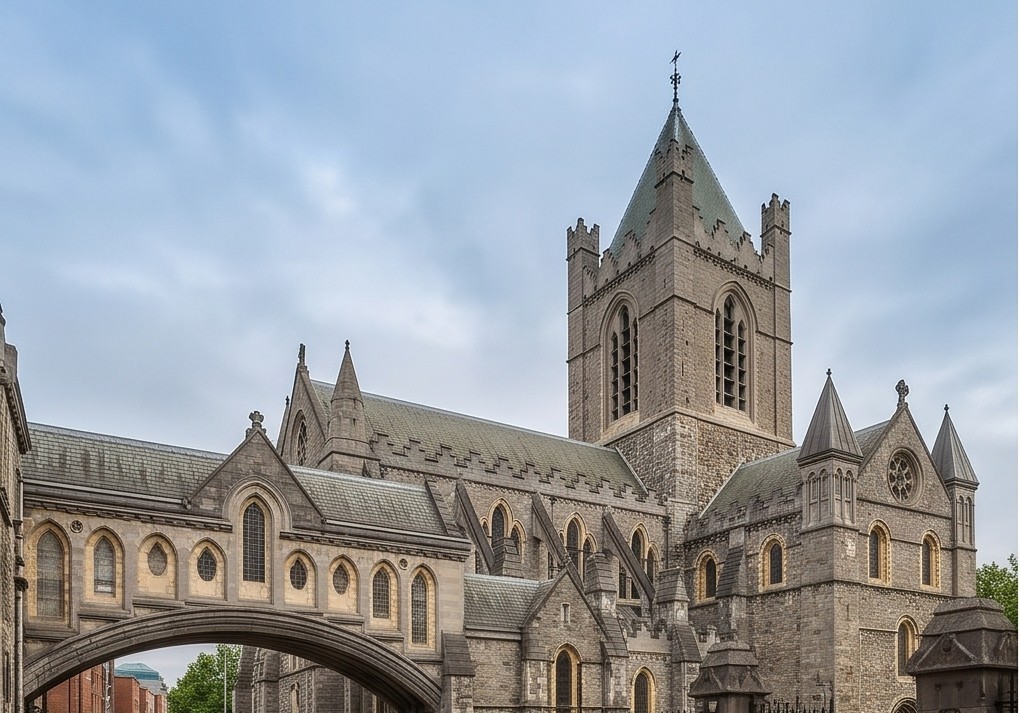
AI-generated image · may differ from the real place Rising majestically above the medieval quarter, Christ Church Cathedral represents the spiritual heart of Dublin. Founded in the eleventh century by Viking King Sitric Silkenbeard, it was rebuilt in stone during the twelfth century under Anglo-Norman warlord Strongbow. When the nave vaulting collapsed in fifteen sixty-two, Strongbow's original monument was smashed and replaced with a contemporary Drogheda tomb. Remarkably, for two centuries after, Dublin merchants and lawyers used Strongbow's tomb as their official venue for signing binding legal agreements. Enter through the main stone portal, walk down the soaring central nave, and inspect the armor-clad effigy along the south wall. Then, descend the stone stairs into the vast subterranean crypt, one of the largest in Britain and Ireland. Look inside the glass display case to spot the famous mummified Cat and the Rat, trapped inside an organ pipe in the eighteen sixties and later immortalized by James Joyce in Finnegans Wake.
Walk southeast down Lord Edward Street onto South Great George's Street and continue ten minutes toward the northern entrance of St. Stephen's Green.
- 1 min · on site
Victorian Sanctuaries and Ceasefire Ducks
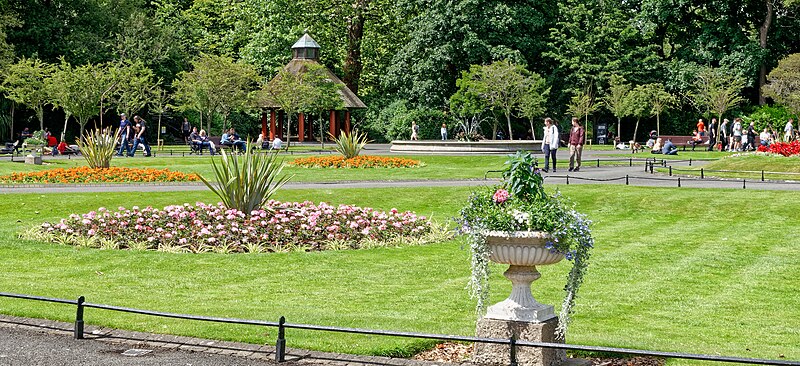
Photo · Wikimedia Commons Passing beneath the triumphant stone archway of Fusiliers' Arch at the top of Grafton Street, you step into the serene sanctuary of St Stephen's Green. Once an exclusive private square, this lush nine-hectare Victorian park was opened to the public in eighteen eighty through the generosity of Lord Ardilaun, heir to the Guinness brewing dynasty. During the Easter Rising of nineteen sixteen, Countess Constance Markievicz and the Irish Citizen Army occupied the park, digging trenches across the lawns. Remarkably, during active combat, daily gunfire was paused every afternoon so the dedicated groundsman could safely feed the resident ducks. Follow the gentle winding path to the main ornamental lake, cross the wooden footbridge, and watch swans glide across the water. Seek out the bronze bust of Countess Markievicz in the central gardens and the monument to James Joyce facing his alma mater at Newman House, letting the peaceful harmony of nature and historical memory surround you.
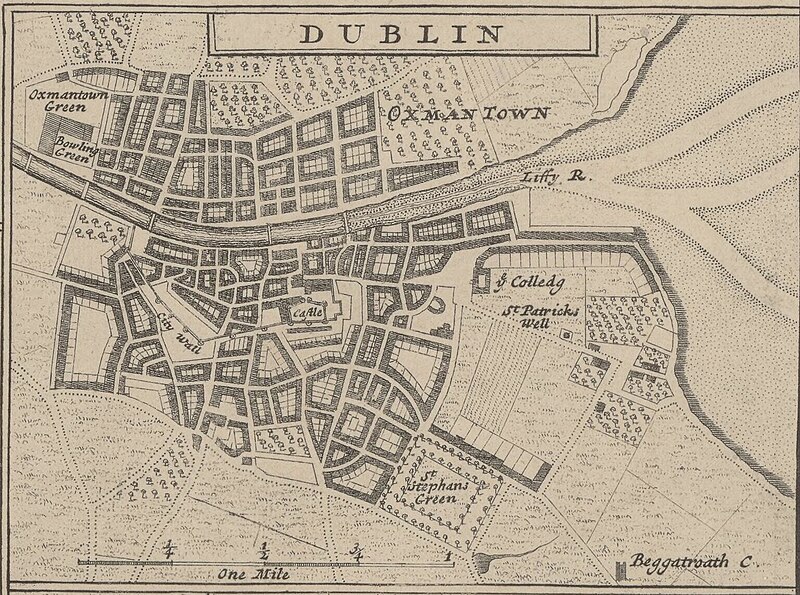

As dusk falls over Dublin and lights flicker on along the River Liffey, the capital's timeless storytelling spirit comes into full bloom. From ancient manuscripts in tranquil university halls to historic bridges and parkways where duck feedings paused national revolutions, Dublin proves that true charm lies in the marriage of grand memory and everyday human warmth. Keep this audio guide close as you explore, and let every cobbled street remind you why this city remains an unforgettable masterpiece.
Take it further
Open the tour in the appThe tour in the app
Central Dublin Historical and Cultural Walking RouteThis walking itinerary guides you through central Dublin from Trinity College Dublin down to Temple Bar, across Ha'penny Bridge to Dublin Castle, onward to Christ Church Cathedral, and finishes at St Stephen's Green. Discover iconic monuments, literary history, and vibrant local atmosphere in under three hours.
+ Add the tour to your planIf you have the app the tour opens right away; otherwise you go to the store.FAQ
- What is the best way to navigate this Dublin landmark walking route?
- The entire route covers roughly three kilometers through central Dublin and is best explored on foot. Wear comfortable walking shoes and carry a light rain jacket as Dublin weather can change quickly.
- How long should I plan to spend completing the entire audio guide walk?
- Allow approximately two to three hours to complete the walking route at a relaxed pace, which includes time to stop for photographs, explore site grounds, and enjoy a coffee break in Temple Bar.