To understand Dublin after dusk is to evaluate a high-end restaurant kitchen operating at peak evening service, where shadow serves as the deep stock and light is applied like a finishing reduction. Most night travelers consume a city visually without contemplating the technical discipline behind the pass. They admire a glowing facade the way an untrained diner marvels at a glistening glaze, unaware of the reduction time, the balance of acidity, or the quiet focus required to keep the flame from scorching the pan. As a culinary critic who has spent decades analyzing how thermal energy transforms raw ingredients, I walk through Dublin light trails looking not for mere brightness, but for architectural structure in the lumens. The night transforms coarse granite into velvet and turns river water into rich consommé, provided the lighting technician understands how to temper their elements with restraint.
Winter in Ireland brings a damp, heavy darkness that demands robust seasoning. A timid floodlight leaves historic architecture pale and unappetizing, while over-calibrated neon produces a garish, burnt bitterness that ruins the palate. What we seek on these light trails is warmth with clarity, the optical equivalent of a perfectly executed reduction sauce. The city becomes a tasting menu served across cobbles and colonnades, where each square and bridge presents a distinct dish of shadow, glow, and stone texture.
The Craft Behind the Glow
Behind every memorable dish stands an obsessive cook whose fingers bear the scars of hot iron, and behind Dublin light trails stand light artists who manipulate optics with equal rigor. Consider how historic stone responds to warmth. Cold ledger stone requires a gentle, low-temperature wash to draw out its mineral grain, just as a tough cut of brisket requires slow braising to yield its deep flavors. When you observe projection mapping across Georgian brickwork or Victorian arches, you are watching a kitchen brigade at work, layering optical marinades over centuries of history.
The human appetite for night illumination is ancient and deeply sensory. We gather around illuminated plazas for the same reason we crowd near an open hearth in a dining room: we crave heat, comfort, and narrative. In Dublin, that narrative is steeped in literary memory and political drama, woven into stone facades that have witnessed rebellions, royal visits, and quiet artistic creation. When light touches these surfaces with precision, it does not hide the structural cracks; it caramelizes them, revealing the rich depth of the city's seasoned character.
A Lingering Aftertaste of Shadow
As you embark on this night promenade, remember that the finest meals are defined not by their size, but by their finish. The lingering memory of a great light trail should rest upon your senses like a deep reduction of dark cocoa and toasted malt. Do not rush from illuminated monument to illuminated monument like a hurried diner swallowing courses without tasting. Pause in the interstitial spaces where the light fades into soft indigo, and allow the cool night air to cleanse your palate between courses. True gastronomy requires patience, and so does the appreciation of a city painted in light. Allow each illuminated facade to settle in your mind before moving to the next dish, reflecting on how shadow and radiance work together in visual harmony. Each passing moment reveals a nuanced layer of urban texture that rewards the mindful observer with lasting culinary delight.
Want to walk it yourself? Plan a trip with these places
The walk
On site, play just that chapter
- 1 min · on site
A Golden Glaze Over Academic Stone
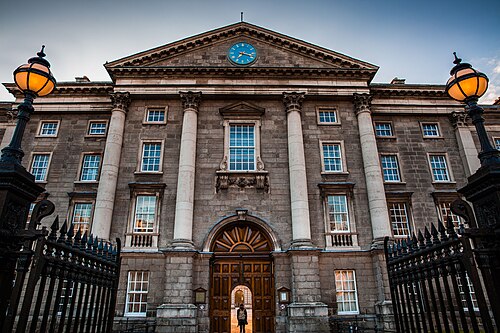
Photo: Stephen Bergin steve_ · CC0 · Original file Stepping through the main archway off College Green, you are greeted by the illuminated front square of Trinity College Dublin, where neoclassical stone facades are coated in a warm, buttery light. The lighting design here functions like a classical reduction sauce, carefully highlighting the Corinthian capitals and the towering Campanile without scorching the delicate detail of the stonework. This sacred ground, founded in 1592 by Queen Elizabeth, nourished literary giants like Oscar Wilde and Samuel Beckett, who walked these very stones as young scholars. As you stand in the courtyard, notice the unusual wooden paving setts underfoot, crafted from dense oak to absorb carriage noise, which create a soft, muted acoustics beneath your boots. Turn your gaze toward the regal portico of the Public Theatre, where amber light washes over the Leinster granite, bringing out the rich mineral grain of Wicklow stone. The effect is grand yet intimate, a perfectly balanced starter for tonight's optical feast.
Leave the peaceful quadrangle behind and walk east down Nassau Street toward the leafy perimeter of Merrion Square Park.
- 1 min · on site
Kaleidoscopic Sorbet in a Georgian Garden
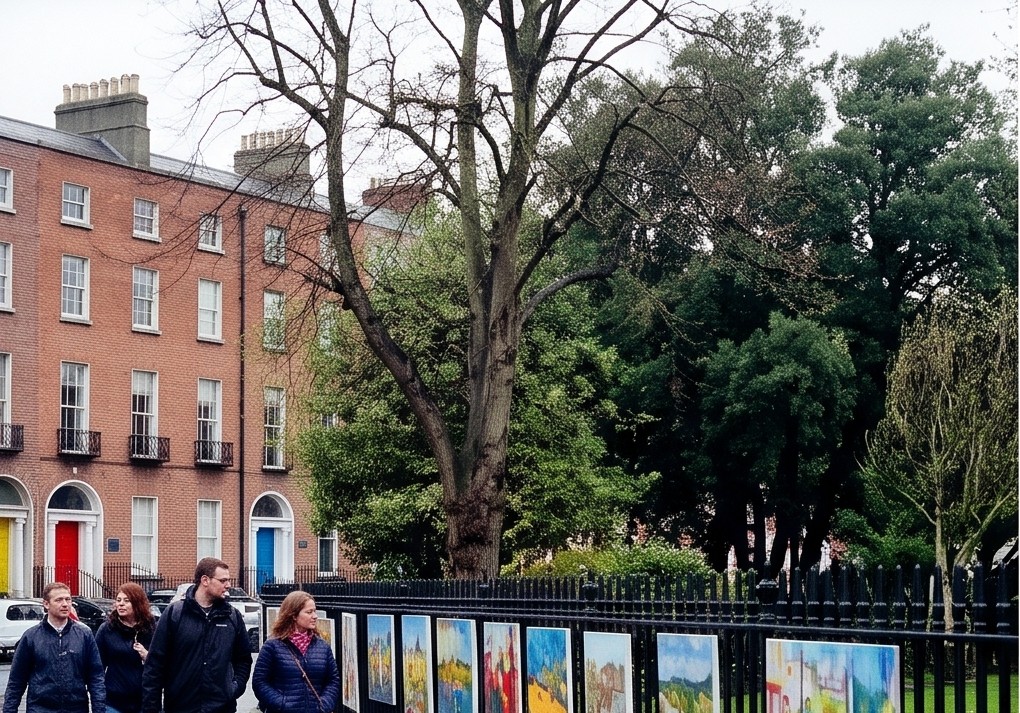
AI-generated image · may differ from the real place Entering Merrion Square Park feels like stepping into a vibrant pastry kitchen where colorful sugar works and giant kaleidoscope installations refract light across the darkness. The Georgian redbrick townhouses encircling the green once housed brilliant minds, including Oscar Wilde at Number 1 and poet William Butler Yeats at Number 82. In 1792, before the River Liffey was fully embanked, a major flood allowed the Duke of Leinster to sail a boat directly from Ringsend to the northeast corner of this square. Today, the park is transformed by luminous snow globes and shifting color spectrums that play across mature tree canopies like candied garnishes. Walk toward the colorful statue of Oscar Wilde reclining on his quartz boulder, where soft green and purple spotlights highlight his famous sardonic grin. Take a moment to breathe in the damp earth and night air, appreciating how the play of geometric light softens the cold winter shadows.
Follow the south side of the square and stroll along Dawson Street toward the northern gates of St Stephen's Green.
- 1 min · on site
Consommé of Reflection on Quiet Waters
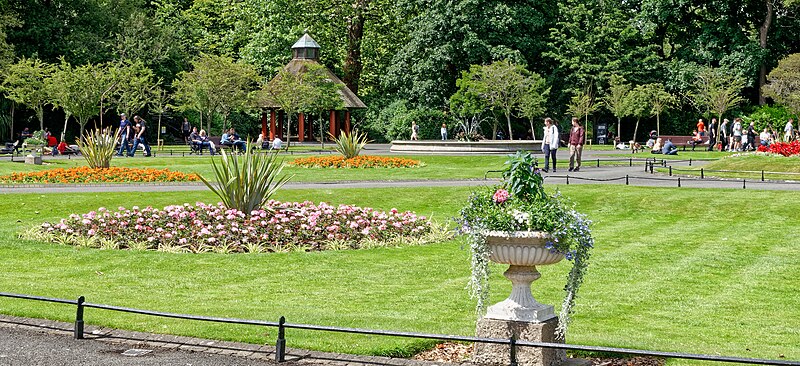
Photo · Wikimedia Commons Step through the Fusiliers' Arch into St Stephen's Green, where festively lit footpaths meander through Dublin's grandest Victorian park. The central lake acts as a dark mirror, catching the golden glow of overhanging trees and artificial waterfalls like shimmering droplets of oil on a rich consommé. In the nineteenth century, Queen Victoria suggested renaming this park Albert Green in memory of her late husband, a proposal fiercely rejected by Dublin Corporation and its citizens. It was ultimately Lord Ardilaun of the Guinness brewing dynasty who funded the magnificent public layout we enjoy tonight. As you walk along the lake path near the ornamental bridge, look for the subtle spotlighting that brings out the gentle ripples on the water where local ducks rest. The atmosphere here is quiet and deeply comforting, offering a soothing palate cleanser after the intense colors of Merrion Square.
Exit through the western gates near Grafton Street and proceed down Dame Street until the historic stone of Dublin Castle comes into view.
- 1 min · on site
Seared History and Crimson Reduction
Photo · Wikimedia Commons Pass beneath the archway into the Upper Courtyard of Dublin Castle, where dramatic floodlighting transforms former fortress walls into a majestic stage. The illuminated facades present a rich visual reduction of Irish history, blending medieval defensive stone with elegant Georgian state rooms. It was here in December 1921 that the castle was ceremonially handed over by British administration to the Provisional Government led by Michael Collins, ending centuries of crown rule. Look up at the ancient Record Tower, the sole surviving medieval structure, where warm amber lights accentuate the thick calp limestone masonry built over the subterranean River Poddle. In Saint Patrick's Hall inside, magnificent ceiling paintings by Vincenzo Valdre have witnessed historic banquets, including the state dinner for Queen Elizabeth II. Stand in the center of the courtyard and observe how the high architectural walls trap the light, creating a warm, secluded bowl of golden radiance amidst the surrounding city night.
Head north down Sycamore Street toward the riverfront to cross the glowing waters of the Liffey.
- 1 min · on site
Tempered Iron Garnish Over the River Liffey
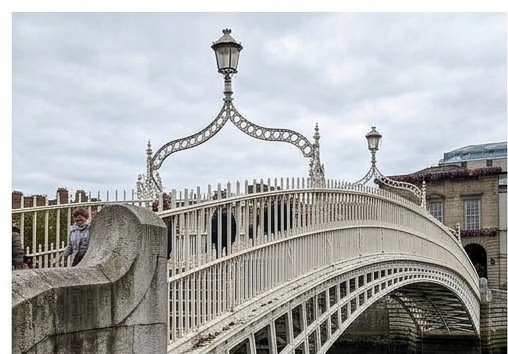
AI-generated image · may differ from the real place Approaching the Ha'penny Bridge, you see its elliptical cast-iron arch leaping across the dark River Liffey like a delicately spun sugar garnish over a dark soup. Erected in May 1816 under Lord Mayor John Claudius Beresford and originally named the Wellington Bridge after the Dublin-born Duke of Wellington, it replaced seven leaky ferries operated by William Walsh. Its cast-iron ribs were cast in eighteen sections in England using Leitrim iron ore, giving the structure an airy yet indestructible grace. Step onto the timber deck and pause mid-span, resting your hands on the white painted iron railing. Look downstream as the city lights ripple across the dark tidal river, creating flickering golden threads that dance upon the black water. The cool breeze off the Liffey carries the fresh briny scent of the sea, providing a sharp, refreshing sensory contrast to the warm stone of the inner city.
Step off the northern foot of the bridge and amble east along Custom House Quay toward the majestic riverfront facade.
- 1 min · on site
The Grand Soufflé of Neoclassical Riverfront
Photo: Dublinprojekt · CC BY-SA 4.0 · Original file Your night journey culminates at The Custom House, James Gandon's 1781 neoclassical masterpiece that rises along the Liffey like a perfectly risen grand soufflé. Revenue Commissioner John Beresford fought fiercely to build this monument, ignoring violent protests by the High Sheriff and a mob of thousands who attempted to sabotage the swampy foundations. Burned during the War of Independence in 1921, its central dome was faithfully restored using darker Ardbraccan limestone, creating a subtle contrast against the original Portland stone facade. Cross to the south bank of the river for the ultimate viewing angle, where powerful floodlights illuminate the carved river coats of arms by Edward Smyth. Notice how the lit dome and statues stand proudly against the dark night sky, reflecting perfectly upon the smooth surface of the river. It is a triumphant closing course, leaving an indelible memory of Dublin's nocturnal mastery.


As the final embers of illumination settle over the Liffey, you are left with the undeniable truth that Dublin by night is a masterpiece of sensory craft. The city does not merely light its monuments; it plates them with history, literary wit, and architectural restraint. Carry this warmth with you into the midnight hours.
Take it further
Open the tour in the appThe tour in the app
Dublin Nocturne Light Trail PromenadeEmbark on an exquisite evening walking trail across six of Dublin's most iconic illuminated landmarks. From the academic quadrangles of Trinity College to the riverbank majesty of The Custom House, experience sensory architecture, rich literary anecdotes, and glowing reflections along the River Liffey.
+ Add the tour to your planIf you have the app the tour opens right away; otherwise you go to the store.FAQ
- What is the best time of evening to experience this light trail?
- Arrive just after dusk when the ambient sky turns deep indigo, allowing the architectural floodlights and projection mapping to achieve maximum contrast against the historic stone.
- Is the walking route accessible on foot for all travelers?
- Yes, the entire trail follows smooth city footpaths, pedestrianized squares, and river quays across central Dublin, taking approximately sixty to ninety minutes at a relaxed promenade pace.