There is a quiet, poetic cadence to Dublin that only reveals itself when you step away from the main thoroughfares and allow the gentle Irish rain to settle on your wool coat. I remember walking along the Grand Canal in the early morning haze of November, where the dark, mirror-like water reflects the graceful silhouette of ancient plane trees and the residential red-brick terraces of Portobello sit in timeless repose. Dublin is fundamentally a city of layered human memories, a sacred place where literature is not merely studied in formal lecture halls but lived along the quiet towpaths, inside subterranean bookstores, and within the hushed galleries of centuries-old libraries. To wander through these hidden quarters with an open and patient heart is to understand that the true character of Dublin does not reside in loud monuments or crowded tourist squares, but in the intimate, unassuming sanctuaries that preserve the human spirit across passing generations.
When you travel through these streets with an eye for subtle details, the city transforms into an intimate, continuous conversation between the past and the present. Every narrow brick alleyway and weathered wooden doorway holds a secret narrative waiting for a thoughtful listener. You begin to notice how the morning light filters through tall stained glass into quiet reading rooms, or how the rich scent of aged paper and freshly roasted coffee lingers in forgotten inner courtyards. It is a walk remembered not by grand monuments, but by small, authentic scenes: the soft echo of footsteps on wet cobblestone, the warm clink of glass in a neighborhood pub where television screens have never been permitted, and the peaceful, unbroken silence of a rooftop garden overlooking slate roofs.
Voices in the Quarter
The cultural history of this city has always been shaped by remarkable, visionary figures who sought refuge or found deep creative inspiration in its quiet nooks. Consider Archbishop Narcissus Marsh, who in seventeen-seven established Ireland's very first public library, entrusting his vast personal collection of rare volumes to the citizens. Alongside him stood Dr. Elias Bouhéreau, a scholarly Huguenot refugee who fled intense religious persecution in France to become the library's first keeper, donating his own prized collection of medical and historical texts to enrich the city's intellectual life. Centuries later, another visionary wanderer left an indelible mark on Dublin's cultural soil. Sir Alfred Chester Beatty, the American mining magnate once known across the globe as the King of Copper, had caught the passion for collecting as a young boy while bidding on mineral specimens at local auctions. At the age of seventy-five, he surprised his international contemporaries by moving his extraordinary treasury of Asian, Islamic, and Western manuscripts to Dublin, eventually bequeathing these priceless artifacts to the people of Ireland.
The Quiet Inheritors
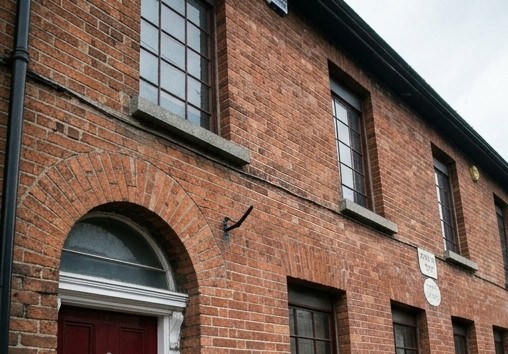
The streets themselves seem to hold an enduring memory of those who passed through them in earlier times. In the quiet residential neighborhood of Portobello, where red-brick terraced houses line peaceful side streets, Chaim Herzog was born into a close community. Decades later, as the President of Israel, he returned in nineteen-eighty-five to open a museum inside a former synagogue on Walworth Road, preserving the vibrant heritage of a community that also helped inspire James Joyce's creation of Leopold Bloom in his masterpiece Ulysses. In Dublin, past and present do not collide; they converse softly together across time. As you walk through these hidden places today, you are not merely a tourist observing from a distance, but a welcomed guest invited directly into a living memory.
Want to walk it yourself? Plan a trip with these places
The walk
On site, play just that chapter
- 1 min · on site
Echoes in Portobello
AI-generated image · may differ from the real place Standing on Walworth Road in the quiet enclave of Portobello, you can feel the calm domestic warmth of a Dublin neighborhood that once thrummed with a vibrant immigrant spirit. Inside two joined nineteenth-century terraced houses, this museum preserves a deeply personal history. As you step inside, notice the meticulously reconstructed nineteen-twenties kitchen on the ground floor, complete with vintage tableware and family photographs that evoke daily domestic life. Upstairs, the original synagogue room remains preserved exactly as it was when local families gathered for prayer. It was here that Irish-born Chaim Herzog, then President of Israel, came in nineteen-eighty-five to inaugurate the museum and honor his roots. This very neighborhood provided the rich cultural backdrop that inspired James Joyce when he fashioned the immortal figure of Leopold Bloom. Look closely at the framed photographs along the entrance hallway, capturing the quiet dignity of a community whose story is woven into the heart of the city.
Leaving this peaceful residential street, walk north toward the quiet canal and follow the path to a hidden Victorian garden.
- 1 min · on site
The Secret Green Sanctuary

Photo: Oliver Gargan · CC BY-SA 4.0 · Original file Tucked behind tall Georgian facades near Harcourt Street, Iveagh Gardens is often called Dublin's secret garden, a tranquil green retreat that feels worlds away from the city bustle. Originally known as Leeson's Fields in the eighteenth century, the grounds were transformed in eighteen-sixty-two when Sir Benjamin Lee Guinness co-founded the Dublin Exhibition Palace and Winter Garden Company to create a permanent recreational park for the public. As you wander along the winding gravel paths, listen for the soothing roar of the cascade waterfall, built with rocks gathered from each county in Ireland. Seek out the sunken lawns and the lush rosarium, where old variety roses bloom in summer quietude. Enter through the discreet gate on Clonmel Street, where the noise of traffic fades instantly into birdsong and rustling leaves. Take a moment to sit on one of the wooden benches near the fountain and observe the subtle Victorian garden layout preserved in timeless harmony.
From this green haven, stroll toward St Stephen's Green and step into a grand Georgian townhouse filled with personal memories.
- 1 min · on site
Stories in a Townhouse
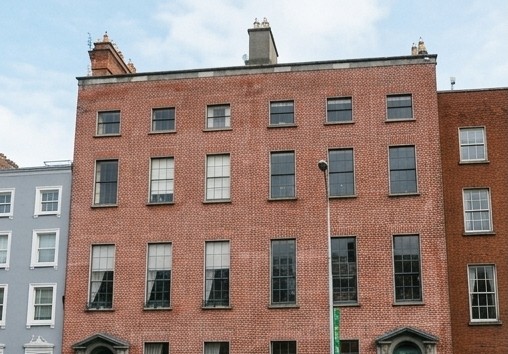
AI-generated image · may differ from the real place Overlooking the tree-lined perimeter of St Stephen's Green, this charming eighteenth-century Georgian townhouse houses a remarkably intimate record of Dublin's modern history. Unlike traditional institutions, the collection here was donated directly by ordinary citizens who wished to share their family treasures and personal mementos with the world. As you ascend the elegant staircase to the second floor, you will find rooms dedicated to pivotal moments, from the nineteen-sixteen Easter Rising to the historic visit of United States President John F. Kennedy in nineteen-sixty-three. There is even a dedicated room celebrating the rise of the legendary rock band U2, filled with rare vinyl, fan memorabilia, and early photographs. Notice the high decorative ceilings and tall sash windows that flood the exhibition spaces with soft natural light. Join one of the passionate local guides whose witty narratives bring these quirky artifacts to life, offering an affectionate and authentic portrait of twentieth-century Dublin.
Walk down Grafton Street and turn onto Wicklow Street, where an understated entrance leads to a subterranean world of print.
- 1 min · on site
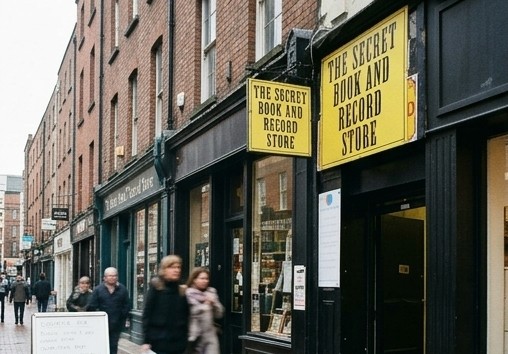
The Secret Book and Record Store
Subterranean Vinyl and Verse
AI-generated image · may differ from the real place In the heart of Dublin's bustling shopping district on Wicklow Street, a narrow and unassuming hallway leads you away from the modern storefronts into a subterranean haven for book lovers and music enthusiasts. Stepping down into this underground sanctuary, you are greeted by the unmistakable aroma of aged paper, vintage cardboard, and pristine vinyl records. Long wooden tables and floor-to-ceiling shelves are packed with secondhand novels, out-of-print poetry collections, classical records, and rare Irish pressings. Take your time browsing the dedicated section of Irish literature near the back of the store, where vintage editions of classic playwrights and poets sit side by side. The atmosphere here is intentionally quiet and unhurried, inviting you to lose track of time while searching through crates of classic jazz and indie records. Look for the handwritten recommendation notes tucked into book covers, written by knowledgeable staff who treat every item as a cherished discovery.
Head north toward the River Liffey and turn into Poolbeg Street, where one of the city's oldest pubs awaits.
- 1 min · on site
A Pint of Pure History
AI-generated image · may differ from the real place Holding one of Dublin's oldest tavern licenses, dating back to seventeen-eighty-two, Mulligan's on Poolbeg Street is a legendary pub where time seems to stand still. Having served generations of journalists from nearby newspaper offices and performers from the historic Theatre Royal, the pub retains an authentic old-world atmosphere entirely free of modern television screens. James Joyce mentioned this very tavern in his celebrated short story Counterparts, and a young John F. Kennedy stopped in for a pint while visiting as a journalist. Look for the vintage theatre posters and black-and-white photographs adorning the dark timber walls. One remarkable tale belongs to an American tourist named Billy Brooks Carr, who loved Mulligan's so deeply that he requested his ashes be placed inside the pub's historic grandfather clock. Order a classic pint at the worn mahogany bar, find a cozy corner in the front room, and savor the warm conversational hum that makes this place an enduring institution.
Cross west toward the historic grounds of Dublin Castle to discover a world-class treasury of rare manuscripts.
- 1 min · on site
The King of Copper's Legacy
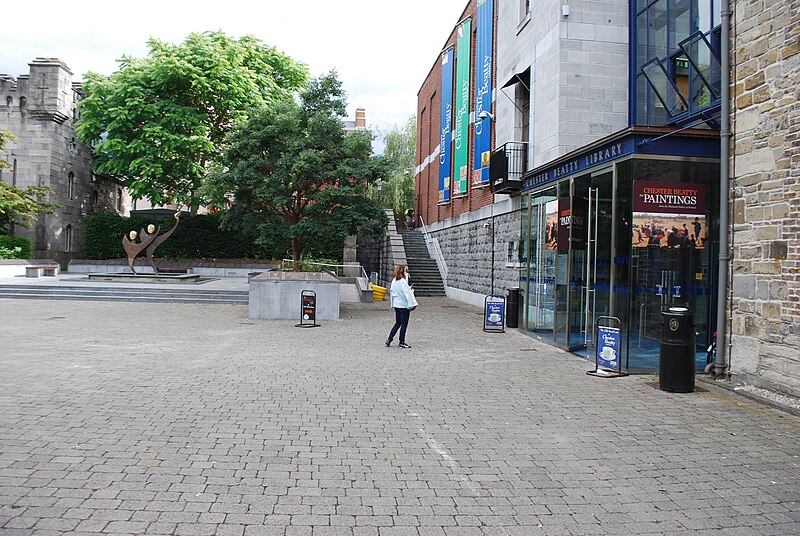
Photo · Wikimedia Commons Tucked peacefully behind the main courtyard of Dublin Castle, Chester Beatty holds one of the world's finest collections of rare manuscripts, illuminated books, and miniature paintings. The museum owes its existence to Sir Alfred Chester Beatty, the American mining magnate known as the King of Copper, who moved to Dublin in nineteen-fifty at the age of seventy-five and bequeathed his extraordinary global collection to the nation. As you explore the Arts of the Book galleries, marvel at intricate Persian illuminations, ancient Egyptian papyri, and delicate East Asian woodblock prints displayed in quiet, dimly lit rooms designed for contemplation. Access the galleries through the serene gardens of Dublin Castle for the most peaceful approach. Before leaving, take the elevator up to the peaceful silk grass rooftop garden, where you can gaze across the castle grounds and reflect on a life dedicated to preserving the beauty of human expression.


As your walk through Dublin comes to an end, the city reveals its final quiet lesson: that true beauty is not found in grand gestures, but in the quiet places where human stories are preserved. Whether sitting in a secluded garden, reading under oak beams, or sharing a warm conversation in an ancient pub, Dublin stays with you long after the footsteps fade.
Take it further
Open the tour in the appThe tour in the app
Dublin's Hidden Sanctuaries: A Memoirist's WalkThis intimate walking tour guides you through Dublin's quietest courtyards, subterranean bookstores, and historic sanctuaries. Starting in the peaceful residential streets of Portobello, you will explore secret gardens, civic museums, legendary literary pubs, and world-class manuscript galleries across the heart of the city.
+ Add the tour to your planIf you have the app the tour opens right away; otherwise you go to the store.FAQ
- What is the best way to experience this walking route?
- Take a slow pace on foot, starting in Portobello in the morning and following the route north toward Dublin Castle, taking time to linger in quiet gardens and reading rooms.
- How long does the entire walk take?
- The route covers roughly three kilometers and can be comfortably enjoyed in two to three hours, leaving ample time to browse books and explore museum galleries.