Winter in Dublin begins with a sudden sharpening of the coastal air, a brisk maritime chill sweeping inland from Dublin Bay that immediately invites structured Donegal tweed, tailored wool overcoats, and enveloping cashmere scarves. As twilight descends by mid-afternoon, the Irish capital transforms into an intimate, cinematic theatre of light and shadow. Rain-slicked granite pavements and ancient cobblestones mirror the amber glow of street lanterns, while pale steam rising from copper tea urns and hot spiced cider catches the frosty northern dusk. To stroll Dublin in December is to partake in a cultivated urban ritual where northern European restraint meets an enduring, stubborn street-level warmth. Here, the festive season is never merely an entry on a commercial calendar; it is intimately registered in the tactile weight of heavy fabric, the rhythmic clatter of wooden market barrows, and the musical cadence of local voices cutting through the winter mist.
There is a distinct sartorial and spatial rhythm to a Dublin winter promenade. Unlike grand continental capitals laid out around vast, ceremonial boulevards and symmetrical plazas, Dublin reveals its festive spirit through intimacy, contrast, and layered architectural character. In this city, true luxury resides in authentic atmosphere, dry conversational wit, and historic patina rather than manufactured festive excess. You move seamlessly between sweeping Georgian thoroughfares and dense medieval passageways, soon discovering that the genuine holiday soul of the metropolis thrives within its historic trading quarters. These vibrant market enclaves are living community stages where generations of Dubliners have gathered, bartered, exchanged dry pleasantries, and celebrated, preserving a resilient civic heart that grounds the city's modern cosmopolitan rhythm.
Echoes of Commerce and Song
Each urban quarter presents its own distinct social texture and historical silhouette. North of the River Liffey, Moore Street preserves the theatrical, unfiltered energy of an open-air trading post. In the nineteen sixties, the artist and urban documenter Flora Mitchell walked this very corridor, writing that although the street faced constant threats of closure, it remained an irreplaceable riot of colour and noise. Mitchell keenly observed the dignity of the market women whose lyrical street calls formed the genuine pulse of Dublin. Across the river to the south, where medieval Augustinian friars once maintained a sanctuary outside the old city walls, seventeenth-century scholar Sir William Temple reclaimed marshland along the riverbank to fashion his private manor and gardens, ultimately bestowing his aristocratic surname upon the bohemian labyrinth of Temple Bar.
That very river precinct resonated with cultural history when George Frideric Handel unveiled the world premiere of his masterpiece Messiah on neighbouring Fishamble Street in April seventeen forty-two, weaving a rich musical legacy into the quarter. Further south, Victorian civic pride erected South City Markets with striking red brick, only to see the entire hall consumed by flames in August eighteen ninety-two. Yet rather than abandoning the site, market directors engaged architect William Henry Byrne, who employed native Dublin stonemasons and ironworkers to rebuild the majestic arcade into a durable temple of everyday elegance.
The Geography of Winter Charm
Today, this festive market crawl gathers these multifaceted historical threads into an effortless winter itinerary. Following this route is an invitation to experience Dublin as stylish locals do: meandering between crisp outdoor fruit stalls, artisan culinary workshops, and velvet-draped vintage rails before slipping into the golden warmth of an independent tavern. The visual tone of the city in December is understated and rich, composed of deep bottle greens, weathered red brick, and honeyed window glow. As woodsmoke and river mist mingle overhead, Dublin delivers a poetic urban sanctuary that lingers in memory long after you step into the velvet dark.
Want to walk it yourself? Plan a trip with these places
The walk
On site, play just that chapter
- 1 min · on site
Banter and Barrows on Moore Street
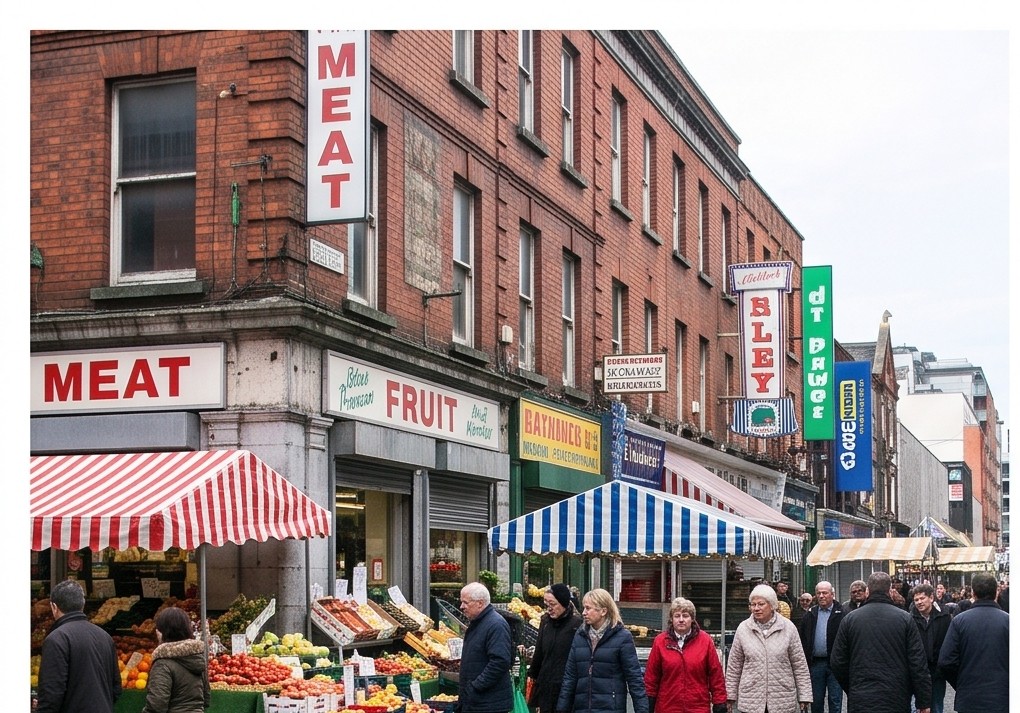
AI-generated image · may differ from the real place Step onto the paving of Moore Street and breathe in the crisp scent of winter citrus, damp timber, and roasting coffee. This is Dublin's oldest outdoor food market, an unapologetic temple of Northside grit and warmth that has anchored Henry Street for generations. Look past the modern storefronts to find the traditional wooden barrows piled high with clementines, winter cabbage, and seasonal blooms. Arrive during the morning hours when the air crackles with the legendary banter of veteran street traders, whose dry humor and sharp wit form the living soundtrack of the street. Artist Flora Mitchell celebrated this bustling thoroughfare as a magnificent riot of color and noise, and that indomitable character still thrives beneath the winter sky. Pause beside the open carts, admire the unpretentious rhythm of local exchanges, and appreciate a corner of the city that resists sterile perfection.
Now turn south toward the River Liffey, crossing the graceful arch of the bridge to enter the illuminated cobblestones of Temple Bar.
- 1 min · on site
Bohemian Strings in Temple Bar
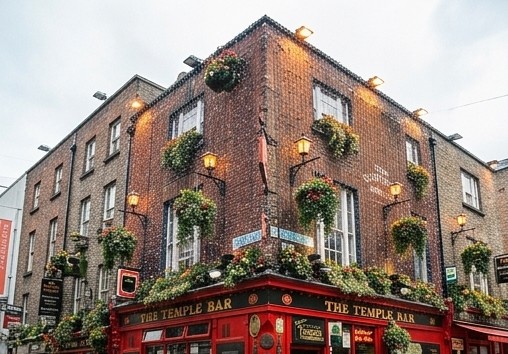
AI-generated image · may differ from the real place Cross into Temple Bar, where centuries of bohemian reinvention meet the celebratory hum of December nights. Originally reclaimed from tidal river mudflats by Sir William Temple in the seventeenth century, these narrow streets evolved from an endangered derelict district into Dublin's cultural and nightlife showcase. Beneath garlands of evergreen boughs and golden fairy lights, acoustic guitar chords and fiddle reels drift through tavern doorways. While the main thoroughfare swells with holiday crowds, true charm awaits in the quiet side alleys. Seek out the intimate, wood-panelled corner pubs tucked away on narrow lanes for a quieter festive drink, where you can sip rich Irish stout beside a glowing fireplace. Notice the weathered brickwork of Meeting House Square and the artistic galleries that still define this quarters creative pulse, offering a comforting respite from the winter chill.
Stroll south away from the river along Dame Street and turn onto South Great George's Street, where the grand red-brick portal of George's Street Arcade welcomes you.
- 1 min · on site
Victorian Velvet at George's Street Arcade

Photo: Tony Webster from Portland, Oregon, United States · CC BY 2.0 · Original file Step beneath the ornate terracotta archway into George's Street Arcade, Dublin's premier Victorian market hall opened in eighteen eighty-one. Following a devastating fire that gutted the original complex in August eighteen ninety-two, architect William Henry Byrne harnessed the skill of native Dublin builders to reconstruct this magnificent iron-ribbed sanctuary. Cast your eyes upward toward the soaring glass roof, where filtered winter daylight illuminates rows of independent traders, antiquarian bookshops, and vintage stalls. Take time to browse both the street level and elevated corners, where you will uncover antique jewellery, pre-loved woolen sweaters, bespoke silver rings, and rare vinyl records. The atmosphere here is deliciously tactile, inviting unhurried tactile discovery while escaping the rain. Take your time wandering between the mahogany cases, savouring the gentle perfume of roasted espresso and aged paper that fills this historic Southside landmark.
Emerge from the arcade into the cool evening air and journey southwest toward the historic Liberties, making your way to Fumbally Lane.
- 1 min · on site
Artisan Tables on Fumbally Lane
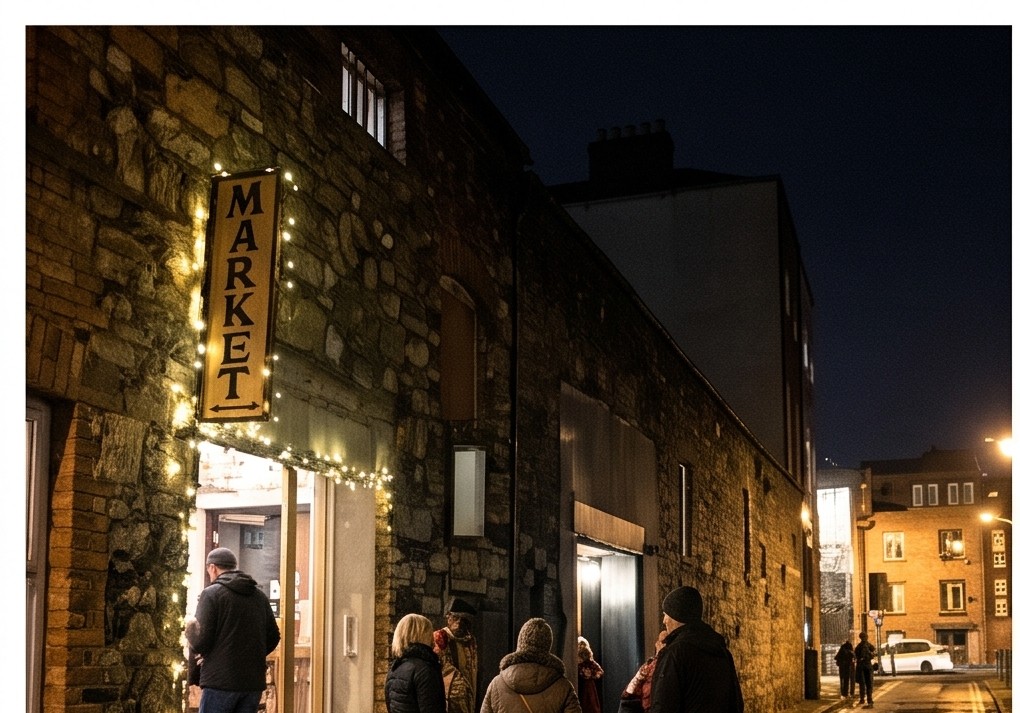
AI-generated image · may differ from the real place Conclude your promenade at The Fumbally Christmas Market, an authentic temple of contemporary Dublin food culture nestled in the historic Liberties. Housed within a communal, rustic warehouse hall, this gathering brings together an inspiring assembly of independent bakers, organic farmers, natural winemakers, and local craftspeople. The room radiates effortless warmth, scented with sourdough bread, mulled spices, and beeswax candles. Arrive with a hearty appetite and share small seasonal brunch plates sourced from multiple artisan makers, from fermented winter preserves and warm roasted vegetables to rich sourdough pastries. Notice how the space champions community and slow living, offering an antidote to rushed holiday commercialism. As acoustic tunes hum quietly in the background and neighbors chat across long wooden tables, you experience Dublin hospitality in its most stylish, soulful, and welcoming guise.

As the night deepens over Dublin, the lights of the market stalls soften into amber halos against the winter mist. In this city of talkers and dreamers, celebration is not a polished spectacle staged for visitors, but an intimate fabric woven from wool, laughter, and centuries of shared life. Wrap your coat close, carry the warmth of these market fires in your chest, and let the quiet poetry of the Dublin dusk escort you home.
Take it further
Open the tour in the appThe tour in the app
A Curated Dublin Winter Market PromenadeThis stylish walking itinerary connects Dublin's premier festive markets across the River Liffey. Journey from the spirited morning trading barrows of Moore Street through Temple Bar's musical side streets, the Victorian vintage halls of George's Street Arcade, and the artisanal culinary community tables of Fumbally Lane.
+ Add the tour to your planIf you have the app the tour opens right away; otherwise you go to the store.FAQ
- What sartorial choices suit a winter market promenade through Dublin?
- Opt for tailored layered wool, a substantial trench or Donegal tweed coat, water-resistant leather walking boots, and a soft cashmere scarf to stay effortlessly elegant against the crisp coastal mist.
- How does Moore Street differ in character from the Southside markets?
- Moore Street embodies the authentic, unvarnished trading wit of old Dublin with open barrows and vocal vendors, whereas the Southside presents Victorian indoor architecture and artisan communal dining.
- What is the best way to enjoy Temple Bar during the festive season?
- Bypass the boisterous main thoroughfare and duck into the intimate wood-lined pubs along quiet side streets to savor live acoustic tunes and rich stout beside a roaring fireplace.
This piece was newly written based on the Wikipedia articles ‘Moore Street’, ‘Temple Bar, Dublin’, ‘George's Street Arcade’ · CC BY-SA 4.0