Morning light across Dublin arrives with the deliberate texture of a northern watercolor, filtering through low maritime cloud and glancing off damp dark calp limestone. If you pause upon the historic bridges of the River Liffey at daybreak, the city presents itself not as an anonymous modern capital, but as an assembled archive of civic and intellectual rituals. The fragrant haze of roasted coffee drifting along the granite quays recalls an enduring historical truth: Dublin has long gathered its collective consciousness over steaming infusions. Long before pressurized brass espresso machines took pride of place upon polished counter tops, eighteenth century Dubliners congregated in wood paneled coffeehouses to decipher foreign gazettes, study parliamentary broadsides, and dispute controversial political tracts. These historic rooms were never merely commercial counters for swift sustenance. They functioned as informal civic parliaments and social equalizers, where aristocratic grandees, merchants, scholars, and impoverished pamphleteers conversed beside a common hearth without distinction of rank or station. To walk these streets today with an observant eye is to recognize how contemporary specialty coffee continues this unbroken lineage of urban contemplation, aesthetic refuge, and egalitarian debate.
Maritime Enterprise and Civic Architecture
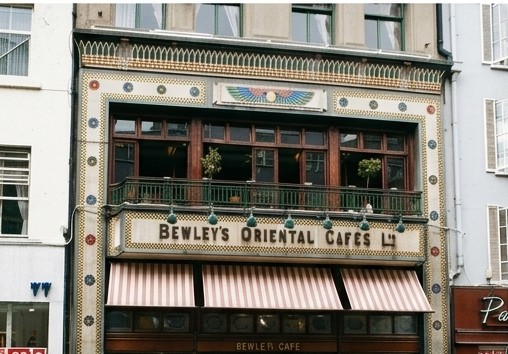
The institutional history of coffee in this island capital is inextricably bound to global shipping enterprise and architectural ambition. In 1835, Samuel Bewley and his son Charles, members of a prominent Quaker merchant family that had settled in Ireland during the seventeenth century, commissioned an audacious maritime venture. They landed two thousand and ninety-nine chests of premium tea shipped directly from Canton in China into Dublin harbor, breaking the restrictive trade monopolies of the imperial era and establishing a commercial foundation that would eventually embrace fine roasted coffee. By the early twentieth century, the family had created grand public drawing rooms across the city center. When Ernest Bewley opened the flagship Grafton Street café in 1927, he deliberately raised it upon the storied grounds of Whyte's Academy, the renowned grammar school where both the Duke of Wellington, victor of Waterloo, and the tragic republican orator Robert Emmet had received their early education. The premises became a civic museum in its own right, adorned with a rare Egyptian Revival mosaic façade and lit by the extraordinary stained-glass architectural orders designed by Harry Clarke, which Ireland's highest courts have protected as irreplaceable architectural fabric of the nation.
The Republic of Letters at the Hearth
Two centuries before Bewley created his temple of glass and mahogany, early Dublin coffeehouses had pioneered a transformative cultural role as the city's first subscription libraries and print centers. Under the rafters of Dick's Coffee House, the enterprising bookseller and publisher Richard Pue operated an active printing press alongside his steaming kettles, churning out broadsides and binding tracts while patrons read newspapers fresh from the ink. The aroma of printer's ink and roasted beans intermingled in a single communal breath, shaping a public sphere long before the advent of modern mass media. Even James Joyce, living as a restless exile on the Adriatic coast in Trieste, chose Viennese coffeehouses as his literary sanctuary, observing how the Austrian Kapuziner coffee was slowly transforming into modern espresso culture. Today, Dublin's finest specialty coffeehouses carry this noble mantle forward. In compact rooms across the Georgian quarters, down cobbled alleys, and along the Grand Canal docks, contemporary baristas balance meticulous extraction science with quiet hospitality. Each room invites you to sit, examine the surrounding artifacts of urban craft, and participate in an ongoing dialogue between Dublin's past and living present.
Want to walk it yourself? Plan a trip with these places
The walk
On site, play just that chapter
- 1 min · on site
Subversive Alchemy North of the Liffey
AI-generated image · may differ from the real place We begin north of the river on Middle Abbey Street, just behind the grand thoroughfare of O'Connell Street. Step into the multi-layered space shared with Wigwam, where Vice Coffee operates as an exacting daytime laboratory. This district once hummed with the noise of nationalist newspaper presses and political debates. Here, coffee is approached not as an automated convenience, but as a craft of precise botanical extraction. Observe the baristas meticulously dialing in regional espresso beans behind the timber counter. The signature creation here is the Fancy Frankie Irish coffee, a refined reimagining of the mid-twentieth century classic, combining artisanal espresso, rich local cream, and aged Irish whiskey with curated balance rather than sugary excess. If your schedule permits, linger into late afternoon to witness the seamless metamorphosis of the venue, as the calm daytime specialty café surrenders its quiet focus to the warm communal hum of a lively neighborhood evening bar.
Now cross the River Liffey southward over the bridge, letting the harbor breeze guide you toward the brick curve of Tara Street.
- 1 min · on site
The Artisan Mezzanine of Tara Street
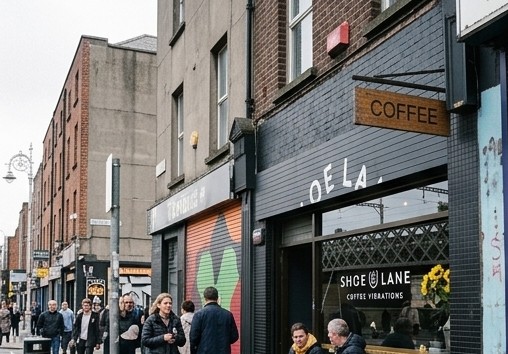
AI-generated image · may differ from the real place At number seven Tara Street, nestled near the historic quayside railway viaduct, Shoe Lane Coffee occupies a site steeped in the memory of Dublin working-class craftsmanship. The name itself recalls the historic shoemakers and tanners who plied their trade through these narrow maritime lanes during the Georgian epoch. Push through the heavy front door to discover a warm interior defined by exposed masonry, rustic timber joists, and gleaming vintage taps. Order their velvety oat flat white alongside a thick, comforting slice of house banana loaf. While the ground floor counter buzzes with commuter greetings and hissing steam wands, ascend the narrow wooden staircase to the upper level. Here you will find a tranquil co-working sanctuary where students and writers sit beside high windows, typing thoughtfully beneath the vaulted ceiling as morning commuter trains rumble softly past on the elevated viaduct outside.
From Tara Street, stroll south past the classical granite walls of Trinity College to enter the grand pedestrian promenade of Grafton Street.
- 1 min · on site
A Secular Temple of Glass and Mosaic
AI-generated image · may differ from the real place Stand before numbers seventy-eight and seventy-nine Grafton Street, where Ernest Bewley opened this flagship sanctuary in 1927. Look closely at the exterior façade, adorned with rare Egyptian Revival mosaics that reflect the archaeological fervor of the nineteen twenties. This very ground previously accommodated Whyte's Academy, the venerable eighteenth-century grammar school where both the Duke of Wellington and patriot orator Robert Emmet once studied. Walk past the mahogany displays to the rear ground floor salon. There, six magnificent stained-glass windows by master artist Harry Clarke capture the classic architectural orders in glowing sapphire, emerald, and gold. Reserve your table ahead, especially during weekend afternoons, and order the celebrated Bewley afternoon tea accompanied by warm buttermilk scones served with clotted cream and jam. Surrounded by crackling open fireplaces and heritage plasterwork, one experiences the sacred continuity of Dublin civic society.
Leave Grafton Street by turning west into the Creative Quarter, where narrow paved streets lead directly to Drury Street.
- 1 min · on site
The Sculpted Palm of the Creative Quarter
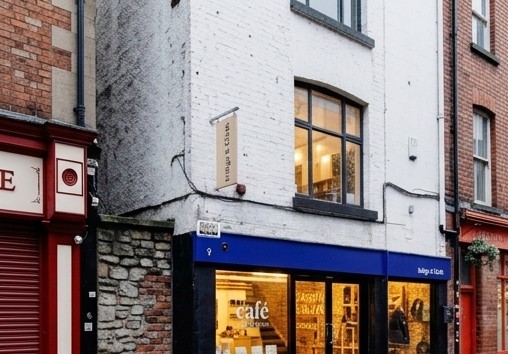
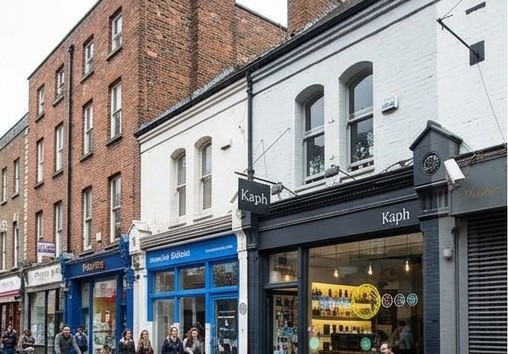
AI-generated image · may differ from the real place At thirty-one Drury Street, Kaph presents a masterclass in modern European minimalism, perfectly integrated into the red-brick fabric of Dublin's design district. The name itself derives from the ancient Semitic letter symbolizing an open palm, reflecting the primal human gesture of receiving and sharing nourishment. The interior is stripped of superfluous ornament, showcasing pale raw timber, poured concrete countertops, and crisp directional lighting. Step up to the counter and request their textbook flat white, paired with a flaky, fragrant almond croissant dusted with toasted nuts. If the Dublin skies show favor, secure one of the narrow wooden benches outside along Drury Street. From this commanding street-level vantage, you can observe passing antique dealers, fashion curators, and neighborhood dogs, immersed in the quiet rhythm of an urban quarter that has reinvented itself through thoughtful modern aesthetics.
Walk southward toward the green perimeter of Saint Stephen's Green, following the tree line toward the foot of Leeson Street Lower.
- 1 min · on site
Domestic Intimacy on a Leeson Street Corner
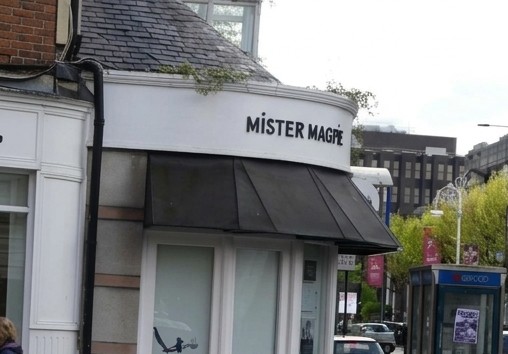
AI-generated image · may differ from the real place Occupying an enviable corner at one A Leeson Street Lower, Mister Magpie represents the warm domestic soul of Dublin neighborhood coffee. Housed within a handsome Georgian junction just steps from the quiet waters of the Grand Canal, this jewel-box café feels like an enlightened collector's private breakfast parlor. The morning light streams abundantly through wide sash windows, illuminating mismatched ceramics, hand-lettered menu boards, and small jars of fresh flora. Order a smooth cappuccino alongside their signature nduja eggs, a comforting dish that layers spicy Calabrian pork with velvety poached eggs on crusty sourdough toast. On a clear morning, take a stool at the outdoor corner seating. Looking out over the junction, you can trace the grand axes of Georgian townhouses and watch canal swans glide under stone bridges, savoring the unhurried elegance that has defined Dublin residential life for centuries.
Follow the historic path of the Grand Canal eastward until the brick warehouses give way to Grand Canal Street Lower.
- 1 min · on site
The Precision Roastery of the Silicon Basin
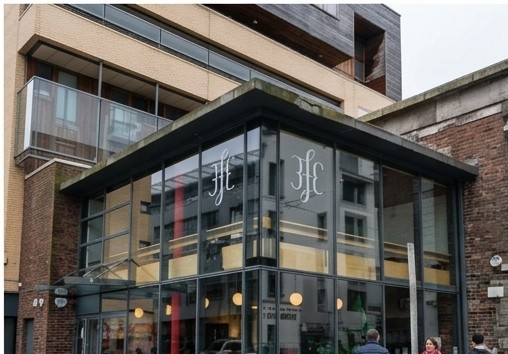
AI-generated image · may differ from the real place Our walking journey concludes at thirty-two to thirty-four Grand Canal Street Lower, the definitive epicenter of Ireland's modern coffee renaissance. Originally established on a modest third-floor apartment landing by barista champion Colin Harmon, 3fe Coffee transformed Dublin from an espresso backwater into a globally celebrated coffee destination. The space reflects an uncompromising industrial beauty, featuring exposed structural steel, whitewashed brick, and dedicated cupping tables that treat coffee sourcing with the analytical rigour of a natural history museum. Arrive early on weekends to comfortably bypass the eager brunch queue, and order their benchmark flat white paired with the indulgent fried chicken and hot sauce pancakes. As you taste the interplay of crisp savory poultry and delicate sweet batter against the bright citrus notes of the roast, you appreciate how Dublin coffee has achieved international renown.
As you conclude this journey along the canals and quays of Dublin, reflect upon how each cup of coffee serves as a living archive. The city does not merely drink its beverage; it inhabits the spaces where history was argued, where stained glass was defended in courtrooms, and where maritime trade was turned into communal art. In Dublin, the simple act of sitting with a steaming cup remains our most eloquent tribute to human conversation and enduring urban culture.
Take it further
Open the tour in the appThe tour in the app
A Dublin Coffee Connoisseur's PromenadeThis curated architectural walking tour explores the living heritage of Dublin coffee culture, guiding travelers from Middle Abbey Street across the River Liffey to Grafton Street, Drury Street, Leeson Street, and the vibrant Grand Canal docks across six distinguished historical and contemporary establishments.
+ Add the tour to your planIf you have the app the tour opens right away; otherwise you go to the store.FAQ
- Why does Bewley's Grafton Street feature Egyptian Revival architecture and Harry Clarke glass?
- Built in 1927 by Ernest Bewley and designed by Millar and Symes, the building reflects the roaring twenties enthusiasm for Egyptian Revival styles following the discovery of Tutankhamun's tomb. Harry Clarke was commissioned to create stained-glass windows representing architectural orders, creating a civic museum atmosphere.
- How did eighteenth-century Dublin coffeehouses shape modern Irish print culture?
- Eighteenth-century coffeehouses like Dick's Coffee House integrated printing presses, newspaper publishing, and circulating libraries under one roof, providing citizens access to political debates and news while sipping their infusions.
- What makes Dublin's contemporary coffee scene unique in Europe?
- Contemporary Dublin specialty coffee combines cutting-edge roasting and extraction science pioneered by Irish champions with a profound respect for historic Georgian architecture, community storytelling, and literary hospitality.