To understand Athens, you must approach it not as an inert museum of cold, polished stones, but as an ancient, sun scorched kitchen that has been simmering for three millennia. Here, marble is never merely dead geological mineral. It is an exquisite raw ingredient that has been sliced, charred, cured, and seasoned by the sharp Aegean salt winds, violent Mediterranean sun, and the ceaseless hunger of human ambition. Early in the morning, before the tourist hordes ascend the rock, the exposed limestone of the citadel has the delicate, ivory luminescence of fresh sheep curd resting in brine. By midday, that same stone bakes into a blinding, desiccated crust that radiates stored heat straight through the soles of your shoes. Every empire that swept through this basin left its greasy thumbprints on the rim of the pot, tossing in foreign spices, stripping away the finest cuts, or reducing the masterworks of antiquity to basic lime for the city walls.
The Tyrant Kitchen and the White Elephant
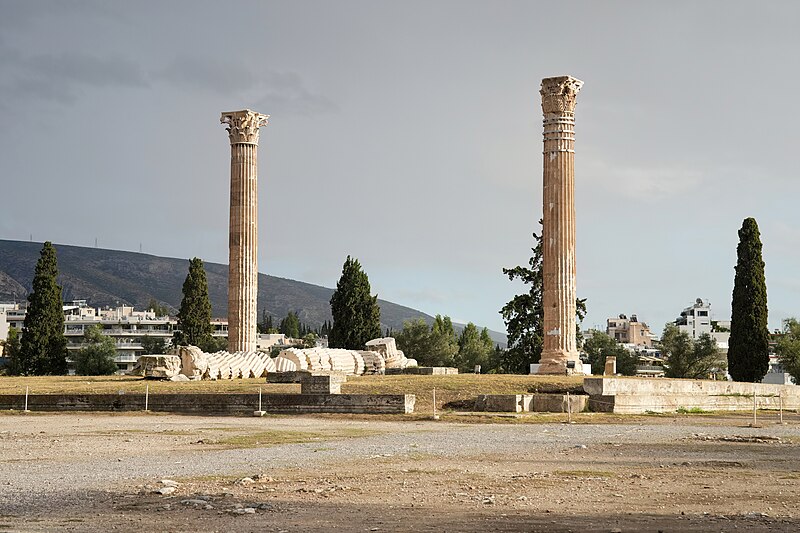
In food criticism, one quickly learns that an overly lavish banquet is rarely about flavor; it is about the sheer, vulgar display of leverage over the kitchen staff. Architectural monuments operate under the identical culinary pathology. Consider the gargantuan Temple of Olympian Zeus looming on the southern plain. When the tyrant Peisistratus and his sons Hippias and Hipparchos broke ground on the sanctuary in the sixth century before our era, they were not trying to nourish the Athenian soul. In his Politics, Aristotle dissected their motive with surgical clarity. The philosopher noted that tyrannies deliberately drown their subjects in monumental state work, treating architecture as an exhausting white elephant designed to deplete the energy, time, and spare wealth of the populace so they possess neither the leisure nor the stomach for rebellion. For more than three centuries after the tyrants fell, the Athenians refused to touch the unfinished feast, leaving its Doric drums scattered in the weeds like discarded soup bones.
Grain, Honey, and the Ashes of Empire
It takes an imperial glutton to revive a banquet that choked its original guests. Seven hundred years later, the Roman Emperor Hadrian arrived in Athens with the obsessive appetite of a royal connoisseur. He completed the colossal Olympieion with one hundred and four Corinthian columns of sweet Pentelic marble, and erected his lavish library complex nearby, paneled in alabaster, gilded cedar, and verdant Karystian stone. Yet the truest measure of this landscape was recorded by the traveler Pausanias in the second century. Walking through the gilded court of Zeus, he noted that beside the towering colossi of gold and ivory stood a cleft in the bedrock where the waters of Deukalion prehistoric flood had supposedly drained away. Into that dark fissure, the citizens annually threw an offering of ground wheat meal mixed with wild honey.
That contrast cuts straight to the bone. Dynasties rise and fall, conquerors like Sulla cart away unfinished fluted columns to adorn Jupiter temple in Rome, and Ottoman governors like Mustapha Agha Tzistarakis blow apart ancient pillars with gunpowder simply to bake marble into mortar for their mosques. What outlasts both the tyrant audacity and the conqueror cannon is that raw, fundamental communion between the soil and the palate. As you walk these ancient paths, keep your senses tuned not to the hollow echo of political grandeur, but to the stubborn textures of the stone, the bitter sting of thyme clinging to the crevices, and the honest, unvarnished flavor of survival.
Want to walk it yourself? Plan a trip with these places
The walk
On site, play just that chapter
- 1 min · on site
The Filleted Marble of the High Citadel
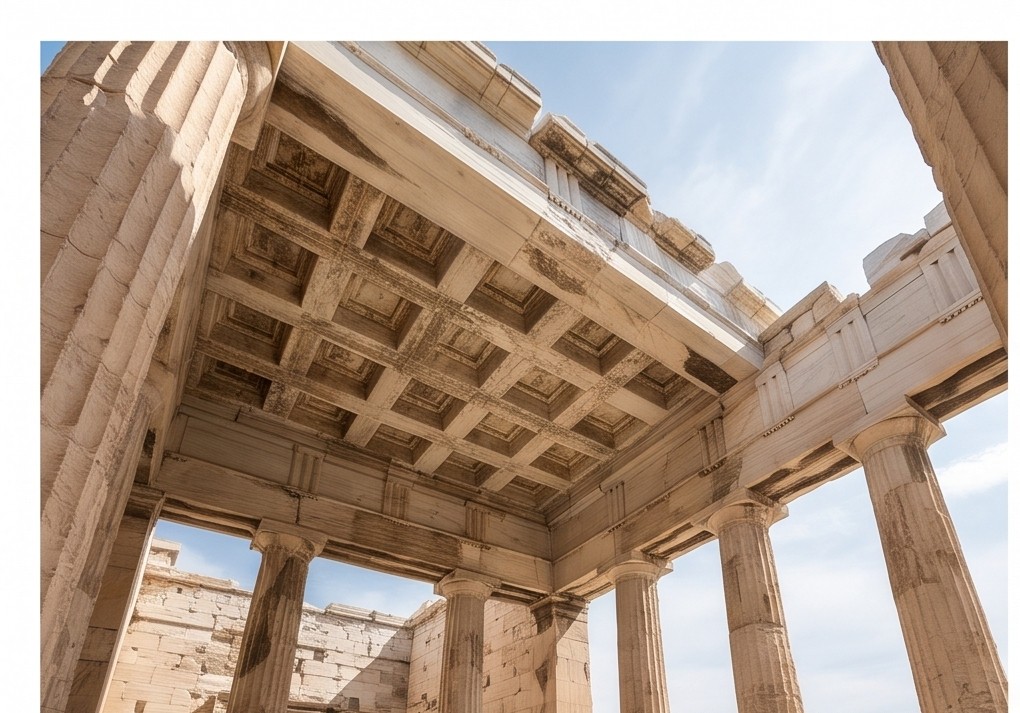
AI-generated image · may differ from the real place Step onto the bare limestone of the citadel in the cool stillness of early morning, long before the sun baking turns this sacred crag into an unbearable oven. As you clear the monumental Propylaea, look toward the Parthenon. To the untrained eye it is a temple of cold symmetry, but observe the fluting of the Pentelic marble columns. The ancient stonecutters filleted these massive drums with the exact precision of a master chef trimming bluefin tuna, introducing minute curves to correct optical distortion. It was this impeccable technique that led an unknown Roman poet in the second century to christen this rock the Greece of Greece. Take in the panoramic views stretching toward the sea, where salt air mingles with dry mountain thyme. Every sacred vessel and ceramic cup excavated here was meant to nourish Athena Parthenos, yet what remains is the sheer discipline of stone worked to utter perfection.
Now follow the ancient path down the southern slope toward the shaded perimeter of Leoforos Vasilissis Olgas, where the towering remnants of Zeus sanctuary command the open plain.
- 1 min · on site
The Sliced Loaf and the White Elephant
Photo · Wikimedia Commons Approach the sanctuary perimeter beside the ancient arch of Hadrian, where the colossal Olympieion reveals the sheer hubris of imperial appetite. Begun by the tyrant Hippias in 520 BC and completed by Hadrian six centuries later, this was the ultimate white elephant of antiquity, designed as Aristotle observed to break the civic spirit under crushing labor. Stand beneath the fifteen towering Corinthian columns still reaching into the blue, then look down at the sixteenth column, brought down by an 1852 tempest. It lies on the dry earth severed into neat, disc-like drums, resembling a loaf of artisanal sourdough sliced clean across its crust. Across these grassy ruins, you can almost smell the sweet honey and ground wheat meal that Pausanias saw cast into the bedrock fissure, a quiet domestic offering that outlasted the vanity of tyrants.
Stroll northward through the tangled lanes of Plaka toward the bustling stalls of Monastiraki Square, where Emperor Hadrian nestled his magnificent sanctuary of intellect.
- 1 min · on site
The Papyrus Cellar and the Pistachio Stone
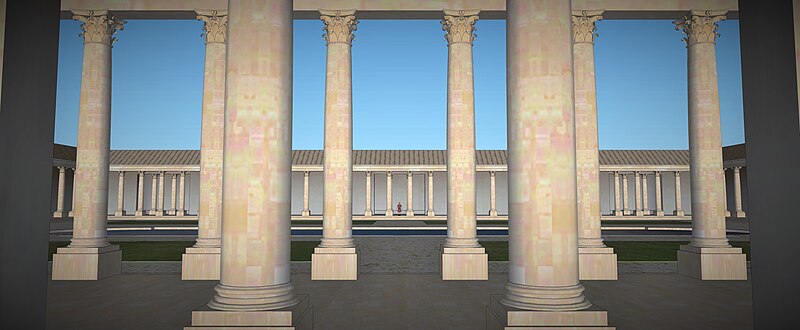
Photo · Wikimedia Commons Just a short walk from Monastiraki Square, step off the busy pavement into the courtyard ruins of Hadrian imperial retreat. Pause before the western facade to admire the Corinthian colonnade, noting how the mottled green Karystian marble contrasts with the creamy Pentelic capitals like aged pistachio butter against whipped sheep milk. Hadrian designed this Roman forum in 132 AD not for gladiatorial spectacles, but as a sanctuary for the mind. Where you now see dry foundations once lay a shimmering oblong pool, flanked by reading halls lined with fragrant papyrus scrolls beneath gilded wood ceilings. Even after the Heruli torched the complex in 267 and medieval builders stacked Byzantine basilicas over the courtyard, the architectural recipe held firm. Notice the excavated plinth of the colossal winged Nike, standing as quiet proof that intellectual hunger will always outlive the fires of siege.
When you finish this tasting menu of ancient stone, let the lingering aftertaste settle on your palate. Athens does not offer easy sweetness. Its architectural feast was seasoned by tyrannical pride, imperial extravagance, and violent ruin. Yet beneath the ruined pediments and scorched architraves sits an enduring truth: empires can demand impossible banquets, but it is the anonymous artisans, the patient stonemasons, and the enduring rituals of earth and grain that feed the memory of humanity.
Take it further
Open the tour in the appThe tour in the app
A Connoisseur Walking Degustation of Ancient StoneBegin at sunrise atop the exposed rock of the Acropolis to savor the Parthenon before the heat bakes the marble. Descend south to the towering Corinthian columns of the Olympieion, then conclude through Plaka at the reflective courtyard of Hadrian Library in Monastiraki.
+ Add the tour to your planIf you have the app the tour opens right away; otherwise you go to the store.FAQ
- Why is early morning the ideal time to explore the Athenian Acropolis?
- Ascending the citadel at dawn allows you to experience the subtle luminescence of the Pentelic marble and observe fine stone carving before intense solar heat radiates from the exposed rock and large midday crowds gather.
- How did the Temple of Olympian Zeus transition from Doric limestone to Corinthian marble?
- Started under sixth century BC tyrants using local limestone, the construction was abandoned during the democratic era until Antiochus IV and later Emperor Hadrian brought in Pentelic marble and magnificent Corinthian capitals to complete the hundred and four colossal columns.
- What makes the combination of materials at Hadrian Library architecturally distinctive?
- Hadrian imported distinctive green marble from Karystos for the Stoa colonnade and crowned them with Pentelic marble capitals, framing a tranquil inner courtyard designed for intellectual reflection rather than imperial spectacle.
This piece was newly written based on the Wikipedia articles ‘Temple of Olympian Zeus, Athens’ · CC BY-SA 4.0