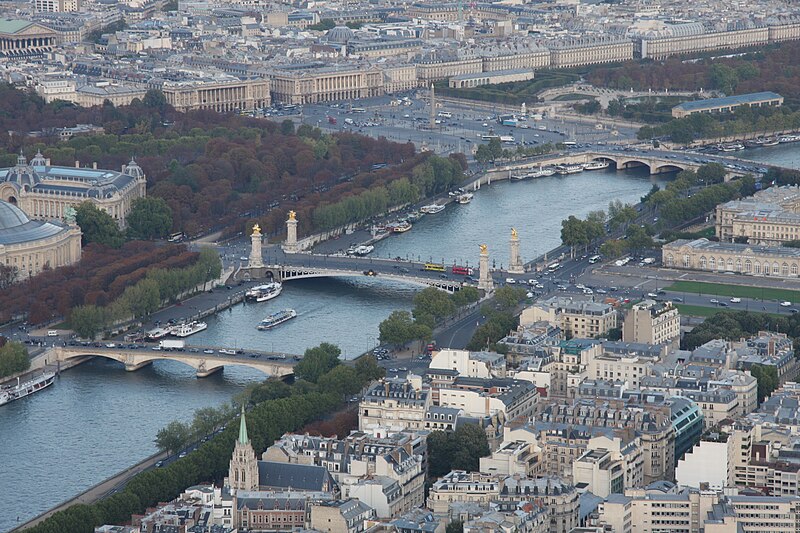
Morning in Paris begins with an exacting precision of gesture. A zinc counter wiped clean with a crisp linen cloth. The pale grey whisper of limestone facades shaking off the dawn mist. Steam rising from a small porcelain cup of dark roasted coffee. For the casual traveler, the French capital is a stage of broad boulevards and monumental perspectives, grand vistas engineered under Napoleon the Third to impress the eye from a flattering distance. Yet those who truly understand elegance know that real luxury never shouts. It lingers in the quiet courtyard behind a heavy carriage door. It waits in the shaded arcades where the city keeps its private thoughts.
Style in this capital is not an accident of geography. It is a practiced discipline of concealment and revelation. The quintessential Parisian silhouette is defined not by extravagance, but by restraint, by the artful fold of a trench coat collar, the nonchalant cadence of an evening walk, the deliberate avoidance of the obvious. The real Paris lives precisely where the grand neoclassical axes surrender to narrower turns. When you step off the crowded tourist avenues, you enter an intimate labyrinth preserved by generations of artists, monarchs, and recluses who understood that secrets are the true currency of glamour.
The Geometry of Concealment
Consider how the great masters orchestrated their private corners. When Claude Monet prepared to gift his vast Water Lilies murals to the French state after the Great War, he flatly refused the institutional halls of conventional salons. Supported by Council President Georges Clemenceau, Monet insisted on housing the giant canvases in the quiet brick shell of an old citrus greenhouse at the edge of the Tuileries. He helped design two seamless oval rooms shaped as an infinity symbol, illuminated solely by daylight descending through curved skylights. It was not merely a gallery, but an immersive sanctuary where time dissolves into shifting aquatic reflections.
Across the river and through the classical colonnades of the Palais-Royal, another ritual unfolded each morning between two enduring arbiters of French letters. Colette, observing the world from her first-floor window along Rue de Beaujolais, would cross the linden-lined gravel alleys to meet Jean Cocteau, who emerged from his quiet quarters on Rue de Montpensier. They would sit together over breakfast at Le Grand Véfour, trading gossip and sharp metaphors beneath gilded mirrors while the rest of the capital rushed past their secluded sanctuary. Long before them, King Louis IX walked barefoot into the city dressed as a humble penitent, carrying the Crown of Thorns he had acquired from Constantinople to enshrine it within Sainte-Chapelle, transforming stone into a luminous jewel box of violet glass. Even the quiet waters of Canal Saint-Martin trace their origin to Napoleon, who financed its construction through a levy on wine to refresh the thirsty capital.
The Habit of Grace
To wander these hidden coordinates is to adopt an entirely different rhythm of perception. You do not tour these sanctuaries as a detached spectator. You inhabit them as a confidant. You learn to listen to the soft murmur of water passing through historic iron locks, to watch the morning light cut through Gothic stained glass, and to trace the raw vitality of contemporary murals climbing the sunlit heights of eastern hills. What remains after the boulevard fanfare fades is an enduring impression of quiet grace, a private Paris tailored to the curious traveler who knows that the most memorable beauty is always discovered in the shadows.
Want to walk it yourself? Plan a trip with these places
The walk
On site, play just that chapter
- 1 min · on site
The Geometry of Serenity
Photo · Wikimedia Commons Step across the gravel terraces at the southwestern corner of the Tuileries Garden. The Orangerie presents itself with modest neoclassical restraint, masking the monumental contemplation within. Once inside, bypass the central corridors and proceed directly into the twin elliptical chambers. Stand precisely in the center of the first oval room. Above, natural light filters through the curved ceiling scrims, exactly as Claude Monet demanded when he designed this sanctuary alongside Camille Lefèvre. The eight colossal Water Lilies murals curve along the perimeter in an unbroken horizon, dissolving the boundary between water, air, and paint. After absorbing this quiet infinity, slip downstairs to discover the exquisite private rooms housing the Walter-Guillaume collection, where canvases by Modigliani and Cézanne rest in quiet luxury. Notice how the silence here feels tailored, like a bespoke garment worn only in private.
Slip out into the crisp Tuileries air and follow the gravel alleys eastward across Rue de Rivoli toward the quiet archways of Rue de Montpensier.
- 1 min · on site
Stripes and Literary Shadows
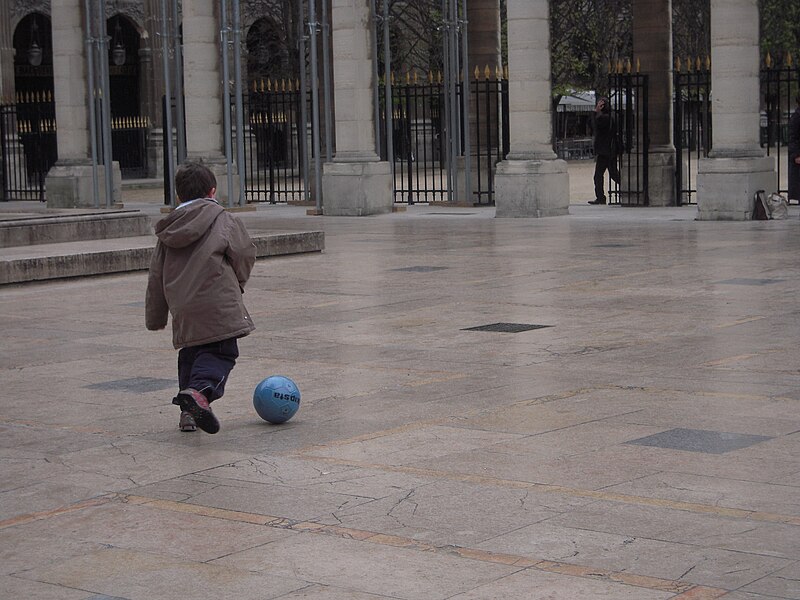
Photo · Wikimedia Commons Enter through the discreet gateway on Rue de Montpensier, which offers the most refined threshold into the palace grounds. Ahead, Daniel Buren's striped monochrome columns rise from the Cour d'Honneur like an outdoor gallery of architectural couture. Stride across the stone platforms toward the central garden, where double colonnades of trimmed linden trees flank gravel paths of absolute symmetry. Find a dark green metal chair near the central fountain. Look up toward the first-floor balconies of the northern arcade, where Colette once lived and penned her sharp observations, while Jean Cocteau strolled from his opposite lodgings on Rue de Montpensier to share breakfast under the gilded ceilings of Le Grand Véfour. The colonnaded arcades still house private antique dealers and perfumers who cater to discerning connoisseurs. The atmosphere here is timeless, composed, and effortlessly chic, capturing the very essence of Parisian flânerie.
Depart through the quiet southern colonnade and stroll across the stone arches of Pont Neuf to reach the ancient heart of Île de la Cité.
- 1 min · on site
The Glass Jewel Box
Photo: Didier B ( Sam67fr ) · CC BY-SA 2.5 · Original file Pass through the gates of the ancient Palace of Justice on Île de la Cité on a crisp, sunny morning. Step inside the compact lower chapel, with its low vaulted ceilings painted in medieval fleurs-de-lys and Castilian castles. Then ascend the narrow spiral staircase of worn medieval stone. When you reach the upper sanctuary, the physical world simply falls away. There are virtually no masonry walls here, only slender cluster columns holding fifteen soaring lancet windows of thirteenth-century stained glass. Crimson and deep cobalt light floods the interior like crushed sapphires and rubies suspended in midair. This was King Louis IX's grand reliquary, erected to enshrine the Crown of Thorns. Gaze upward at the intricate flamboyant rose window on the western facade, where golden sunlight transforms history into pure transcendent atmosphere. It is the pinnacle of Rayonnant Gothic design, dazzling in its structural weightlessness.
Step out into the daylight, cross the Seine back to the Right Bank, and walk northeast through Temple toward the tranquil waters of Quai de Valmy.
- 1 min · on site
Industrial Romance and Woven Waters

Photo: GFreihalter · CC BY-SA 3.0 · Original file Arrive at Quai de Valmy, where the shaded canal cuts a cool ribbon of water through the bohemian heart of eastern Paris. Walk north from Place de la République toward La Villette, where the banks become quieter and delightfully atmospheric. Pause upon one of the elegant arched iron footbridges that span the water. Watch the double staircase locks churn as heavy canal boats rise and fall, an engineering spectacle commissioned by Napoleon and financed by historical wine taxes. Along the stone quays, fashionable locals gather with crusty baguettes and chilled bottles of natural wine. Look across the green water toward the historic facade of Hotel du Nord, celebrated in classic French cinema. The neighborhood exudes an effortless charm, where industrial heritage meets contemporary café culture in perfect harmony. It is an unhurried corner of the capital where everyday life feels elevated to cinema.
Turn away from the water and follow the gentle eastward slope of Rue du Faubourg du Temple into the spirited crossroads of Boulevard de Belleville.
- 1 min · on site
Rebel Strokes and Highland Panoramas
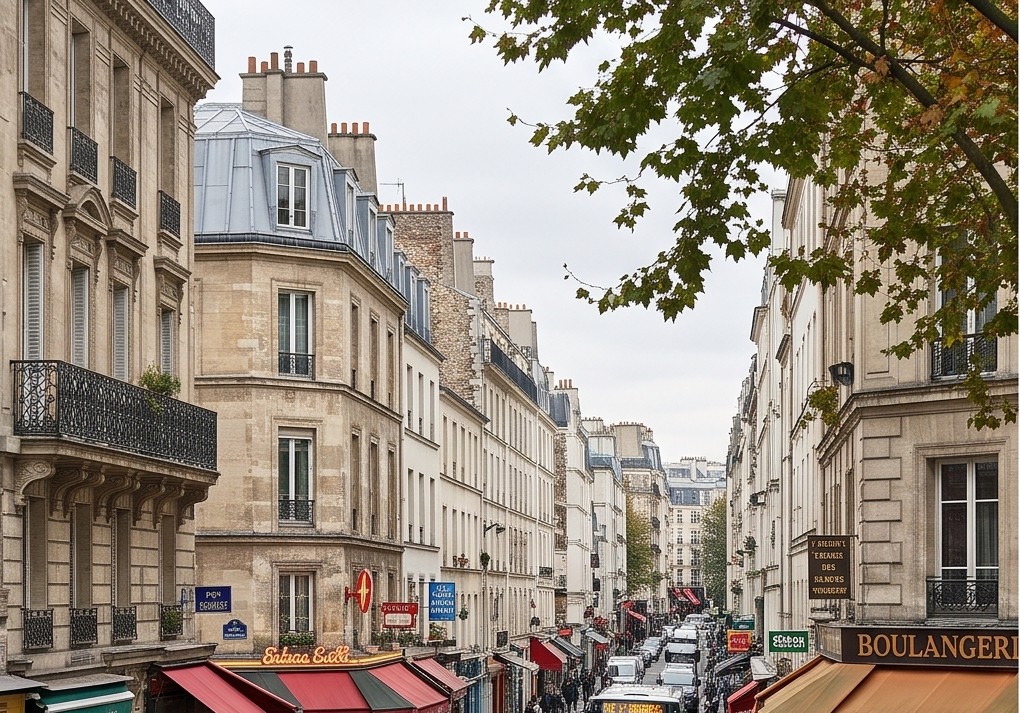
AI-generated image · may differ from the real place Step into the vibrant pulse of Boulevard de Belleville, a storied hillside enclave that preserves the rebellious soul of historic Paris. Turn off the main boulevard and wander uphill along Rue Denoyez, an open-air gallery where every doorway, shutter, and lamppost is covered in vivid, ever-changing graffiti murals. Take time to inspect the intricate stencil portraits and expressive calligraphy created by contemporary street artists. Continue ascending the winding cobblestone lanes toward the summit of Parc de Belleville. At the crest, stand by the sweeping balustrade to take in an astonishing panoramic view of the entire city. Below, the zinc rooftops of Paris stretch toward the horizon, punctuated by the silhouettes of the Eiffel Tower and the domes of the Left Bank. The breeze up here is fresh and invigorating, offering a welcome antidote to tourist crowded centers.
Stroll northward through the peaceful residential streets until the dramatic wooded contours and stone gates of Rue Botzaris come into view.
- 1 min · on site
Romantic Theatrics on the Northern Cliffs
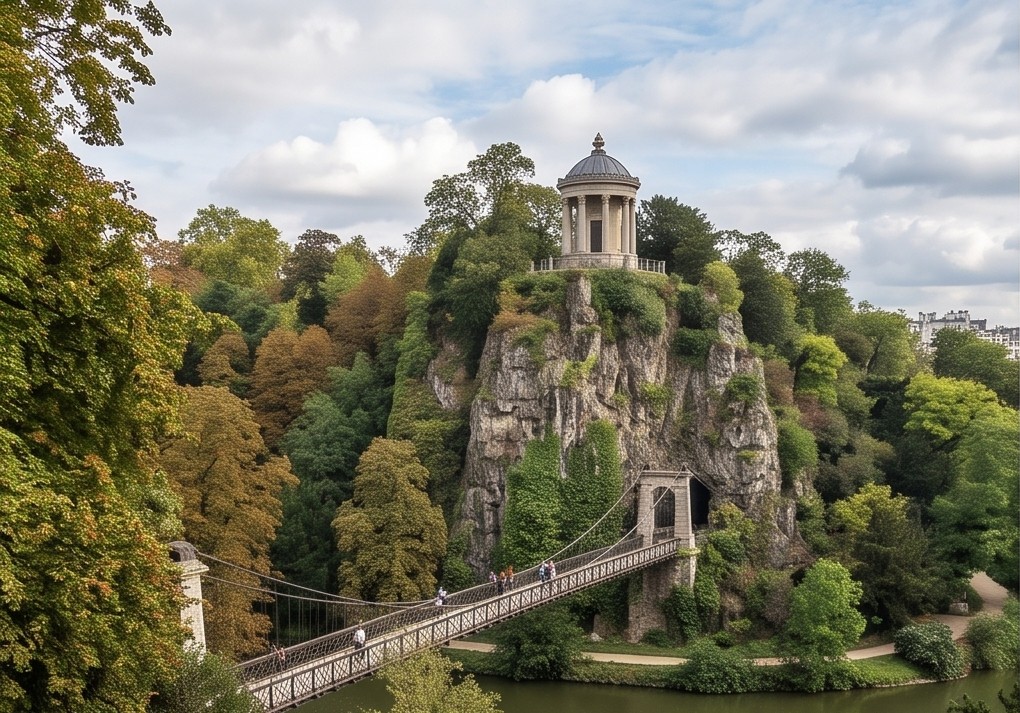
AI-generated image · may differ from the real place Pass through the gates at Rue Botzaris into an astonishing landscape of dramatic cliffs and hidden grottos. Built on a former limestone quarry under Napoleon the Third, engineer Adolphe Alphand sculpted this dramatic park into a masterpiece of romantic fantasy. Fasten your walking shoes and descend through shaded winding paths toward the central artificial lake. Cross the soaring suspension bridge that swings above the water to reach Belvedere Island. Climb the steep stone steps to the miniature Temple de la Sibylle, modeled directly after the Temple of Vesta in Tivoli, Italy. From this fifty-meter clifftop vantage point, look out across the park's lush foliage toward the distant white domes of Sacré-Cœur gleaming on the Montmartre horizon. The park offers an intoxicating mixture of theatrical grandeur and secluded wilderness, providing the ultimate finale to our private promenade through hidden Paris.



True sophistication in Paris is never about seeing everything. It is about feeling the subtle resonance of spaces designed for private contemplation. As the evening lights begin to reflect across the tranquil canal waters and the skyline softens into twilight, you realize that the most stylish secrets are not hidden behind lock and key. They are simply waiting for those patient enough to look beneath the surface.
Take it further
Open the tour in the appThe tour in the app
A Private Haute Route Through Hidden ParisAn intimate promenade through secret courtyards and sunlit hills, charting Claude Monet oval water sanctuary, Colette Palais-Royal arcades, Louis the Ninth stained-glass reliquary, Napoleon leafy canals, and the romantic clifftops of Belleville and Buttes-Chaumont. This curated journey captures the elusive spirit and enduring glamour of hidden Paris.
+ Add the tour to your planIf you have the app the tour opens right away; otherwise you go to the store.FAQ
- What makes this walking route unique compared to typical Paris sightseeing tours?
- Rather than skimming crowded monuments from a tour bus, this itinerary guides you through secluded arcades, historic locks, and creative hillside panoramas where locals live and literary figures once found daily inspiration.
- How should one prepare for the terrain and transitions between these neighborhoods?
- Wear comfortable leather walking shoes suitable for gravel alleys, ancient spiral staircases, and steep park paths, and allow yourself the leisure to pause at neighborhood cafés along the way.
This piece was newly written based on the Wikipedia articles ‘Musée de l'Orangerie’, ‘Palais-Royal’, ‘Sainte-Chapelle’, ‘Canal Saint-Martin’ · CC BY-SA 4.0