Morning light breaks over the zinc rooftops of Paris like a dusting of powdered sugar over warm brioche. If you stand on the Pont des Arts at eight in the morning, the waking city breathes a distinctive perfume: the comforting warmth of caramelizing butter, damp river stone, and the deep aroma of dark roasted cocoa drifting up from basement kitchen vents. For generations, visitors were told that Paris was a culinary museum frozen in time, where every tearoom was an austere monument to eighteenth century aristocratic manners. Yet the moment you step onto these sunlit boulevards today, you realize French pastry is not a relic preserved under glass. It is a kinetic, fiercely creative theatre, an ongoing cultural conversation where centuries of classical technique crash joyfully into our modern hunger for visual drama, tactile wonder, and pure sensory joy.
Here along the Seine, sugar has never been mere comfort food. It has always operated as subtle rebellion, political intrigue, and cultural currency. When you peel back the layers of French baking lore, you realize that every crisp flake and glossy ganache began as a response to social upheaval. Centuries before contemporary pastry prodigies turned sculpted fruits into internet sensations, royal court confectioners were deploying sweet artistry to navigate diplomacy, private desires, and the sheer boredom of court life.
The Royal Cure and the Feminine Sanctuary
Consider Sulpice Debauve, the distinguished former chemist to King Louis the Sixteenth. When young Queen Marie Antoinette complained about the unbearable bitterness of her daily pharmaceutical potions, Debauve did not simply brew a sweetened tea. Instead, he ingeniously blended rich cocoa, cane sugar, and gentle botanical extracts into elegant, coin shaped medallions. The delighted queen christened them Pistoles, effectively turning royal medical frustration into the glorious birth of modern French artisan chocolate. Debauve would go on to supply Napoleon and three subsequent Bourbon kings, cementing chocolate as an intellectual and aesthetic pursuit.
That restless impulse to democratize pleasure only gathered speed across the generations. At the turn of the twentieth century, Jeanne Souchard, the perceptive wife of Ernest Laduree, looked out at the bustling city during the nineteen hundred Exposition Universelle and recognized a quiet injustice. The grand boulevard cafes were overwhelmingly masculine spaces where respectable women could rarely linger unchaperoned. Her bold solution was to open an intimate tearoom on the first floor above their Rue Royale bakery, creating an elegant haven where Parisian women could gather freely, converse without social censure, and savor delicate pastries beneath ceilings painted with chubby pastry angels. French pastry became a quiet vehicle for female social autonomy.
Hyper Craft and the Contemporary Craze
A few years later, Marcel Proust immortalized that mysterious, emotional power in literature when a single bite of a shell shaped madeleine dipped in tea triggered an involuntary cascade of childhood memories in his masterwork. Decades after that, fashion revolutionary Coco Chanel made her daily pilgrimage to the gilded mirrors of Angelina for velvet hot chocolate, cementing the dessert counter as the undisputed center of Parisian style and social display.
Today, that unbroken lineage has exploded into a thrilling new golden age. A fresh wave of culinary obsessives has reimagined classical French patisserie into an extraordinary playground of architectural texture and hyper seasonal fruit. The lively queues spilling down historic stone colonnades are not simply travelers chasing digital hype. They are passionate pilgrims celebrating the supreme discipline of human hands shaping butter and flour. As you begin this journey from the grand arcades of the Tuileries to the quiet cobblestones of the Left Bank, listen to the rhythmic scrape of spatulas and the crackle of caramelized pastry shells. You are stepping straight into the beating, joyful heart of a three hundred year old obsession.
Want to walk it yourself? Plan a trip with these places
The walk
On site, play just that chapter
- 1 min · on site
Belle Epoque Splendor and the Chestnut Mount
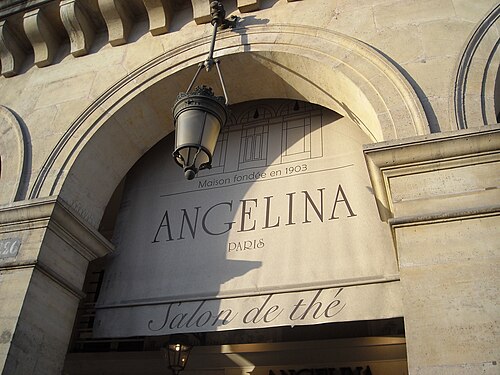
Photo: Robert Schediwy · CC BY-SA 3.0 · Original file Step beneath the grand limestone arcades of Rue de Rivoli, right across from the green canopy of the Tuileries Garden. Inside Angelina, the Belle Epoque interior created by architect Edouard-Jean Niermans envelops you in warm gilded moldings, mirrored panels, and painted pastoral scenes. Austrian confectioner Antoine Rumpelmayer founded this salon in nineteen hundred and three, naming it after his daughter-in-law. Look around the velvet dining room: this was the creative sanctuary where Marcel Proust lingered over tea and where fashion titan Coco Chanel took her dedicated corner seat for l Africain, a legendary hot chocolate so thick and molten it coats your spoon like silk. Your essential order is the iconic Mont-Blanc, a dome of crisp baked meringue heaped with chantilly cream and draped in ribbons of fragrant chestnut purée. Even Sophie Marceau filmed iconic coming of age scenes for the movie La Boum Two right here amid the polished silverware.
When you step back out under the stone arcades, turn right and make an immediate left into Rue de Castiglione, where a very different kind of culinary drama awaits.
- 1 min · on site
La Pâtisserie du Meurice par Cédric Grolet
Sculpted Illusions and Palace Precision
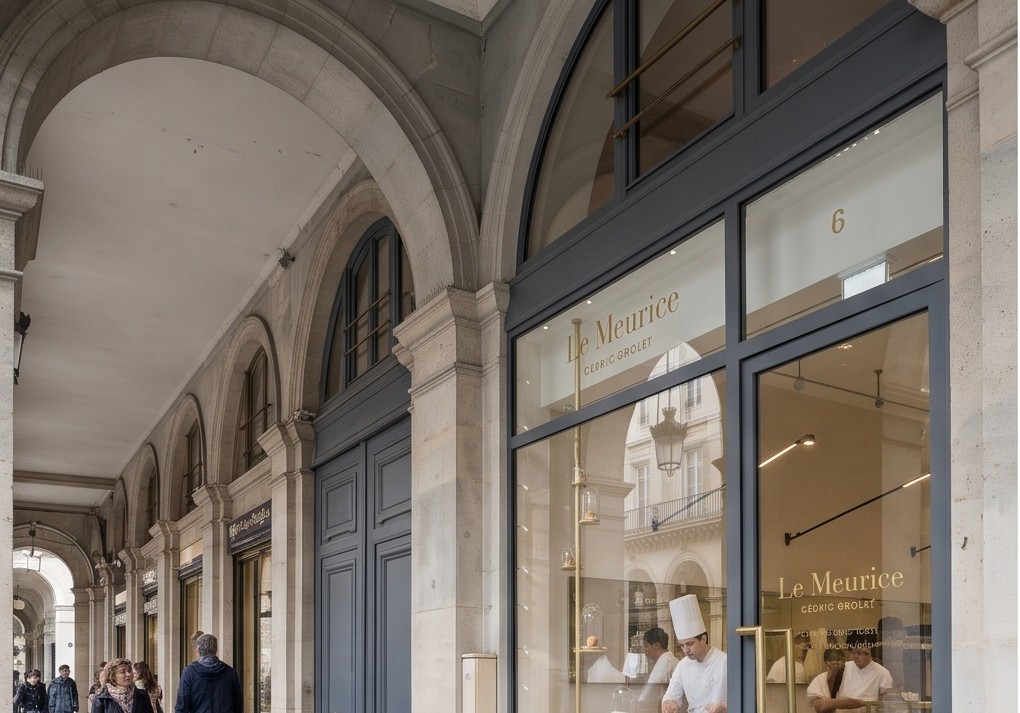
AI-generated image · may differ from the real place Just a few steps north of the garden arcades at number six Rue de Castiglione, the atmosphere shifts from historic romance to high octane contemporary craft. Behind this minimalist glass front sits the Parisian boutique of chef Cedric Grolet, who rose from young apprentice at Fauchon under Christophe Adam to executive pastry chef of the storied palace hotel Le Meurice. Peer closely into the illuminated display cases and you will witness the trompe l oeil masterpieces that captured the digital imagination of the entire world. Grolet painstakingly sculpts ultra thin shells of white chocolate and delicate cocoa butter, airbrushing them with botanical accuracy to replicate the dimpled skin of lemons, golden apples, and ripe figs. Crack through that deceptive outer crust with your fork to discover luscious poached fruit and herbal ganache bursting with concentrated acidity. Alongside the famous fruits, notice his elegant Paris-Brest, whose choux pastry wheel honors the historic nineteenth century bicycle race.
Now retrace your steps toward the Tuileries Garden, cross the Seine over the historic Pont Royal, and follow the river breeze onto the storied Left Bank.
- 1 min · on site
The Royal Apothecary and the Queen Chocolate Coins

Photo: Reinhardhauke · CC BY-SA 3.0 · Original file Arriving on the Left Bank at number thirty Rue des Saints-Pères, you stand before an extraordinary temple of chocolate heritage. The boutique itself is a classified historical monument, designed in eighteen nineteen by Napoleon Bonaparte personal architects Percier and Fontaine. Step inside and admire the grand semicircular wooden counter, crafted like an antique apothecary desk under soaring ceilings. Here, former royal chemist Sulpice Debauve opened his doors after famously inventing the coin shaped Pistoles for Queen Marie Antoinette, who detested the taste of her medicine. Later joined by his nephew Auguste Gallais, the house earned royal warrants from Napoleon, Louis the Eighteenth, and Charles the Tenth. Even the legendary gourmet Brillat-Savarin celebrated Debauve chocolate in his classic culinary treatises, while novelist Anatole France adored this parlor. Breathe in the rich, earthy fragrance of single origin dark cocoa and order a box of gold stamped Pistoles, savoring the exact bittersweet profile that sustained French royalty.
Leave the tranquil quiet of Rue des Saints-Pères, walk two blocks east along Rue Jacob, and turn south onto the vibrant cobblestones of Rue Bonaparte.
- 1 min · on site
Celadon Ceilings and the Macaron Revolution

Photo: Herry Lawford · CC BY 2.0 · Original file At number twenty-one Rue Bonaparte, you reach the iconic sage and celadon green facade of Laduree. Founded as a humble bakery in eighteen sixty-two by miller Louis Ernest Laduree, this house was rebuilt after burning during the Paris Commune. Look up at the decorative motifs: the chubby cherubs dressed as pastry cooks painted by artist Jules Chéret have presided over these counters for well over a century. It was here that Laduree cousin Pierre Desfontaines helped spark a global craze by uniting two almond meringue shells with silky ganache to create the modern Parisian macaron. This confection conquered global pop culture, appearing as Blair Waldorf obsession in the series Gossip Girl and inspiring the decadent pastel banquet scenes of Sofia Coppola film Marie Antoinette. Step up to the marble counter and admire the rainbow spectrum of pastel shells, from salted caramel to pistachio, each delivering that signature crisp crunch giving way to tender chew.
Continue walking south down Rue Bonaparte, past the monumental stone fountain of Place Saint-Sulpice, until you arrive at the sleek corner boutique of another modern master.
- 1 min · on site
The Picasso of Pastry and the Rose Garden

Photo: Vincent Bourdon · CC BY-SA 4.0 · Original file Arriving at number seventy-two Rue Bonaparte, you stand outside the flagship atelier that fundamentally revolutionized modern confectionery. Pierre Herme, born into four generations of Alsatian bakers and apprenticed at age fourteen to culinary legend Gaston Lenotre, opened this Saint Germain boutique in two thousand and one. Hailed by Vogue as the Picasso of Pastry and named the World Best Pastry Chef, Herme stripped away heavy traditional ornament to focus entirely on architectural flavor. Step into the sleek, jewel-box interior where pastries are curated like museum sculptures. Your journey concludes with his greatest artistic statement: the Ispahan. In this breathtaking dessert, two vivid pink rose-water macaron biscuits embrace delicate rose petal cream, juicy tropical lychees, and tart fresh raspberries. The interplay of floral sweetness and sharp berry acidity creates a sensory crescendo that lingers on your palate long after you step back onto the Parisian street.


As you finish your stroll through Saint Germain, take a moment to sit beside the fountain of Place Saint-Sulpice and let the flavors settle. In Paris, pastry is never merely about satisfying an appetite. It is an intimate, edible archive of French social history, architectural ambition, and daily joy. Long after the delicate crumb has melted away, the memory of that perfect crisp bite remains.
Take it further
Open the tour in the appThe tour in the app
A Grand Tasting Promenade from the Tuileries to Saint-GermainThis curated tasting walk bridges three centuries of French pastry mastery across two distinct riverbanks. Starting beneath the grand Tuileries colonnades with Belle Epoque salon rituals and sculpted palace illusions, you cross the Seine into Saint Germain to trace royal chocolate secrets and the colorful evolution of the modern macaron.
+ Add the tour to your planIf you have the app the tour opens right away; otherwise you go to the store.FAQ
- What is the proper etiquette when ordering pastries to take away versus dining in?
- Most Parisian pastry boutiques have separate counters for takeaway orders, while grand salons like Angelina invite you to wait for table service. If dining in, savor your pastry leisurely with tea or coffee rather than rushing.
- How should delicate macarons and filled pastries be stored while exploring the city?
- Macarons and cream filled pastries are sensitive to heat and moisture. Keep your boxes horizontal and avoid carrying them in direct sun, enjoying fresh creations within a few hours for the best crisp texture.
- What makes the Mont-Blanc dessert unique to the Parisian salon tradition?
- The classic Mont-Blanc balances a crisp baked meringue base, a light dome of chantilly cream, and extruded vermicelli ribbons of sweetened chestnut purée, designed to evoke the snow-capped summit of the Alps.
This piece was newly written based on the Wikipedia articles ‘Debauve & Gallais’, ‘Ladurée’, ‘Angelina (salon de thé)’, ‘Debauve & Gallais’ · CC BY-SA 4.0