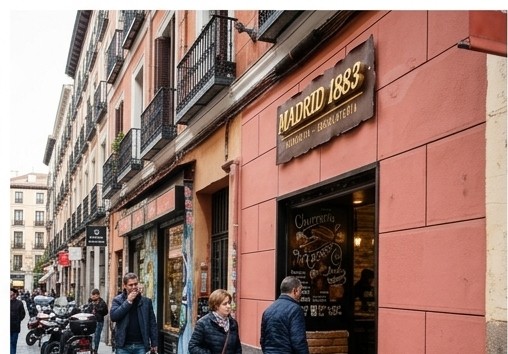
Dawn in Madrid does not break with gentle bells or sunrise over the distant Guadarrama peaks, but with the unmistakable hiss of boiling oil hitting cold dawn air. Long before the city stirs into its frantic cosmopolitan rhythm, a sharp blue frost clings to the granite flagstones of the old quarters. You find yourself drawn through the shadows by an aroma that brooks no argument: the toasted grain of scalded wheat flour, the hot clean steam of frying fat, and the deep, resinous perfume of bitter cacao simmering in seasoned vats. To the casual traveler, churros and hot chocolate might appear as a nostalgic indulgence, an easy concession to the morning sweet tooth. But to anyone who critiques gastronomy with serious intent, it is nothing less than an exacting culinary ritual, an architectural counterpoint between blistered crunch, balanced salinity, and dense bittersweet viscosity.
The Geometry of the Wheel
True appreciation begins at the marble counter, watching the master churrero command the cauldron. There is no room for theatrical flourishes or hesitation here. The batter itself is deceptively austere: nothing more than refined wheat flour, boiling water, and sea salt, beaten rapidly to gelatinize the starch into an elastic dough. Pressed firmly through an extruder fitted with a star-shaped brass die, the fluted grooves are not decorative vanity. They represent an ingenious piece of thermal engineering designed to dramatically expand the pastry surface area. When plunged into hot oil, these sharp ridges flash-fry into a shattering, golden crust while trapping interior steam to keep the center tender and pillowy.
As the cook curls the continuous rope into a vast swirling wheel, guiding the golden spiral with long wooden batons, one recognizes a discipline honed across centuries. Spanish culinary history reveals that hot chocolate was not always this comforting morning companion. In the late sixteenth century, Jesuit missionary José de Acosta documented with bemusement that the indigenous cacao drink of the Americas was so dark, bitter, and frothy that newcomers initially recoiled, yet Spanish women in the colonies soon died for its intoxicating allure. It was only after Spanish monks at the Monasterio de Piedra sweetened the cacao paste with sugar and heated it with boiling milk and cinnamon that chocolate conquered the royal court of Emperor Charles the Fifth, eventually cascading into the street culture of Madrid.
The Measured Plunge
By the close of the nineteenth century, master novelist Benito Pérez Galdós immortalized Madrid chocolaterías in his classic Episodios Nacionales, depicting how steamy cafes brought bohemians, politicians, and laborers together over common cups of dark elixir. In these rooms, chocolate a la taza achieved its defining consistency: thick enough to coat a silver spoon, bound gently with starch, and stripped of excessive sugar so the roasted acidity of the bean cuts cleanly through the richness of fried pastry. In another corner of literary Madrid, dramaturge Ramón María del Valle-Inclán set scenes of his nocturnal masterpiece Luces de Bohemia against the backdrop of late-night chocolaterías, where night owls sought warmth against the chilly morning air.
To partake in this breakfast requires an opinionated hand. You do not drown the churro or let it soak limp. You angle the fluted baton into the dark cup, allowing the hot emulsion to cling to the ridges for two deliberate seconds before lifting. The crisp exterior gives way with an audible snap, releasing fragrant steam that mingles instantly with the bitter cocoa butter. In that single, scalding bite, the harsh chill of the Castilian plateau dissolves into pure sensory equilibrium, reminding us that Madrid greatest morning monument is neither sculpted in marble nor preserved in a gallery, but perfected anew every dawn over boiling oil.
Want to walk it yourself? Plan a trip with these places
The walk
On site, play just that chapter
- 1 min · on site
The Pristine Morning Crucible
AI-generated image · may differ from the real place To understand the foundational baseline of Madrid churro craft, you must walk through the quiet cobblestones of Malasaña while the neighborhood still sleeps. Find number eight along Calle del Espíritu Santo, where this venerable establishment has tended its fryers since the late nineteenth century. Step inside and observe the counter: no neon, no modern gimmicks, only the pristine gleam of stainless steel and the quiet rhythm of seasoned churreros. Order the classic thin churros and watch them emerge directly from the kettle. Their color is pale gold, their fluted edges sharp and translucent with heat. Upon the first bite, the crunch is whisper-thin, yielding instantly to a soft, steamy crumb that carries a pronounced note of toasted grain and clean oil. Dip them into the house chocolate, which avoids cloying cornstarch heaviness in favor of a clean, roasted cocoa finish that respects the delicate pastry.
Having calibrated your palate with northern Malasaña restrained purity, descend south toward the bustling central plazas where Madrid most legendary chocolate salon awaits in a hidden alleyway.
- 1 min · on site
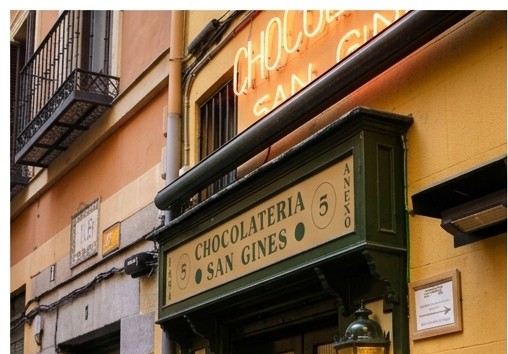
The Nocturnal Temple of Cacao
AI-generated image · may differ from the real place Tucked away in the narrow stone corridor of Pasadizo de San Ginés behind the medieval church, this institution has defined the capital ritual since eighteen ninety-four. Walk through the brass-trimmed doorway and take in the atmosphere: emerald green wood paneling, white marble tabletops, and antique mirrors reflecting generations of morning patrons. It was here that literary figures like Benito Pérez Galdós and Valle-Inclán found inspiration in Madrid bohemian nocturnal energy. Order the classic combination of six churros with a steaming cup of chocolate a la taza. The chocolate here is legendary for its density, glossy as polished ebony and viscous enough to cling tenaciously to the fluted ridges of the dough. The churros are fried to a deeper mahogany hue, delivering a robust, resonant snap that stands up effortlessly against the rich, unctuous cacao beneath.
Step out of the darkened passageway back into the blinding morning light and make your way toward Calle Mayor, where a neighborhood bastion celebrates the grand tradition of the porra.
- 1 min · on site
Churrería-Chocolatería Las Farolas
The Aerated Grandeur of the Porra
AI-generated image · may differ from the real place As you stroll along the historic artery of Calle Mayor, look for the wrought-iron facade of Las Farolas, situated just steps from the grand civic expanse of Plaza Mayor. While amateurs fixate exclusively on slender churros, a discerning palate knows that Madrid true specialty is the porra. Here, the dough incorporates a pinch of baking soda and rests longer, allowing yeast-like bubbles to form an intricate, honeycomb crumb. Watch the cook skillfully pour the batter into wide concentric wheels before slicing the piping-hot spirals into thick golden batons. Order both varieties side by side to study the textural contrast. The porra delivers a breathtaking dichotomy: an audibly crisp shell enclosing an airy, custard-soft interior that drinks up the dark, lightly spiced chocolate like a sponge, releasing pockets of scalding flavor on the palate.
Turn east along the stone curve of Calle Mayor toward the bustling center of Puerta del Sol, seeking an intimate, unvarnished counter tucked into a nearby postal street.
- 1 min · on site
The Precision of the Small Batch
AI-generated image · may differ from the real place Just south of the monumental clock tower at Puerta del Sol, turn into the narrow Calle del Correo to find Masa y Dora. In an era where volume often compromises freshness, this modest storefront operates with admirable discipline. The fryers sit mere inches from the glass partition, allowing you to witness every phase of extraction and fry time. When you place your order at the compact counter, the dough is extruded on the spot rather than sitting under heat lamps. Notice the pale, ivory interior of their churros: it indicates precisely calibrated frying oil that has not degraded, allowing the natural sweetness of the scalded wheat to sing through. The accompanying chocolate is velvety and balanced, formulated with a restrained sugar level that accentuates the earthy terroir of the roasted cacao beans.
Leave the compact alley and stroll south across the wide open flagstones toward Plaza de Jacinto Benavente, where an ambitious modern specialist reinterprets the churrero heritage.
- 1 min · on site
The Theater of Modern Extrusion
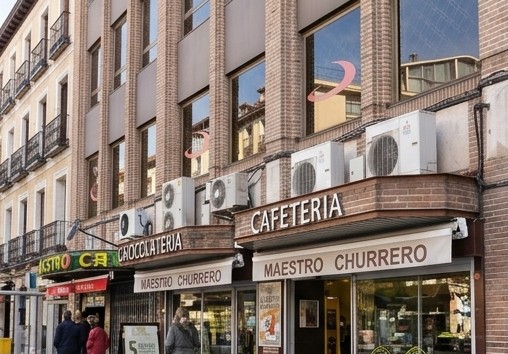
AI-generated image · may differ from the real place Commanding a prominent corner on Plaza de Jacinto Benavente, Maestro Churrero represents the deliberate evolution of Madrid traditional craft. Secure an outdoor table on the terrace to watch the city pedestrian tapestry unfold, or stand inside near the open kitchen where state-of-the-art temperature controls govern massive stainless cauldrons. The churrero here treats oil heat with scientific rigor, producing churros with pronounced, razor-sharp ridges that maximize structural crunch. Take note of the temperature when your order arrives: the chocolate is served piping hot in heavy ceramic cups, exhibiting a glossy surface tension that reflects the morning sky. The pastry remains miraculously crisp even when dipped repeatedly, testament to a batter formulated with minimal oil absorption. It is an assertive, thoroughly modern presentation that respects the core tenets of the centuries-old ritual.
From the wide plaza, wander eastward into the winding lanes of the Barrio de las Letras, where a quiet artisan workshop elevates chocolate into pure liquid velvet.
- 1 min · on site
The Artisan Velvet of Huertas
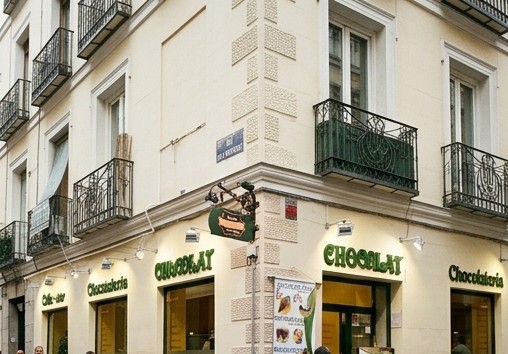
AI-generated image · may differ from the real place Wander through the literary quarter along Calle de las Huertas, tracing the golden quotations embedded in the cobblestones until you reach number fifty-nine. Chocolat Madrid is a sanctuary of deliberate, slow craftsmanship, far removed from the hurried rush of tourist avenues. Pull up a wooden chair in the unpretentious dining room and observe the blackboard notes and warm neighborhood chatter. The owner prepares the chocolate daily from high-grade cocoa beans, achieving an extraordinary, silk-like emulsion that boasts natural fruit acidity and a deep, wine-dark complexity without relying on excessive starches. Pair it with their freshly turned churros, which are remarkably light and devoid of greasy residue. As you dredge the delicate pastry through the dark elixir, the balance of sea salt, toasted wheat, and bitter cocoa achieves true gastronomic poetry, offering a serene finale to our morning expedition.
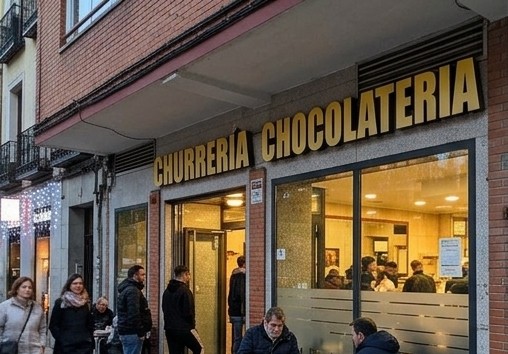
Madrid reveals its soul not in ostentatious banquet halls, but over these steaming counters where flour and cacao meet. To trace this route from Malasaña to Huertas is to experience an unbroken chain of technique, where each morning reclaims an edible masterpiece that sustains the spirit of the capital.
Take it further
Open the tour in the appThe tour in the app
The Golden Spiral: A Connoisseur's Breakfast WalkBeginning in the morning quiet of Malasaña, this curated gastronomic itinerary descends through Madrid historic central plazas to the literary quarter, connecting six venerable counters that showcase contrasting frying techniques, aerated porras, and velvety dark drinking chocolate across the waking capital streetscape.
+ Add the tour to your planIf you have the app the tour opens right away; otherwise you go to the store.FAQ
- What is the culinary difference between a churro and a porra?
- A churro uses an unleavened batter of flour, boiling water, and salt extruded through a star die to create a thin, deeply ridged pastry with maximum crunch. A porra includes a pinch of baking soda, rests longer, and is extruded through a wider nozzle, producing a thicker, airy pastry with a tender, honeycomb interior.
- Why is Spanish chocolate a la taza so much thicker than hot chocolate elsewhere?
- Spanish hot chocolate is traditionally formulated with whole cocoa paste and a small amount of starch, such as cornstarch or rice flour, then slowly simmered. This creates an unctuous, spoon-coating emulsion engineered specifically for dipping pastries rather than drinking as a thin beverage.