Step onto the sun-dappled stone of Barcelona on a crisp morning and you immediately sense that shopping here is far more than a simple everyday errand. It is a vivid public ritual, a daily celebration of light, sound, texture, and neighborhood community. The morning air carries the rich aroma of freshly roasted dark coffee beans, sea salt, and ripe orchard fruit, while the warm hum of local chatter echoes beneath cast-iron columns and soaring nineteenth-century brick arches. Across the Catalan capital, historic market halls do not function merely as commercial spaces for routine buying and selling. Instead, they operate as welcoming neighborhood living rooms where local life unfolds with natural grace in real time. Here, medieval street trade heritage blends smoothly with a stylish contemporary pulse, creating an urban culture that feels both deeply rooted in history and completely vibrant today.
For generations, first-time travelers were encouraged to admire Barcelona primarily through its towering Gothic cathedrals, winding medieval alleyways, or the whimsical modernisme architecture of its famed avenues. Yet the authentic heartbeat of the city thrives within its public marketplaces, where design, culinary pride, and neighborhood identity naturally collide. When the renowned Spanish poet Federico Garcia Lorca walked down La Rambla, he famously remarked that it was the only street in the world he wished would never end. Lorca recognized that Barcelona's thoroughfares and market halls were continuously creating rich living stories. From rows of acorn-fed cured hams hanging from dark wooden beams to medieval convent ruins resting beneath roofs covered in vibrant ceramic tiles, every shopping district offers an intriguing conversation between historic memory and contemporary urban energy.
The Theater of Everyday Commerce
Today, a fresh generation of style enthusiasts and culture seekers is rediscovering these legendary market destinations with a keen eye for authenticity, local craftsmanship, and aesthetic detail. They travel from the quiet leafy squares of Gracia to the sunlit maritime promenade of Port Vell, seeking out spaces where heritage meets creative renewal. At the Sunday book fair of Sant Antoni, intellectuals, writers, and casual readers have gathered for nearly a century, preserving a proud legacy of literary passion that famously survived even the quietest eras of political censorship. As you stroll through these historic markets, you quickly discover that every vendor stall holds a human story, every architect left a distinct artistic signature, and every neighborhood market offers a gracious invitation to pause, observe, and savor the timeless art of daily life.
In an era dominated by digital convenience and mass production, Barcelona's markets offer a refreshing tactile counterweight. Shopping in these historic pavilions encourages you to slow down, touch artisan ceramics, smell mountain herbs, and converse directly with merchants whose families have maintained their stalls for generations. It is an immersive experience where every sense is engaged, transforming a simple walk into an unforgettable cultural pilgrimage through the soul of Catalonia.
A Legacy of Creative Renewal
Whether you are seeking vintage paper ephemera, small-batch extra virgin olive oils, or simply the thrill of watching local chefs select their morning produce, Barcelona's market culture provides an unmatched sensory canvas. This guide is designed to walk you through six of the city's most evocative shopping destinations in a single, fluid journey. You will travel from historic neighborhood sanctuaries to sleek harbor waters, experiencing how Barcelona transforms daily commerce into an enduring art form that stays with you long after your visit.
Want to walk it yourself? Plan a trip with these places
The walk
On site, play just that chapter
- 1 min · on site
Gracia's Iron Sanctuary of Neighborhood Life

Photo: Jordiferrer · CC BY-SA 3.0 · Original file Your journey begins in the bohemian neighborhood of Gracia at Mercat de la Llibertat. Constructed in the late nineteenth century, this elegant neighborhood market features a high central nave and ornate decorative ironwork that reflects the proud industrial craft of its era. As you step inside, the cheerful buzz of local morning shoppers sets an inviting rhythm. Take a moment to look up at the soaring ceiling truss before browsing the central aisles, where fishmongers and butchers display their freshest morning catches alongside seasonal Catalan vegetables and mountain herbs. Observe how neighborhood residents pause to chat warmly with stallholders who have known their families for years. To experience the market like a true local, find a quiet spot near the inner seafood counters to sample a plate of warm grilled squid or crisp olive oil tapas while taking in the charming neighborhood atmosphere.
When you finish exploring Gracia, walk south down the tree-lined slope of Passeig de Gracia toward the buzzing central plaza.
- 1 min · on site
A Flagship Department Store with Cuban Heritage

Photo: Felix König · CC BY 3.0 · Original file Arriving at Placa de Catalunya, you stand before El Corte Ingles, Spain's iconic flagship department store. Founded in 1940 by Ramon Areces and Cesar Rodriguez, the enterprise grew into a national institution after Areces mastered retail as a teenager working at Almacenes El Encanto in Havana, Cuba. Enter through the main plaza doors and take the escalator straight to the gourmet food hall on the top floor. Here, wide glass windows offer sweeping views over the busy rooftops of central Barcelona while long rows of wooden displays showcase extra virgin olive oils, cured regional cheeses, and fine artisan chocolates. Notice how the modern retail layout preserves traditional Spanish culinary delicacies alongside international luxury. It is the perfect central vantage point to pause, admire the city skyline, and absorb the vibrant urban energy below.
From Placa de Catalunya, stroll southeast into the historic cobblestone alleyways of the Born district.
- 1 min · on site
The Wave of Color Over Medieval Convent Walls
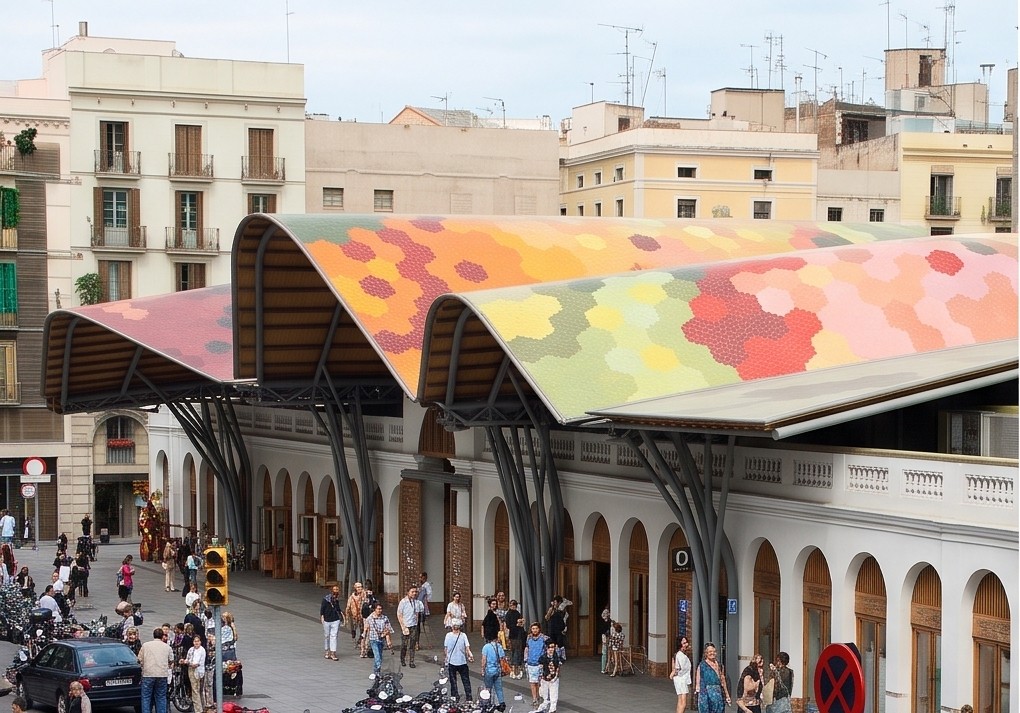
AI-generated image · may differ from the real place You now arrive at Mercat de Santa Caterina, the oldest covered market in Barcelona, built in 1844 on the grounds of a thirteenth-century Dominican convent. Between 1997 and 2004, visionary architects Enric Miralles and Benedetta Tagliabue transformed the hall with a dramatic wave-like roof covered in two hundred thousand colorful ceramic tiles that pay homage to Antoni Gaudi's famous trencadís mosaic style. Walk inside to admire how sunlight streams through high windows across market counters selling cured Iberian meats, wild mountain honey, and aromatic herbs. Notice the organic layout that mirrors medieval market alleys while showcasing local Catalan produce at its finest. Take your time observing the bustling fruit stands and artisan olive vendors. Before leaving, pause near the main entrance to examine the glass floor panels that reveal preserved medieval convent foundations resting quietly beneath your feet.
Cross nearby Via Laietana and weave through the narrow gothic lanes toward the lively avenue of La Rambla.
- 1 min · on site
La Rambla's Legendary Feast for the Senses
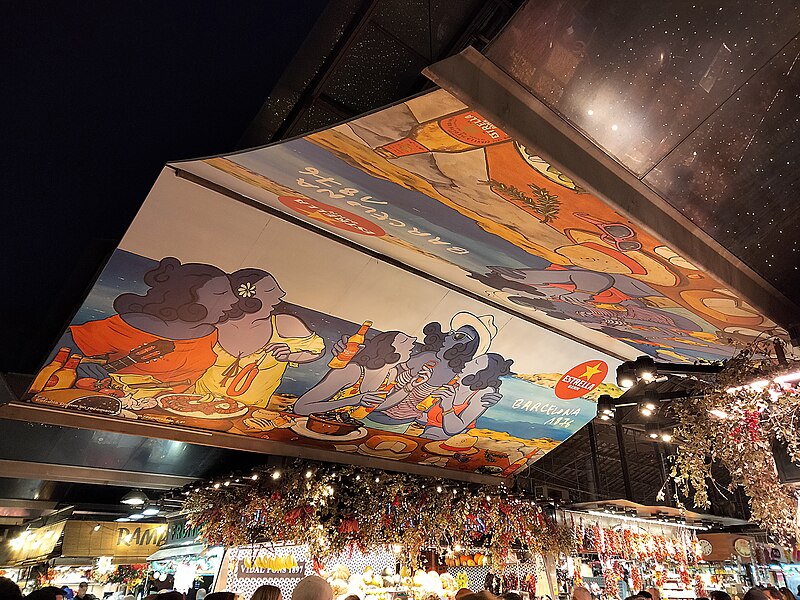
Photo · Wikimedia Commons Stepping onto La Rambla, you enter Mercat de la Boqueria, Barcelona's most famous culinary landmark. First recorded in 1217 as an open-air meat market near the medieval city gates, it evolved into an official iron structure inaugurated in the mid-nineteenth century. The market sits along the very promenade that poet Federico Garcia Lorca celebrated for its endless vitality. Wander through the ornate iron entrance and look down on the pavement to spot Joan Miro's vibrant floor mosaic. Inside, colorful stalls burst with freshly pressed fruit juices, artisanal cheeses, and paper cones of acorn-fed jamon Iberico, while bustling tapas counters cook wild mushrooms on hot griddles. Take your time wandering through the colorful central corridors, observing how century-old family stalls showcase the rich gastronomic heritage of Catalonia.
Leave the bustle of La Rambla behind and walk west into the laid-back neighborhood of Sant Antoni.
- 1 min · on site
Literary Treasures Under an Octagonal Iron Dome
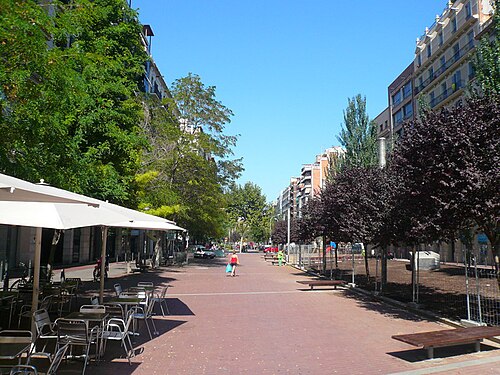
Photo: Pere prlpz · CC BY-SA 3.0 · Original file Before you stands Mercat de Sant Antoni, a magnificent octagonal iron landmark designed in 1882 by municipal architect Antoni Rovira i Trias. On Sundays, the surrounding sheltered marquees host the famed Dominical de Sant Antoni, a world-famous secondhand book market. Celebrated by Catalan writer Tisner as a cultural treasure, this market saw brave vendors secretly sell banned literature during the Franco dictatorship. Over the decades, it has drawn artists, thinkers, and international icons like actress Ursula Andress. Browse the wooden stalls under the historic wrought-iron canopy to admire vintage leatherbound books, antique vinyl records, and classic comic books. Take a moment to chat with long-time booksellers, soaking in the intellectual charm that has nourished generations of curious readers while appreciating how literature continues to weave through the neighborhood's living soul.
From Sant Antoni, walk south toward the harbor waterfront along the scenic maritime promenade.
- 1 min · on site
Waterfront Style at the Edge of the Mediterranean
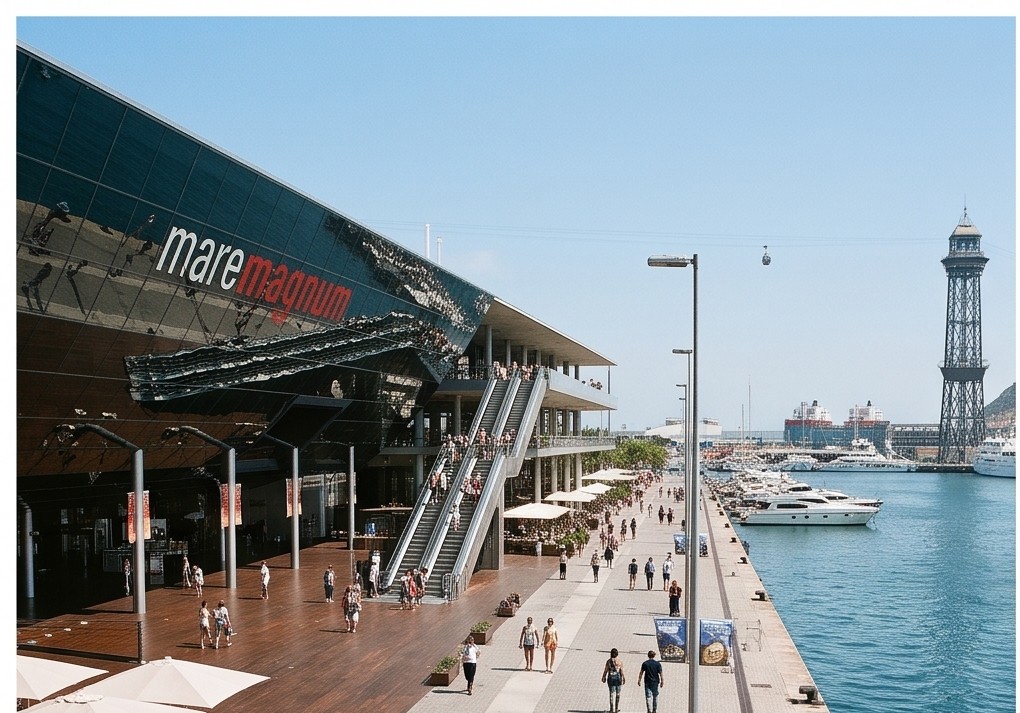
AI-generated image · may differ from the real place Your walk concludes at Maremagnum, situated on Moll d'Espanya in the heart of Port Vell harbor. To reach this modern waterfront shopping destination, stroll across the wooden Rambla de Mar pedestrian bridge, watching sailboat masts sway gently against the Mediterranean blue waters. The complex offers a sleek contemporary contrast to the historic inland markets, bringing together open-air fashion boutiques, coastal lifestyle stores, and spacious dining terraces. Look out over the harbor basin to watch ferries gliding across the water while enjoying the bright Mediterranean light and gentle ocean breeze. Find a sea-view bench on the upper promenade to feel the refreshing sea air while looking back over the historic skyline, reflecting on a memorable journey through Barcelona's timeless market culture as evening sunlight paints the coast in warm gold.


As afternoon sunlight softens over the Mediterranean, Barcelona's market halls transition into gentle evening gathering spots. Whether resting your feet after discovering vintage paper treasures or watching the sea reflection from a harbor terrace, you realize that shopping here is an intimate study in human connection. These markets preserve the soul of the neighborhood while welcoming the world with open arms.
Take it further
Open the tour in the appThe tour in the app
Barcelona Historic Market and Harbor Walking RouteThis curated walking tour connects six iconic shopping landmarks across Barcelona. Beginning in bohemian Gracia at Mercat de la Llibertat, you progress through Placa de Catalunya, El Born, La Rambla, and Sant Antoni, concluding along the scenic Port Vell waterfront at Maremagnum.
+ Add the tour to your planIf you have the app the tour opens right away; otherwise you go to the store.FAQ
- What makes Barcelona market halls so culturally significant?
- Barcelona markets are historical community hubs where nineteenth-century iron architecture, local culinary heritage, and vibrant social life meet. They offer an authentic glimpse into neighborhood identity beyond standard tourist sights.
- How should I approach visiting the Sunday book market at Sant Antoni?
- Visit on Sunday morning to explore outer canopy stalls filled with vintage books, paper ephemera, vinyl records, and classic comics. Take your time chatting with passionate stallholders who continue a long literary tradition.
This piece was newly written based on the Wikipedia articles ‘La Rambla, Barcelona’, ‘Dominical de San Antonio’, ‘El Corte Inglés’ · CC BY-SA 4.0