November arrives in Barcelona not with an apology, but with a consummate costume change. The Mediterranean glare steps back. In its place, an amber wash settles across the generous octagonal corners of the Eixample. Light becomes architectural, slicing low across honeyed limestone and wrought-iron balconies. The locals promptly shed their summer linen for structured camel wool coats, fine cashmere, and tailored leather boots. It is crisp. It is cinematic. People gather outside neighborhood vermuterias with bare ankles and turned-up collars, nursing bittersweet herbal spritzes while the afternoon shadows lengthen toward the sea. This is the Catalan capital at its most composed, stripped of transient beach crowds and returned entirely to its own inimitable theater.
Winter here is an editorial choice, never an endurance test. While northern capitals retreat behind double-glazed windows and heavy velvet curtains, Barcelona boldly turns its public promenades into open-air salons. The avenues smell faintly of sweet roasted chestnuts, woodsmoke, and crisp sea brine drifting inland from the old port. There is a silent civic agreement that the cooler months demand sharper silhouettes and richer sensory rituals. To walk these grand boulevards now is to recognize that Catalan style has always thrived on defiance, celebrating texture, design, and communal warmth precisely when the winter sun slants low against ancient façades.
The Architecture of Unhurried Genius
This theatrical flair has always belonged to the city’s stubborn visionaries. When Antoni Gaudí was asked why his monumental expiatory basilica rose so slowly across the decades, his answer was delightfully nonchalant and sublime: my client is not in a hurry. Gaudí understood that enduring art, like exceptional haute couture, refuses artificial deadlines and fleeting commerce. Years later, when Count Eusebi Güell found no aristocratic buyers for his ambitious garden city upon the Carmel hills, Gaudí simply withdrew his life savings, purchased the lone unsold show villa, and moved inside with his elderly father and niece. He chose to live directly inside his grand experiment, unfazed by the skepticism of polite society, watching the winter light illuminate his curving ceramic benches.
Just downhill, in the dense, tangled lanes of the Casc Antic, his rival Lluís Domènech i Montaner was executing an equally audacious spectacle for the Orfeó Català choir. He packed the Palau de la Música Catalana with exploding stone roses and a dazzling inverted skylight of polychrome glass, winning the municipal building prize in nineteen hundred and eight. Decades later, the 1929 International Exposition sparked another breathtaking artistic quest: architects Francesc Folguera and Ramon Reventós, alongside painters Miquel Utrillo and Xavier Nogués, climbed into a motorcar steered by their driver Santiago and covered twenty thousand kilometers across sixteen hundred Spanish towns to curate the architectural signatures of Poble Espanyol.
An Unfolding Winter Runway
That same discerning instinct for curation defines Barcelona’s winter celebrations today. The seasonal festivities here do not trade in predictable kitsch or manufactured holiday cheer. Instead, they exhibit a sharp, stylish wit and deep artistic pride. Traditional moss-covered nativity figurines share display stalls with artisanal orange peel candies, while choral rehearsals echo through stained glass onto chilly medieval cobblestones. As twilight descends, the great Ferris wheel at Port Vell turns against a violet horizon, casting luminous geometry across the historic harbor waters.
Before you embark on this walking route, adjust your inner cadence. Discard your haste. Listen closely for church bells drifting above the Gothic rooftops and the murmur of conversation echoing off polished flagstones. Winter in Barcelona is not a season of retreat, but a private runway designed for the observant wanderer, impeccably tailored, deeply romantic, and undeniably chic.
Want to walk it yourself? Plan a trip with these places
The walk
On site, play just that chapter
- 1 min · on site
The Grand Overture
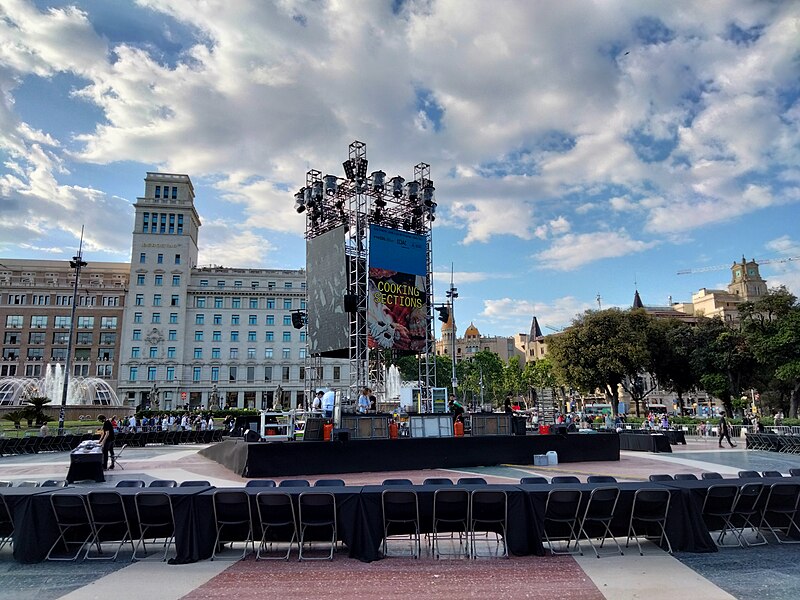
Photo · Wikimedia Commons Stand near the central stone compass rose etched into the pavement and look outward. This immense plaza is the nexus where the medieval lanes of Ciutat Vella meet the rational geometry of the nineteenth-century Eixample. In the cooler months, the open expanse feels particularly dramatic, animated by seasonal gatherings, temporary stages, and swirling flocks of pigeons. Notice the monumental bronze sculptures catching the low amber light and the constant hum of city life fanning out into the grand avenues. The air carries the faint aroma of freshly roasted chestnuts from nearby street carts, blending with the crisp Mediterranean breeze. Take a moment to observe the impeccably dressed locals crossing the square in tailored wool coats and silk scarves. This is Barcelona's grand entrance hall, a generous civic stage where the city's seasonal energy begins before funneling into the historic heart.
Walk toward the northeast corner of the square and follow Carrer de Fontanella into the narrow, winding alleys of Sant Pere.
- 1 min · on site
Choral Geometry in Stained Glass
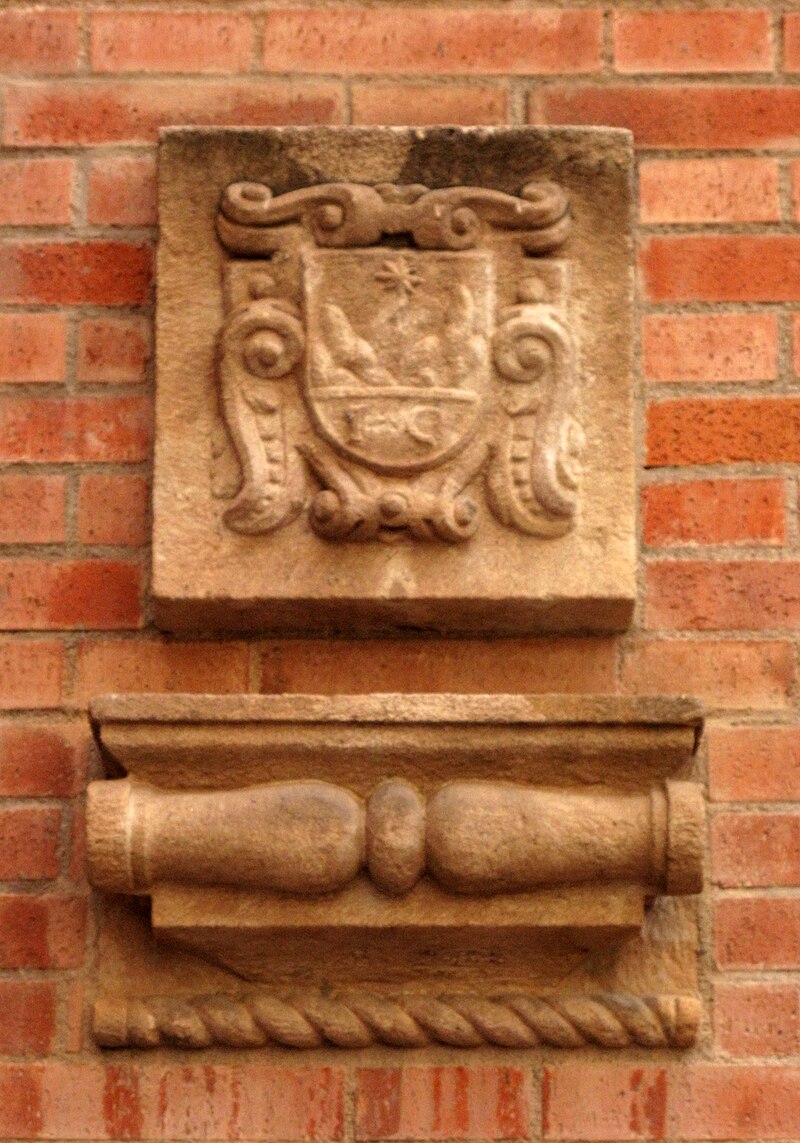
Photo · Wikimedia Commons As you step into the cramped shadow of Carrer de Sant Pere Més Alt, pause before the façade to take in its theatrical drama. Architect Lluís Domènech i Montaner conceived this secular temple for the Orfeó Català choir, turning an impossibly tight corner into a tour de force of Catalan Modernisme. Look up at the second-level balcony where every single mosaic column boasts an individual floral motif, bursting like stone roses against the brickwork. Step inside toward the foyer and gaze toward the main concert hall above, where a monumental inverted stained-glass skylight glows like a golden droplet suspended in mid-air. During this season, the palace vibrates with holiday choral rehearsals, their rich harmonies drifting down into the cool stone vestibule. Notice how natural light filters through polychrome glass, showering the sculptures of muses in kaleidoscopic jewel tones. It is architectural music made physical, daring, and intensely poetic.
Head south down Via Laietana and turn right into the Gothic Quarter until you reach the open expanse of Plaça Nova.
- 1 min · on site
The Scent of Pine and Winter Ritual
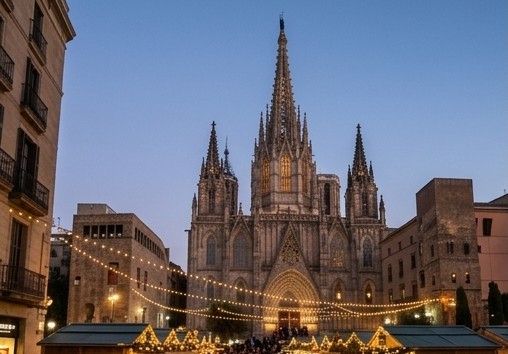
AI-generated image · may differ from the real place Emerge into Plaça Nova right before the soaring towers of Barcelona’s Gothic Cathedral. The winter market assembled here is a sensory masterclass in Catalan folk tradition and seasonal elegance. Stroll slowly between the wooden stalls draped with fresh evergreen boughs, eucalyptus, and mistletoe. Pause to admire the delicate handmade nativity figurines and the iconic caganer, a beloved symbol of good fortune and earthy Catalan humor. Look for the stalls showcasing fragrant dried orange slices, ginger biscuits, and handcrafted advent calendars arranged like miniature townhouses. Notice how the medieval stone of the Roman city wall creates a dignified, sun-drenched backdrop for the festive chatter of multigenerational families. Pick up a bundle of fragrant winter herbs or inspect the painted wooden crafts crafted by regional artisans. The atmosphere here is warm and unpretentious, a living heritage ritual that connects the contemporary city to centuries of communal winter celebration.
Stroll down the lively pedestrian thoroughfare of Carrer de la Portaferrissa until you emerge directly onto the bustling promenade of La Rambla.
- 1 min · on site
A Winter Feast Under Cast Iron
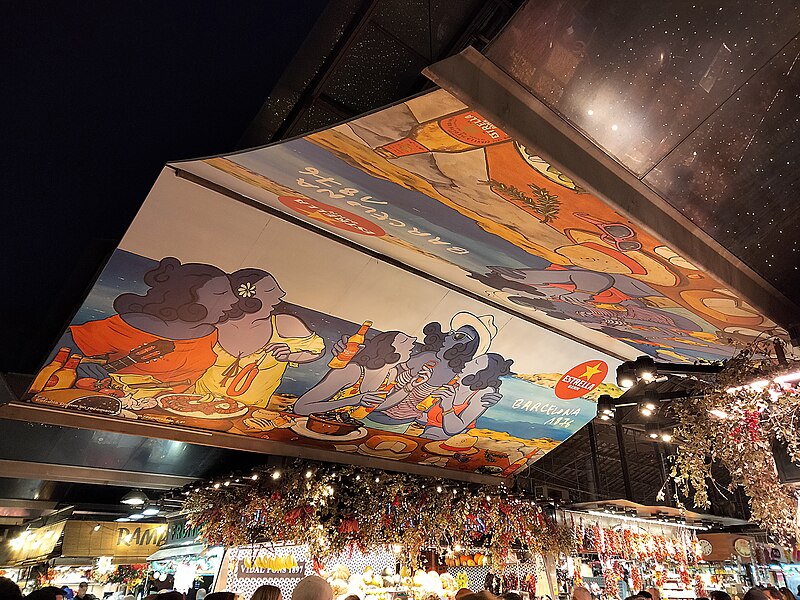
Photo · Wikimedia Commons Cross the threshold under the historic Art Nouveau stained-glass arch into the sensory labyrinth of La Boqueria. While this market began in the thirteenth century as an open-air meat exchange near the old gate, today it is a cathedral of gastronomy crowned by an iconic nineteen-fourteen metal roof. Walk the full perimeter first to absorb the riot of seasonal abundance before selecting a counter. Feast your eyes on pyramids of deep crimson winter pomegranates, glossy wild mushrooms gathered from Catalan hillsides, and glossy legs of cured Iberian ham hanging in tidy rows. Seek out the small family stalls offering holiday turrón, dense almond nougat perfumed with rosemary honey and toasted nuts. Pull up a stool at an interior tapas bar and order a plate of sautéed wild mushrooms and baby calamari, hot from the plancha. The market is an exhilarating burst of sound, sizzle, and seasonal generosity.
Continue southward along La Rambla toward the Christopher Columbus monument, where the boulevard opens gracefully to the sparkling sea.
- 1 min · on site
Harbor Twilight and Salt Air
AI-generated image · may differ from the real place Step onto the gently undulating wooden boards of Rambla de Mar, the pedestrian swing bridge that carries you directly over the harbor waters. Originally a derelict industrial quayside until its radical transformation for the nineteen-ninety-two Olympics, Port Vell now serves as the city's sparkling waterfront salon. Stand near the railing to take in the panoramic vista of vintage sailing vessels, sleek modern yachts, and the majestic silhouette of Montjuïc rising behind the port. In this festive season, an open-air market lines the quayside beneath festive garlands and a towering illuminated Ferris wheel. Watch the wheel rotate against the evening sky, painting shimmering ribbons of light across the Mediterranean surface. The air here tastes clean and salty, a refreshing contrast to the dense historic alleys you have traversed. Linger here as dusk falls, letting the harbor breeze wrap around your collar while the city lights begin to glow across the waterfront.
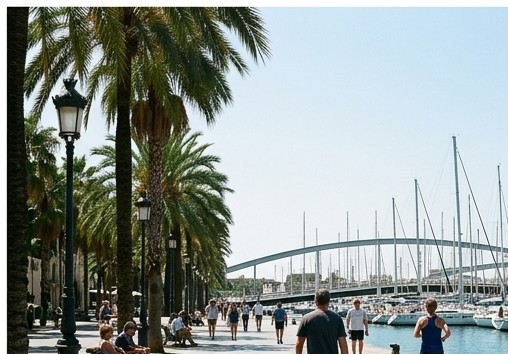
As the night deepens, Barcelona slips into its most private and luminous elegance. The cool sea breeze reminds you that winter here is not about hibernation, but about savoring the craft of living. Pull your wool coat closer, step back onto the lit boulevards, and let the city's quiet cadence guide you home.
Take it further
Open the tour in the appThe tour in the app
A Winter Promenade Through Civic EleganceFollow this sensory winter walk from the grand open expanse of Plaça de Catalunya into the jeweled interior of the Palau de la Música, through the fragrant stalls of the Christmas Market, past the festive feast of La Boqueria, and down to the twilight sea breeze of Port Vell.
+ Add the tour to your planIf you have the app the tour opens right away; otherwise you go to the store.FAQ
- When is the optimal period to experience Barcelona's winter festivities?
- From late November through early January, when holiday illuminations light the boulevards and seasonal markets animate Plaça Nova and Port Vell.
- What attire is best suited for an editorial winter stroll through the city?
- Tailored layers in camel wool, a cashmere scarf, and supportive leather walking shoes that transition seamlessly from brisk coastal breezes to historic flagstones.
- How should one navigate market dining at La Boqueria during winter?
- Arrive in the late morning to admire the seasonal wild mushrooms and pomegranates before claiming a stool at an inner tapas bar for freshly grilled seafood.
This piece was newly written based on the Wikipedia articles ‘Sagrada Família (en.wikipedia) and Park Güell’, ‘Poble Espanyol’, ‘Palau de la Música Catalana’ · CC BY-SA 4.0