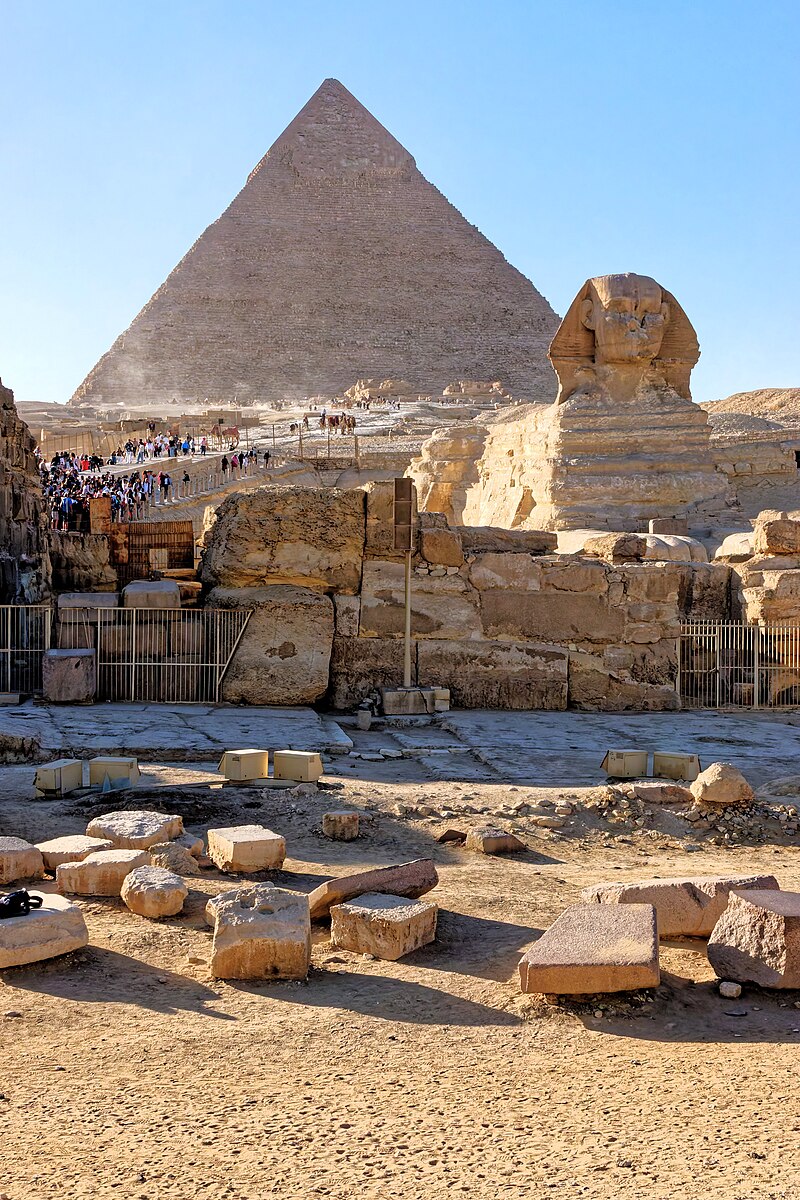
Morning light cuts through the amber desert haze as a cool breeze sweeps across the high limestone plateau. This audio walking tour explores six iconic ancient monuments in Giza, guiding you from massive pharaonic pyramids to majestic stone sphinxes. We are stepping into a landscape where ancient royal tombs inspire modern creators and global culture. Visitors from all around the world gather early near the main gate to watch golden sunbeams strike giant stone blocks quarried over four thousand years ago. The fresh morning air carries a distinct sense of wonder as shadows stretch across the vast sand dunes. Walking here in the early hour gives you a front row seat to history.
Standing before these geometric stone giants feels like stepping into a cinematic masterpiece. The sheer scale of the desert architecture creates an unforgettable visual impact that draws travel lovers and photography enthusiasts alike. As you begin walking along the stone pathways, notice how the changing sunlight alters the warm tones of the stone blocks every minute. This unique blend of ancient engineering and modern travel aesthetic makes Giza the ultimate cultural destination for modern explorers. The monumental views offer endless inspiration for anyone seeking deep history.
Stories Cut in Ancient Stone
Ancient records reveal that travelers have always been fascinated by the human stories behind these monuments. Greek historian Herodotus visited Giza in the fifth century BC and recorded a bizarre detail about the Great Pyramid construction. He noted that an inscription on the outer stone casing listed sixteen hundred talents spent on radishes, garlic, and onions for the workforce. That historical anecdote reminds us that massive royal projects were carried out by real people who needed daily meals. It transforms imposing stone structures into relatable human achievements. The historical narrative comes alive when you picture those ancient builders sharing meals in the shadow of stone.
Centuries later around fourteen hundred BC, young Prince Thutmose fell asleep under the sand buried Sphinx after a morning hunting trip in the desert. The sun deity spoke to him in a vision, promising him the throne of Egypt if he cleared away the encroaching desert sand. When he became Pharaoh Thutmose IV, he carved that royal promise onto a massive granite slab placed between the Sphinx paws. That ancient dream stele still stands today as a testament to royal ambition and desert mystery. It captures the imagination of every traveler who steps onto the viewing terrace.
The Echo Across Millennia
In eight thirty two AD, Abbasid Caliph Al Mamun tunneled deep into the stone passages seeking ancient treasures and legendary emerald jars. Fourth century Christian pilgrim Egeria even wrote in her travel diary that these geometric stone structures were Joseph biblical granaries built to store grain before famine. These historical accounts show how each generation projects its own imagination onto the desert skyline. The layers of myth and history make every footstep across the plateau feel like traversing centuries of human curiosity. Writers and explorers through the ages have left their impressions on this sacred ground.
As you walk along the plateau pathways today, let the ancient stone structures fire your imagination. The monuments are not static museum pieces but living symbols of human ambition that continue to inspire world culture today. Listen closely to the desert breeze as we begin our walk across this legendary landscape. Every stone has a story waiting to be discovered.
Want to walk it yourself? Plan a trip with these places
The walk
On site, play just that chapter
- 1 min · on site
Where Royal Ambition Meets Giant Limestone
Photo · Wikimedia Commons The Great Pyramid of Giza stands directly at the main plateau entry gate as the largest tomb built for Pharaoh Khufu. Step past the main entrance barrier early in the morning to beat the midday desert heat. Look up at the massive limestone blocks stacked in precise horizontal layers above you. Ancient builders quarried over two million stone blocks from nearby bedrock to complete this monument. Notice how the rough core stones reflect glowing warm tones under the morning sky. Each corner aligns almost perfectly with the cardinal directions of true north and south. As you walk around the eastern base, you can spot the remains of smaller satellite pyramids built for royal family members. The sheer size of this ancient wonder creates an awe inspiring sight that sets the tone for our entire walk.
Follow the stone causeway path heading south toward the middle pyramid resting on the high ridge.
- 1 min · on site
The Apex Crowned in Smooth White Stone
Photo · Wikimedia Commons The Pyramid of Khafre rises on higher bedrock right in the center of the Giza plateau as the second largest royal tomb. Look directly toward the top apex to spot the remaining smooth white limestone casing stones preserved near the peak. The steep slope angle gives this structure a sharp dramatic profile against the blue horizon. Because it sits on elevated ground, it often appears taller than its famous neighbor. Walk along the base to appreciate the giant granite blocks framing the lower courses of the entrance. Ancient surveyors aligned this massive structure with extreme mathematical precision using astronomical methods. The surrounding stone pavement offers an incredible vantage point for capturing wide landscape photographs of the plateau. Take a breath and admire how the peak catches the sun.
Continue walking south across the desert floor toward the smallest major pyramid of the royal trio.
- 1 min · on site
Granite Accents on the Southern Horizon
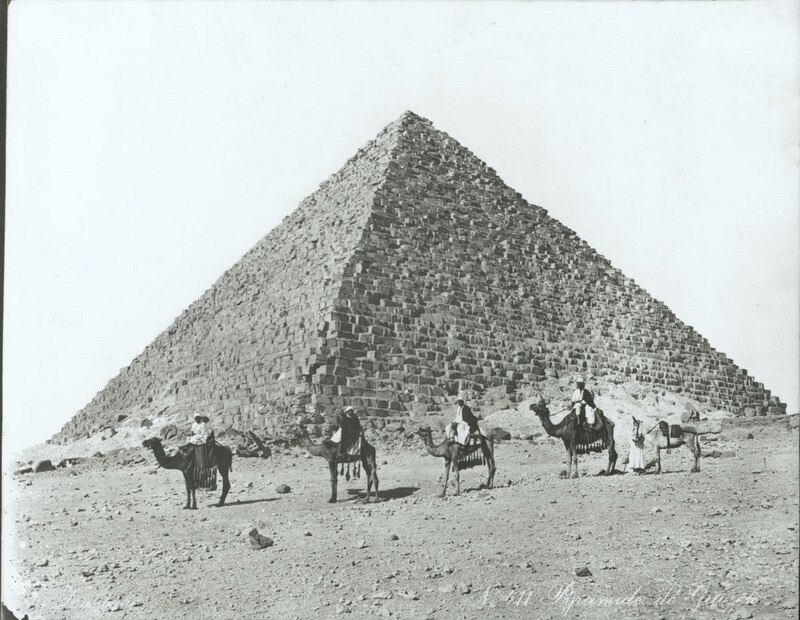
Photo · Wikimedia Commons The Pyramid of Menkaure anchors the southern end of the Giza plateau as the third major royal tomb. Notice the distinct dark red granite blocks covering the lower portion of the exterior walls. These heavy granite casing stones were transported hundreds of miles down the Nile River from quarries in Aswan. Unlike the smooth limestone above, several lower granite courses remain rough and unfinished, offering a rare glimpse into ancient construction techniques. Take a moment to scan the south side, where three smaller satellite pyramids stand in a neat row. The quieter atmosphere at this southern viewpoint allows you to absorb the peaceful desert surroundings away from heavy tour groups. It provides a perfect spot to pause and reflect on ancient royal legacy.
Follow the gentle downhill path leading east toward the valley floor near the ancient riverbank.
- 1 min · on site
Monolithic Granite Halls of Royal Rituals

Photo: lienyuan lee · CC BY 3.0 · Original file The Valley Temple of Khafre sits beside the Sphinx enclosure at the eastern foot of the plateau as a preserved mortuary complex. Step inside the entrance hall to stand among colossal T shaped pillars carved from solid red granite. Look down at your feet to examine the polished white alabaster floor slabs that still gleam after thousands of years. Natural daylight streams through narrow roof openings, casting dramatic light beams across the dark stone walls. This temple served as the sacred gateway where royal purification rituals took place before funeral processions moved up the causeway. The quiet interior atmosphere creates a striking contrast with the open sunlit desert outside. The cool stone walls offer a serene shelter from the bright sun.
Step through the side doorway directly onto the lower stone viewing terrace facing the giant statue.
- 1 min · on site
The Silent Guardian Cut from Bedrock
Photo · Wikimedia Commons The Great Sphinx of Giza rests on the lower quarry floor facing east toward the rising sun as Egypt iconic lion statue. Walk down to the lower viewing terrace to get the most famous frontal photograph of the human head and lion body. Look closely between the giant front paws to spot the inscribed granite Dream Stele erected by Pharaoh Thutmose IV. The entire monument was carved directly from a single massive outcropping of limestone bedrock over four thousand years ago. Notice the subtle horizontal layers in the body stone, showing centuries of natural wind erosion and restoration work. Early Arab travelers called this mysterious guardian the father of terror. Its enigmatic gaze across the desert horizon continues to fascinate visitors from around the globe.
Take a short drive south to the ancient necropolis of Saqqara to discover where pyramid design began.
- 1 min · on site
The Stepped Origin of Monumental Architecture
Photo · Wikimedia Commons The Step Pyramid of Djoser dominates the desert necropolis at Saqqara just south of the main Giza plateau. Walk through the colonnaded entrance hall into the grand courtyard to view six receding stone tiers rising into the sky. Master architect Imhotep designed this revolutionary monument during the Third Dynasty as the world first large scale cut stone structure. Instead of traditional flat mud brick tombs, he stacked six stone mastabas to create a stairway for the royal soul. Look across the surrounding funerary complex to admire the restored limestone boundary walls and ceremonial shrines. This historic site represents the brilliant architectural breakthrough that paved the way for all future Giza pyramids. It forms the ultimate climax to our journey across ancient pharaonic landmarks as you gaze up at the stone steps.
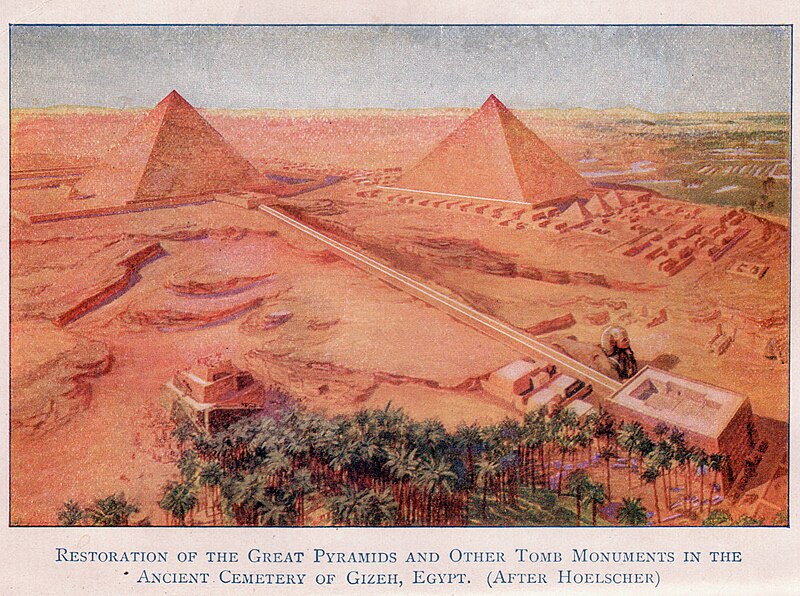
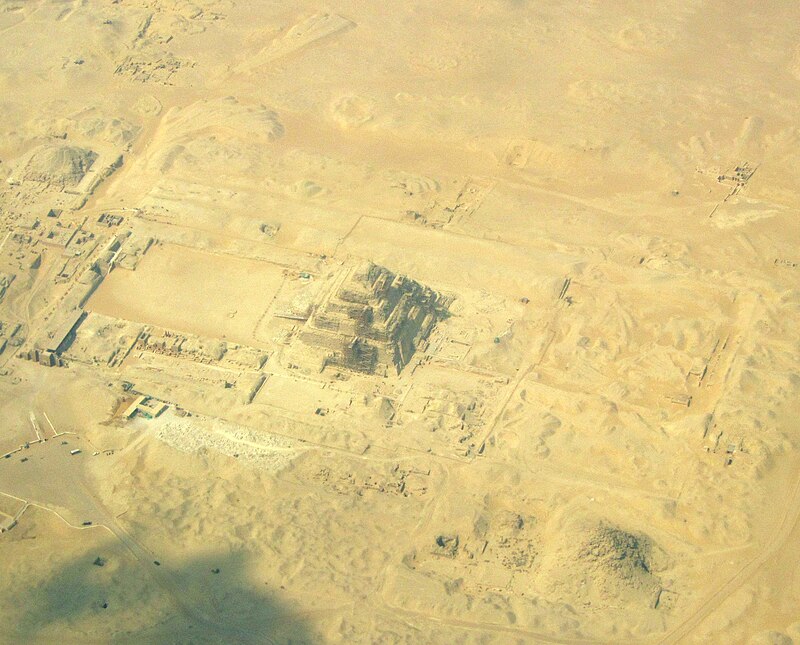


This journey across Giza and Saqqara reveals how ancient stone craft continues to captivate world travelers. Keep exploring these timeless monuments as sunset turns the desert sand into pure gold.
Take it further
Open the tour in the appThe tour in the app
Giza Plateau & Saqqara Landmark WalkThis curated audio walking tour covers six monumental highlights of ancient Giza and Saqqara. Starting at the Great Pyramid of Khufu, you will explore Khafre, Menkaure, the Valley Temple, the Great Sphinx, and finish at the Step Pyramid of Djoser.
+ Add the tour to your planIf you have the app the tour opens right away; otherwise you go to the store.FAQ
- What is the best time of day to start this landmark walk?
- Arrive early at the main Giza Plateau gate right as it opens to enjoy cooler morning temperatures and avoid afternoon crowds.
- How should I travel from Giza to the Step Pyramid of Djoser in Saqqara?
- Take a short taxi or private vehicle drive south from the Giza Plateau to reach the Saqqara archaeological complex in about thirty minutes.