Winter in Prague does not merely arrive; it settles like a slow reduction over an ancient stock, concentrated, deep, and rich with the essence of time. Standing on the heights above the river as twilight deepens, the biting frost carries a distinct and irresistible perfume of burning oak, caramelizing pastries, and the sharp bite of crisp Bohemian air. As a food critic, I have long maintained that a city reveals its truest soul not through its grand silent monuments, but through the scents that rise from its street hearths when the weather turns cold. Prague is a metropolis defined by dramatic seasonal rhythms, where every cobbled alleyway subtly transforms its culinary vocabulary to match the temperature of the sky. Here, the boundary between imperial grandeur and simple street sustenance is impossibly thin, creating a sensory landscape that invites you to taste history as much as you observe it.
To understand Prague's seasonal heart is to appreciate how deeply its heritage is intertwined with the pursuit of intellect, art, and craft. In the late sixteenth century, Holy Roman Emperor Rudolf the Second elected Prague Castle as his main imperial residence, transforming this hilltop fortress into a sparkling cultural capital of Europe. Within these grand courts, Rudolf gathered not only painter Arcimboldo and famous astronomers Tycho Brahe and Johannes Kepler, but also alchemists seeking the secret of turning base metals into pure gold. Rudolf understood that true luxury lay in passionate curiosity, a philosophy that still lingers in the quiet courtyards of Hradčany where seasonal markets now gather. The rich aromas of spiced wine, roasted nuts, and savory meats drifting through these historic spaces feel like a living echo of the lavish banquets that once filled the Renaissance halls.
Imperials, Alchemists, and Palindromes
Descending toward the Vltava, the medieval stone bridge built under Emperor Charles the Fourth carries its own remarkable tale of patient craftsmanship and mysticism. Czech legend tells us that Charles the Fourth, a monarch deeply devoted to numerology, personally laid the foundation stone at precisely five thirty one in the morning on July ninth, thirteen fifty seven. This precise palindrome timestamp was carefully calculated because the emperor believed it formed a numerical arch of protection that would grant the bridge eternal strength against flood and time. Nearby, during a severe famine in the thirteen sixties, Charles IV also commissioned the famous Hunger Wall, explicitly designed to provide employment and daily bread for struggling citizens. Today, as early morning light illuminates the statues along the parapets, that ancient calculation of compassion and geometry feels wonderfully alive. The bridge stands as proof that structure, care, and human intent must harmonize before anything truly lasting can be created.
As we wander through these historic quarters, seasonal celebrations continuously bridge the past and the present. Whether it is the magical glint of handmade glass Christmas ornaments on the castle steps or the crackle of open fires at a neighborhood market, Prague feeds both the discerning palate and the reflective mind. The cooks behind the counters, working with red coal and seasoned cast iron, practice an unwritten craft passed down through centuries. To journey through Prague in season is to slow your pace, to savor each distinct layer of texture, aroma, and memory, and to allow this extraordinary city to reveal its secrets one carefully considered course at a time.
Want to walk it yourself? Plan a trip with these places
The walk
On site, play just that chapter
- 1 min · on site
Sanctuary of Winter Spices and Royal Courtyards
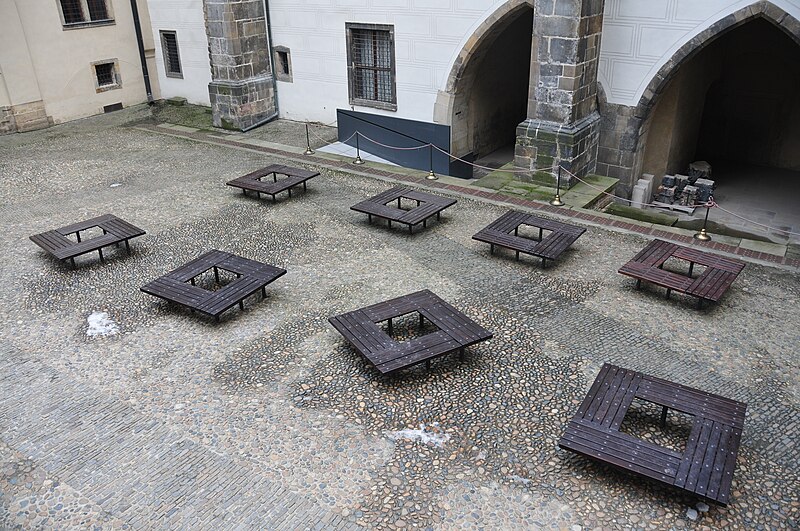
Photo · Wikimedia Commons Standing inside the expansive courtyards of Prague Castle, the morning cold sharpens every sensory detail. Enter via the main gate early in the morning to enjoy quieter courtyards before the crowds arrive. As you walk toward St. George's Basilica, the festive atmosphere of the seasonal Christmas market begins to unfold around you. The crisp air is filled with the rich aroma of roasting pork leg, spiced mulled wine, and sweet sugar dust. Watch the cook behind the counter skillfully turn the heavy pork over open oak embers, brushing it with salted lard until the skin crackles into a perfect brittle crunch. Notice the dramatic visual contrast between the ancient Romanesque towers of St. George and the temporary wooden stalls offering warm winter fare. The hot spiced wine served here carries an opinionated kick of clove and star anise that warms you instantly from the inside out.
From the quiet castle grounds, follow the descending stone stairs toward Lesser Town to discover a hidden gem of seasonal artistry.
- 1 min · on site
The Glass Craftsmen on the Castle Steps
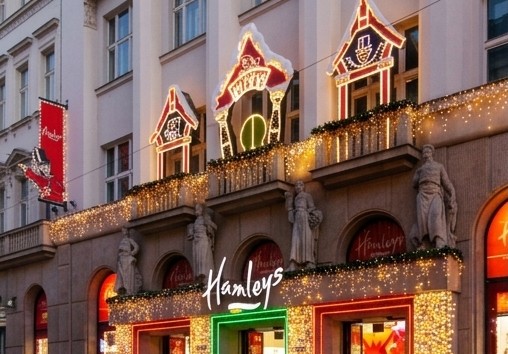
AI-generated image · may differ from the real place Nestled along Zámecké schody on the historic Castle steps, this intimate shop is a jewel box of Bohemian craft. As you step inside, notice the delicate glass ornaments gleaming like melted sugar under warm velvet light. Ask the shopkeeper about locally made ornaments crafted by master glassblowers in the northern Bohemian mountains, which make truly distinctive gifts. The delicate technique required to blow these paper thin glass spheres mirrors the precise sugar pulling of traditional master confectioners. Look closely at the hand painted motifs, where thin silver leaf and crimson lacquer create intricate winter landscapes across the glass surface. Each ornament carries the crisp tactile perfection of artisan craftsmanship. It is an extraordinary reminder of how Bohemian artisans turn raw silica and fire into delicate seasonal magic that captures the light of winter.
After admiring these delicate glass treasures, descend the stone stairs to the Vltava riverfront where the legendary stone span awaits.
- 1 min · on site
Palindrome Stones and Sunrise Mist on the River
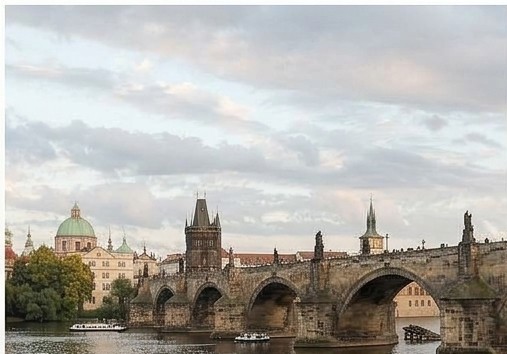
AI-generated image · may differ from the real place Stepping onto Charles Bridge, the historic stone pavement vibrates with centuries of human memory. While a sunset walk across the Vltava offers golden reflections on the water, cross at sunrise for clear views, far fewer people, and an uninterrupted view of the gothic towers. Look up at the weathered stone statues of saints lining the parapets, especially the statue of Saint John of Nepomuk. Notice how the soft river mist wraps around the sandstone pillars, creating an ethereal sensation as if walking directly through a framed landscape painting. The cool river breeze carries a faint scent of fresh water and old damp stone, grounding your senses. As you reach the Old Town bridge tower, pause to admire the geometric precision of the arches above, where Emperor Charles IV laid his numerology stone to guard the city.
Leaving the bridge towers behind, walk straight into Old Town's winding streets toward the bustling historic market square.
- 1 min · on site
Medieval Commerce and Freshly Baked Hearth Bread

Photo: Perituss · CC0 · Original file Entering Havelské tržiště, the scents of fresh orchard fruit and warm baked pastries welcome you to Prague's oldest functioning market. Since the thirteenth century, this cobblestone square has fed the city's residents through every changing season. Browse the side stalls for handmade wooden crafts and artisanal gifts away from the busier main aisle. Observe the market vendors behind their rustic wooden stalls, arranging wooden toys, seasonal berries, and crisp red apples with practised precision. Order a warm trdelník or sweet koláč from a local baker; notice how the butter rich dough is generously dusted with cinnamon sugar, offering a golden crisp exterior and a tender, steaming interior. The lively chatter of locals and the tactile charm of handcrafted souvenirs make this market a joyful, mouthwatering pit stop on your afternoon walk.
From the historic market stalls of Old Town, head south toward the Smíchov district to experience Prague's modern culinary hearth.
- 1 min · on site
Open Flames and Contemporary Street Feasts
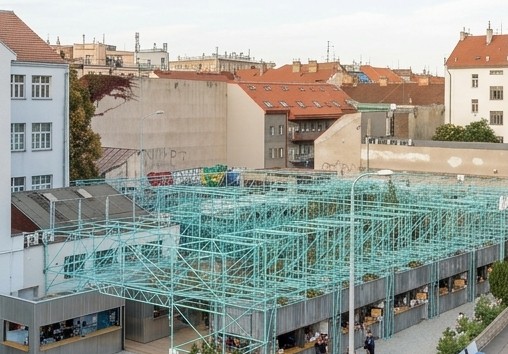
AI-generated image · may differ from the real place Arriving at Manifesto Market Anděl, the contemporary energy of Prague's culinary scene takes center stage. This vibrant outdoor market blends sleek modern architectural design with seasonal street food culture and live music. Check the board on arrival for the day's seasonal specials, craft brews, and live performance events. Here, young opinionated chefs work culinary magic behind open kitchen counters, searing artisanal meats over high flames and crafting inventive seasonal small plates. Smell the aromatic blend of sizzling smash burgers, spiced pork belly tacos, and local craft beers flowing fresh from the tap. Take a comfortable seat near the central heaters, absorb the upbeat ambient soundtrack, and savor the contrast between traditional Bohemian heritage and modern gastronomic flair. It is the ultimate memorable finale to a winter walk across Prague.

As night falls over the Vltava, Prague lingers in the memory like the long, elegant finish of a great vintage wine. From royal courtyards to market flames, the city proves that true flavor is born when time, human craft, and seasonal devotion meet.
Take it further
Open the tour in the appThe tour in the app
Seasonal Prague Gastronomic and Historic Walking RouteEmbark on a sensory winter walk starting at Prague Castle's seasonal market, descending the historic castle stairs to a master glass workshop, crossing Charles Bridge at sunrise, exploring the medieval stalls of Havelské tržiště, and concluding with vibrant craft food at Manifesto Market Anděl.
+ Add the tour to your planIf you have the app the tour opens right away; otherwise you go to the store.FAQ
- What is the best time of day to walk across Charles Bridge during festival seasons?
- Cross at sunrise to enjoy clear views of the Vltava and gothic towers without the crowds, avoiding the busy peak afternoon hours.
- How can visitors find unique seasonal gifts at Prague's street markets?
- Browse the side stalls at Havelské tržiště for handmade wooden crafts, and ask the shopkeeper at the Castle steps for locally blown Bohemian glass ornaments.
This piece was newly written based on the Wikipedia articles ‘Charles Bridge’, ‘Prague’ · CC BY-SA 4.0