Morning arrives in Rio de Janeiro not as a gentle dawn, but as a deliberate sweep of theatrical light. The Atlantic throws a blinding silver sheen against dark volcanic granite. Along the promenade, the Portuguese stones wind in monochrome waves, cool and polished beneath bare soles. Here, style is not an ornament you put on. It is an instinct you strip down to. Cariocas understand something northern runways constantly forget: true glamour is effortless, sun-bleached, and intensely physical. The city does not invite you to admire it from behind plate glass. It demands your presence on the warm pavement, your pulse tuned to the rhythm of salt air and distant percussion.
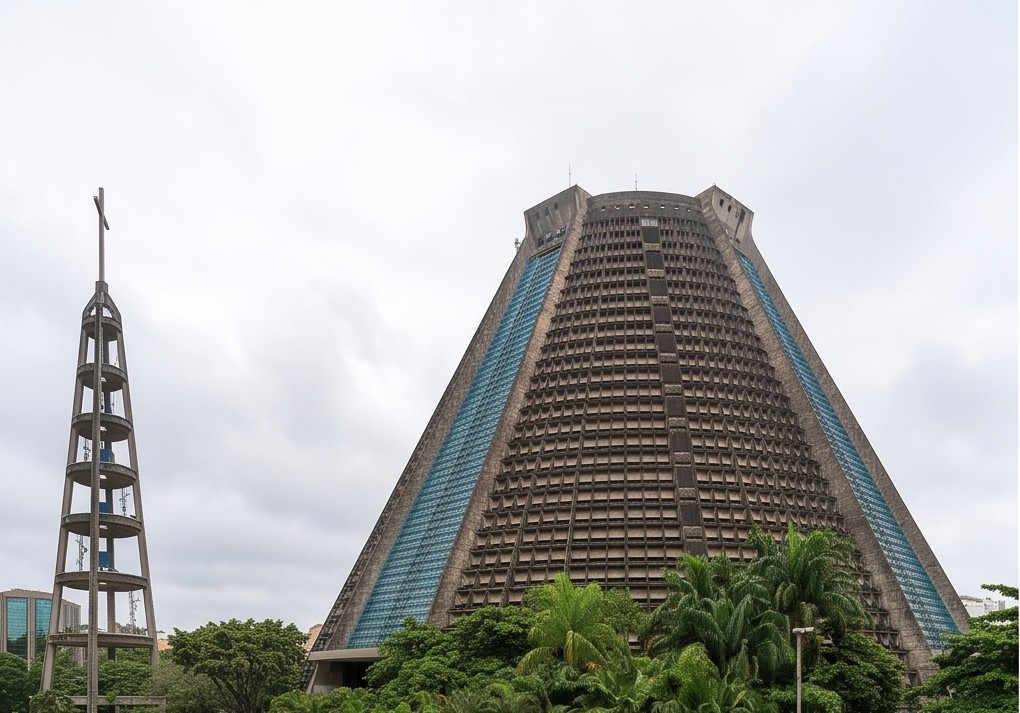
Consider the geometry of this extraordinary coastline. Brutalist modernism and untamed Atlantic forest collide without apology. In the central business district, Monsignor Ivo Antonio Calliari dared to erect a soaring concrete cone that evokes an ancient Mayan pyramid, pierced by four sixty-meter ribbons of stained glass that tint the cavernous interior in ruby and sapphire. Just steps away, the soaring white arches of the eighteenth-century colonial aqueduct bridge the Bohemian pulse of Lapa, carrying the Santa Teresa tram high above the streetcars. The posture of the city is pure composure. Even under the fierce midday sun, there is no frantic hurry, only a calibrated, sensual sway. Rio treats daily existence as an open-air couture presentation staged along the sand, where the dress code is minimalist and the attitude is absolute sovereign grace.
The Obsession of Form
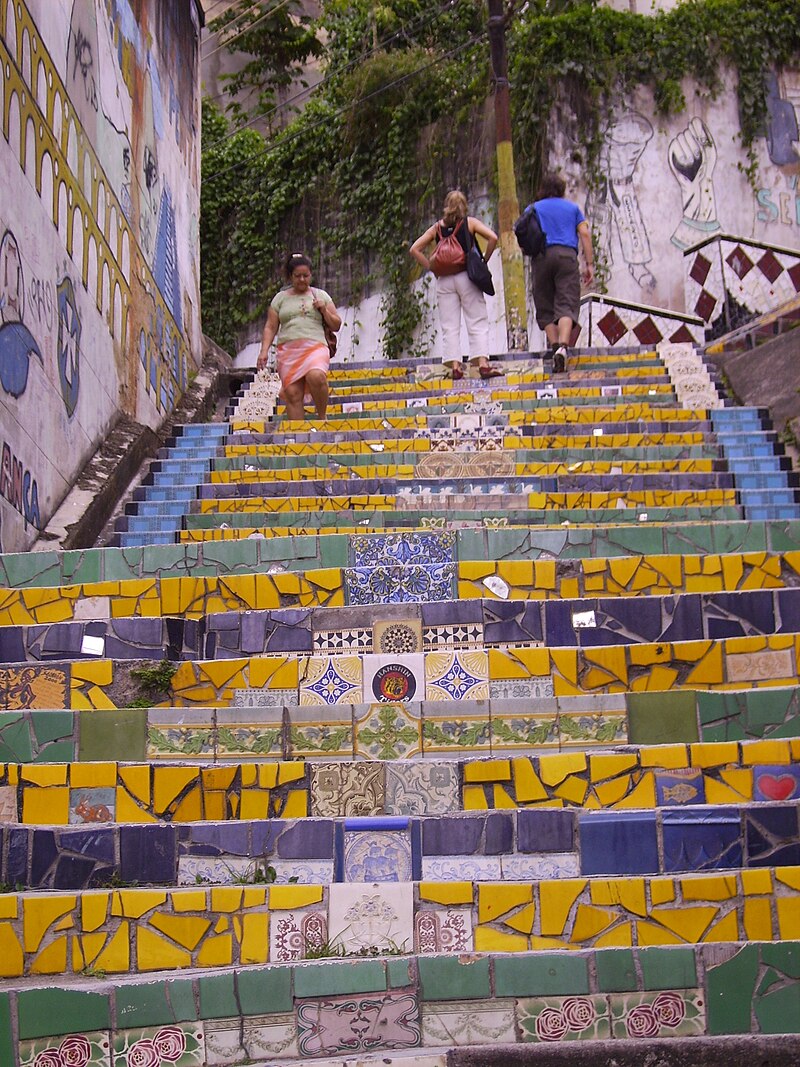
Every iconic silhouette in Rio began with a fiercely personal obsession. Consider Jorge Selaron, the wandering Chilean painter who settled beside a rundown flight of steps between Lapa and Santa Teresa. In nineteen ninety, on a sudden impulse, he began cladding the decaying concrete in fragments of vivid ceramic. His neighbors initially mocked his choice of vivid blue, yellow, and green tiles, the sharp palette of the Brazilian banner. Yet that mockery soon gave way to universal fascination. Selaron sold more than twenty-five thousand portraits of an enigmatic pregnant woman, painting day and night in poverty simply to purchase mirrors and porcelain tiles donated from over sixty countries. He famously declared that his crazy, unique dream would end only on the day of his death. It was art as pure ritual, sustained entirely on passion and pigment.
Further south, along the curving shoreline of Ipanema, culture assumed an even lighter, sun-drenched cadence. In nineteen sixty-two, Antonio Carlos Jobim and Vinicius de Moraes watched a young woman stroll toward the sea and caught the drifting melancholy that gave bossa nova its global passport. Years later, at Posto Nine, the exiled writer Fernando Gabeira stepped onto the sand in an unapologetic purple swimsuit, transforming beachwear into a brazen declaration of personal liberty. Style here is never trivial. It is how this republic of beauty reclaims its freedom.
The Lingering Afternoon
As dusk softens the granite peaks of Dois Irmaos into deep violet shadows, the city pauses for its favorite collective ritual. Out on the weathered rocks of Arpoador, crowds gather not merely to watch the sunset, but to applaud it with rising warmth. It is an ovation for nature itself, executed with easy theatricality and communal joy. You sit with the scent of roasted mate and ocean brine in the air, watching linen shirts catch the evening breeze. You realize that Rio does not belong to static monuments of stone. It belongs to the ephemeral instant where twilight kisses the tide, leaving behind a sharp, delicious longing.
Want to walk it yourself? Plan a trip with these places
The walk
On site, play just that chapter
- 1 min · on site
Catedral Metropolitana de São Sebastião do Rio de Janeiro
Brutalism in Technicolor
AI-generated image · may differ from the real place Step off the wide pavements of Avenida Republica do Chile and enter a monumental concrete cone that defies every European cathedral trope. Completed in nineteen seventy-nine under Monsignor Ivo Antonio Calliari, this brutalist sanctuary resembles an ancient Mayan pyramid rendered in sculpted slate. Inside, the sheer scale takes your breath away. Look up toward the central ceiling, where four immense sixty-meter vertical bands of stained glass soar directly toward an illuminated cross. Sunlight pours through the glass in emerald greens, sapphire blues, and rich ambers, casting kaleidoscopic pools across the dark flagstones. The acoustic stillness here offers a striking sanctuary from the roaring traffic outside. It is austere, commanding, and profoundly cinematic, proving that holy spaces need no gilded cherubs when raw architectural geometry can conduct pure light with such operatic authority.
Walk three blocks south toward the bohemian heartbeat of Lapa, where the city shifts from modern concrete to romantic colonial stonework.
- 1 min · on site
The Monumental Colonnade

Photo: Wilfredor · CC0 · Original file Emerge onto the open square to behold the grand aqueduct of Carioca, forty-two double-tiered arches rising like white marble bones against the tropical skyline. Built in the mid-eighteenth century to channel mountain spring waters into the colonial core, this majestic colonnade found an entirely new destiny in the late nineteenth century when it became the elevated viaduct for the charming Santa Teresa tram. Stand beneath the towering arches and look up as the canary-yellow streetcar glides gracefully overhead, wooden blinds rattling with vintage nonchalance. By day, the pristine whitewashed masonry cuts a sharp architectural profile. As dusk falls, the surrounding pavement fills with the intoxicating percussion of street samba and live pagode, reminiscent of the legendary concerts at neighboring Fundicao Progresso. It is a monument that does not merely sit in history; it dances through it every night.
Turn down the alleyway along Joaquim Silva street, where the sound of the avenue softens into the mosaic labyrinth of Manuel Carneiro.
- 1 min · on site
A Living Runway of Porcelain
Photo · Wikimedia Commons Arrive in the early morning stillness, before the world awakens, to witness two hundred and fifteen steps gleaming with fresh morning dew. What began in nineteen ninety as a painter's private eccentricity evolved into Jorge Selaron's permanent love letter to the Brazilian populace. Take your time ascending the steep passage, letting your eyes wander across thousands of fragments scavenged and gifted from over sixty nations. Notice the recurring hand-painted tiles of a pregnant African woman, the mysterious motif Selaron painted over twenty-five thousand times to fund his obsessive craft. Shards of cobalt blue, sunshine yellow, and palm green weave a vivid ceramic tapestry that climbs directly toward the hillside village of Santa Teresa. There is a raw, bohemian glamour in how mirror fragments catch the sun, turning this urban incline into an ever-changing stage of international devotion.
Slip into a taxi heading south along the coastline, leaving the bohemian hills behind for the fortified promontory guarding Copacabana.
- 1 min · on site
Artillery, Espresso, and Ocean Air
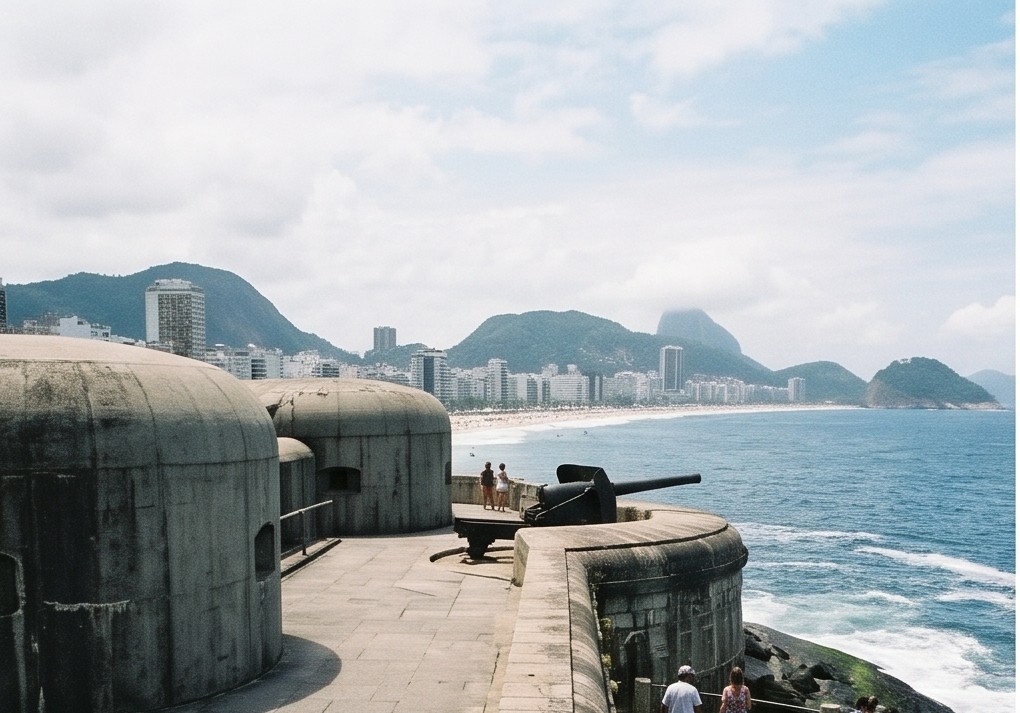
AI-generated image · may differ from the real place Perched on the rocky headland of Praca Coronel Eugenio Franco, this nineteen-fourteen fortress offers one of the most sophisticated vantage points in the Americas. Walk past the massive Krupp armored cupolas, which once roared in the historic tenentista uprising of nineteen twenty-two, and make your way directly to the shaded oceanfront cafe terrace. Order an espresso and a warm pastry, taking a front-row seat to the panoramic sweep of Copacabana's crescent beach. The sea crashes against dark rocks below, while the breeze rustles through coastal palms. Inside the army museum, vintage brass guns and naval memorabilia whisper tales of old South Atlantic defenses, but the true luxury here is the perspective. After taking in the coastal panorama, step through the historic gates and join the leisurely flow along the Copacabana promenade, where vintage elegance still reigns supreme.
Stroll westward around the rocky outcrop toward Arpoador, where the shoreline opens into the sublime golden sands of Ipanema.
- 1 min · on site
The Runway of Sovereign Ease

Photo: The original uploader was Chmouel at English Wikipedia . · CC BY-SA 3.0 · Original file Stroll down Avenida Vieira Souto, where Roberto Burle Marx's iconic black-and-white stone mosaics guide you along the Atlantic shore. Ipanema is not merely a stretch of sand; it is an effortless cultural stage delineated by lifeguard towers. Head toward Posto Nine, the legendary haven of free thinkers, artists, and political rebels where writer Fernando Gabeira once redefined counter-cultural fashion in a daring purple swimsuit. Watch casual games of footvolley played with athletic grace against the backdrop of the iconic twin peaks of Dois Irmaos. As late afternoon draws in, walk out onto the rugged promontory of Arpoador Rock. Join the gathered crowd as the sun descends into the Atlantic, erupting into a collective standing ovation as twilight claims the horizon. It is the quintessential Carioca ritual: effortless, shared, and impossibly chic.


Rio does not ask you to conform to its rhythm; it quietly dismantles your defenses until you adopt its gait. In this city where granite meets surf, sophistication is measured not by what you possess, but by the effortless grace with which you surrender to the salt, the light, and the lingering samba.
Take it further
Open the tour in the appThe tour in the app
From Modernist Concrete to Coastal SandFrom the monumental concrete pyramid of the Metropolitan Cathedral to the bohemian rhythm of Lapa's arches and Selaron's tiled steps, this curated journey transitions from downtown architectural modernism to the South Zone. Conclude with seaside espresso at the historic Copacabana fort before watching sunset crowds applaud the Atlantic tide at Ipanema.
+ Add the tour to your planIf you have the app the tour opens right away; otherwise you go to the store.FAQ
- Why are the steps of Escadaria Selaron decorated primarily in green, yellow, and blue?
- Jorge Selaron initially chose fragments of blue, green, and yellow tiles as a direct visual tribute to the Brazilian national flag, despite initial teasing from his neighborhood peers.
- What is the cultural significance of Posto 9 along Ipanema Beach?
- Delineated by the ninth lifeguard station, Posto 9 became a celebrated gathering sanctuary for artists, intellectuals, and counter-cultural figures following journalist Fernando Gabeira's public appearance in 1979.
- How did Arcos da Lapa transform from an aqueduct into a transportation icon?
- Constructed in the eighteenth century to channel spring water from the Carioca River into central Rio, the structure was converted in the late nineteenth century into an elevated viaduct for the Santa Teresa streetcar.
This piece was newly written based on the Wikipedia articles ‘Escadaria Selarón’, ‘Ipanema’, ‘Nos Arcos da Lapa’ · CC BY-SA 4.0