Dawn over Rio de Janeiro arrives not with a sudden burst of glare, but with a slow, majestic unfolding of shadow and ancient granite. Standing along the historic harbor of Pier Mauá, one observes how the early morning mist gently clings to the emerald slopes of Corcovado while Guanabara Bay glimmers under the soft tropical light. For generations, travelers have arrived at this famous coastline expecting merely sun-drenched beaches and samba rhythms, yet what awaits the curious family is something far more profound: a living, breathing museum where deep geological epochs meet the tender human impulse to remember, build, and preserve. When parents and children walk these waterfront avenues together, they step directly into a rich historical narrative forged across centuries by indigenous guardians, Portuguese maritime trade, African artisans, and visionary modernists. To explore Rio de Janeiro through the eyes of a museum curator is to offer young minds a foundational lesson in cultural layering, teaching them to discern the subtle dialogues between natural landscape and human architecture.
Architecture of the Waterfront
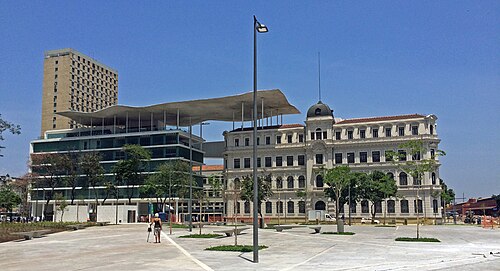
Consider how this coastal cityscape functions as an evolving archive of civic ambition and cultural reinvention. Where industrial docks once handled commercial cargo, the revitalized port area now serves as a serene sanctuary for scientific curiosity and artistic reflection. Here, contemporary design does not displace history; rather, it enters into a thoughtful conversation with the maritime past. Spanish architect Santiago Calatrava embodied this ethos when he designed the soaring, cantilevered structure of the Museu do Amanhã. Drawing direct inspiration from the native bromeliads he studied inside Rio de Janeiro's historic Botanical Garden, Calatrava created a building whose mobile solar spines shift gracefully with the sun like a living organism. Just outside, resting within the reflection pool facing the bay, the American artist Frank Stella installed Puffed Star II, a massive six-meter metallic sculpture featuring twenty radiating points. Donated to the museum's permanent outdoor collection after its display in New York, Stella's geometric star reflects the vast Brazilian sky and the dark harbor waters below, anchoring global modern art within Rio's historic maritime hearth.
The Heritage of the Forest Mansion
Journeying southward toward the forested foot of Corcovado mountain, the historical narrative transitions from public harbor ambition to romantic private patronage and lush botanical design. Deep within the neighborhood of Jardim Botânico lies Parque Lage, an extraordinary public park born from private love and architectural elegance. In the 1840s, English landscape designer John Tyndale crafted its winding garden pathways and constructed a rustic artificial grotto concealed within the subtropical foliage. Decades later, in the 1920s, the Brazilian industrialist Henrique Lage commissioned Italian architect Mario Vodret to remodel the estate mansion for his celebrated wife, the Italian opera singer Gabriella Besanzoni. Painter Salvador Payols Sabaté adorned the interior walls with classical murals, filling the grand salons with color while operatic melodies echoed across the central courtyard. Today, children wander freely through these same vaulted colonnades where visual arts students now sketch, seamlessly connecting the grand heritage of twentieth-century opera with contemporary Brazilian creativity.
As you prepare to guide your family through these historic monuments, allow yourselves to slow down and observe with deliberate care. Listen closely to the gentle lap of Guanabara Bay against the stone piers, trace the intricate classical moldings of the old courtyard arches, and notice how Rio de Janeiro constantly honors its storied past while imagining its future. History here is never confined to dark display cabinets; it thrives beneath the open sky, shared effortlessly between parent and child.
Want to walk it yourself? Plan a trip with these places
The walk
On site, play just that chapter
- 1 min · on site
Aquário Marinho do Rio de Janeiro
Depths of the South Atlantic

Photo: Edvaldo Reis e Hudson Pontes · CC BY 3.0 · Original file As you step inside the massive maritime interior of Aquário Marinho do Rio de Janeiro, the ambient light softens into a soothing ocean blue. Here, along the historic docks of Avenida Rodrigues Alves, human curiosity meets the mysterious depths of the South Atlantic. To begin your walk, guide your family toward the main glass ocean tunnel where blacktip reef sharks and spotted rays glide effortlessly overhead. Encourage your children to look upward through the acrylic dome; observe how the filtered sunlight creates undulating patterns across the sandy basin, mimicking the natural open ocean. This sanctuary is designed not merely for spectacle, but to foster scientific stewardship among young visitors. Notice the quiet absorption of children watching large sea turtles swim past, reflecting how marine education transforms abstract environmental awareness into personal empathy for marine life.
Leaving the ocean tunnel, follow the smooth waterfront promenade along Praça Mauá toward the striking white cantilever of the city's futuristic museum.
- 1 min · on site
Sails of Science and Future
Photo: Mariordo (Mario Roberto Durán Ortiz) · CC BY-SA 4.0 · Original file Standing before Museu do Amanhã on Pier Mauá, one is struck by how architect Santiago Calatrava translated the natural geometry of Rio's native bromeliads into soaring steel wings. Step onto the wide marble plaza and look toward the large reflection pool facing Guanabara Bay. Here you will spot Frank Stella's Puffed Star II, a metallic twenty-pointed star resting gracefully upon the water. Guide your family around the western edge of the pool to observe how the sculpture's geometric facets reflect both the surrounding harbor waves and the dramatic solar roof above. Inside, the exhibition invites children to contemplate global ecosystems through five narrative journeys. Pause in the central hall to watch the ceiling panels adjust to the shifting sun, demonstrating how intelligent design honors environmental harmony.
From this sunlit pier, take a short drive southward toward the lush neighborhood of Jardim Botânico, where forested mountain trails await beneath Corcovado.
- 1 min · on site
Courtyards of Opera and Art
Photo · Wikimedia Commons Entering Parque Lage at the foot of Corcovado mountain feels like stepping into a romantic Nineteenth Century landscape painting. Follow the gravel pathway framed by towering imperial palms toward the central Italianate mansion, originally remodeled by industrialist Henrique Lage for his wife, opera singer Gabriella Besanzoni. Walk into the open stone courtyard and look up at the inner colonnades, where students from the Visual Arts School refine their craft among classical arches. Guide your children along the garden trails behind the main mansion to discover the artificial grotto crafted by John Tyndale in the eighteen forties. Look closely at the built-in aquarium tanks embedded within the stone walls of the grotto, where colorful freshwater fish swim surrounded by lush moss and historic stonework, demonstrating a harmonious synthesis of human craftsmanship and living nature.


May your family carry home not just photographs of sunlit stone, but a lasting reverence for the stories and living heritage of Rio de Janeiro.
Take it further
Open the tour in the appThe tour in the app
A Curator's Family Journey Through Rio's HeritageThis curated family route journeys from the historic maritime harbor at Pier Mauá to the lush botanical foot of Corcovado mountain. Parents and children explore world-class marine life, visionary sustainable architecture, and romantic nineteenth-century estate gardens, encountering century-old art, historical anecdotes, and natural wonder across Rio de Janeiro's rich landscape.
+ Add the tour to your planIf you have the app the tour opens right away; otherwise you go to the store.FAQ
- How does this walking tour accommodate families with children of varying ages?
- The route features wide pedestrian plazas, interactive museum spaces, and calm park trails that allow children to move safely while discovering history and ocean science.
- What makes the architectural design of Museu do Amanhã particularly significant for young visitors?
- Designed by Santiago Calatrava, the museum features mobile solar roof wings that move with the sun, offering children a clear, real-world example of how sustainable engineering mimics living biological forms.
This piece was newly written based on the Wikipedia articles ‘Museu do Amanhã’, ‘Parque Lage’ · CC BY-SA 4.0