Morning arrives in Buenos Aires not with a sudden burst of harsh sunlight, but as a gradual softening of golden shadows along broad avenues and quiet cobblestone backstreets. To move through this captivating South American metropolis with an open heart and a curious eye is to discover that shopping here has never been a mere transaction of commercial goods. Instead, it is an ongoing cultural dialogue between European architectural grandeur and a deeply rooted South American spirit of artistic reflection and leisurely exploration. As you travel toward the northern neighborhood of Palermo, where purple jacaranda branches cast delicate patterns across wrought iron balconies, the urban landscape reveals how nineteenth-century Parisian ambitions were thoughtfully transplanted onto Argentine soil. Here, shopping arcades were designed with the solemn beauty of classical cathedrals, former industrial breweries were transformed into sunlit temples of modern fashion, and historic railway yards were reimagined as vibrant open-air promenades. Every boulevard carries the quiet memory of writers, poets, and dreamers who once walked these exact pathways, seeking creative inspiration amidst the dust of antique stalls and beneath glittering glass cupolas. This romantic city invites you to slow your step, pause at quiet street corners, and observe how daily routines become elevated into timeless art.
The Literary Footsteps of Palermo and Recoleta
The literary soul of Buenos Aires was forged by visionary artists who found profound beauty in the everyday rhythms of neighborhood life. Jorge Luis Borges spent his formative years wandering the tranquil, tree-shaded grid of Palermo Viejo, capturing its suburban solitude, courtyard fountains, and wrought iron gates in his very first published verses before later assuming his post as Director of the National Library in Recoleta. For Borges, the city was an intricate labyrinth of memories where past and present merged seamlessly along quiet residential corners. Only a short distance away in Recoleta, his close literary companions Adolfo Bioy Casares and Silvina Ocampo strolled past the aristocratic townhouses of Quintana Avenue, their philosophical conversations floating past carved stone portals and hidden courtyards. Further south in Balvanera, tango legend Carlos Gardel, universally revered as El Morocho del Abasto, transformed the bustling wholesale fruit market into an immortal cultural symbol, filling neighborhood cabarets with his soulful voice. These historic figures did not simply inhabit the capital; they infused its markets, avenues, and arcades with an enduring narrative legacy that continues to inspire thoughtful travelers today.
The Art of Urban Exploration
To explore Buenos Aires today with this personal audio guide is to listen to the distant echoes of those storied lives while crafting your own meaningful impressions of the capital. As your journey unfolds through these distinct commercial havens, allow yourself the freedom to linger before hand painted murals, to run your fingers over carved wooden antiques, and to pause beneath soaring glass vaults illuminated by the soft afternoon glow. The true luxury of Buenos Aires is never found in hurried haste, but rather in the deliberate art of flânerie, where every turn invites you to observe, reflect, and appreciate the timeless craftsmanship of a bygone era. Let these historic spaces reveal themselves before you like the chapters of a cherished book, offering a rich tapestry of art, history, fashion, and urban heritage. Step forward into the natural cadence of the streets, embrace the quiet elegance surrounding you, and let the enduring romance of the city guide your path forward.
Want to walk it yourself? Plan a trip with these places
The walk
On site, play just that chapter
- 1 min · on site
A Treasury of Forgotten Heirloom Antiques

Photo: Defensoría del Pueblo de la Ciudad de Buenos Aires · CC BY-SA 4.0 · Original file As you step inside Mercado de las Pulgas along Dorrego Avenue, the comforting aroma of aged cedar wood, polished brass, and vintage paper immediately surrounds you. This expansive hall in Colegiales has long served as a cherished sanctuary for local antique collectors, where every individual stall holds a forgotten fragment of Argentine domestic history. Take your time browsing through the winding aisles, asking vendors about the provenance of carved wooden cabinets, mid-century chandeliers, and hand-restored leather armchairs before choosing a keepsake. Notice how natural sunlight filters through the high timber roof, illuminating rows of gilded mirrors, vintage travel trunks, and oil paintings that once adorned belle epoque salons in Recoleta. To wander here is to witness how the city holds onto its vibrant past with profound affection, turning neglected family heirlooms into beloved treasures.
From here, a short walk south along Paraguay Street leads you toward the open sky of Distrito Arcos.
- 1 min · on site
Industrial Heritage and Open-Air Fashion

Photo: Rosario cuevas · CC BY-SA 4.0 · Original file Walking south along Paraguay Street brings you to Distrito Arcos, where historic industrial railway architecture seamlessly merges with contemporary outdoor shopping. Built upon the historic marshalling yards of the San Martin Railway and the former storage sheds of Bodegas Giol, this open-air complex retains its original red brick arches under the open sky. When the complex opened in two thousand fourteen, actors Guillermo Francella and Adrian Suar gathered alongside corporate leaders to celebrate its creative urban transformation. As you walk along the central brick promenade, check the outlet racks first for exceptional finds on past-season Argentine designer apparel, and pause at a specialty coffee kiosk near the garden installations. Observe how underground rainwater collection tanks have been cleverly repurposed for landscape irrigation, beautifully blending historic preservation with sustainable modern urban design.
Continuing southeast along Avenida Santa Fe will bring you directly to the glass covered atrium of Alto Palermo.
- 1 min · on site
A Modern Shopping Hub on Historic Ground
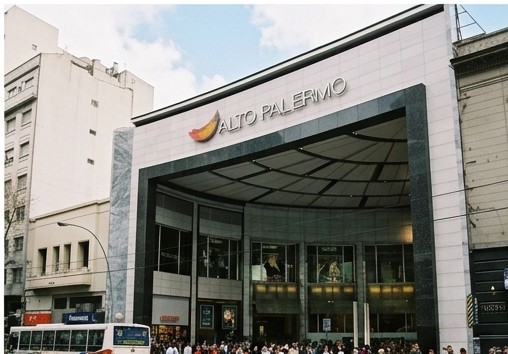
AI-generated image · may differ from the real place Continuing southeast toward Santa Fe Avenue, you arrive at Alto Palermo, a landmark shopping center that stands upon ground once occupied by the historic Cerveceria Palermo brewery. Founded in eighteen ninety-seven by industrialist Ernesto Tornquist and later acquired by Otto Bemberg, the original brewery produced beer for generations before giving way to this glass-roofed complex designed by architect Juan Carlos Lopez. Enter through the main access on Santa Fe Avenue and look upward to admire the vast glass canopy that bathes the multi-level atrium in bright natural light. Walk up to the top level terrace to view the striking outdoor mural created by urban artist Martin Ron, which beautifully overlooks the bustling avenue below. Do not miss the chance to glance down at Arenales Street, which passes directly beneath the building in the only covered street tunnel in Buenos Aires.
From Palermo, heading east toward the aristocratic quarter of Retiro brings you to the neoclassical portals of Patio Bullrich.
- 1 min · on site
Aristocratic Elegance in Historic Auction Halls
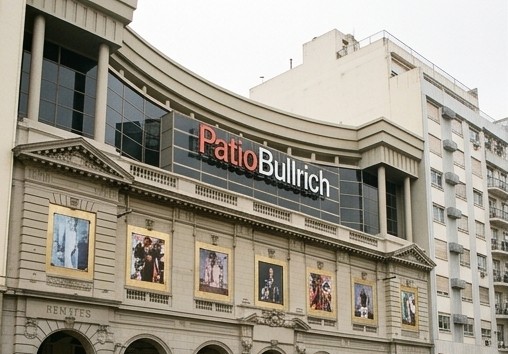
AI-generated image · may differ from the real place Heading east into the refined district of Retiro, you reach Patio Bullrich, an exquisite shopping arcade that began its life in eighteen sixty-seven as a premier auction house. Designed by architect Juan Waldorp for the prominent Bullrich family, these grand halls once echoed with the shouts of livestock auctions for prize bulls, thoroughbred racehorses, and fine family heirlooms. When architects Pfeifer and Zurdo converted the building into a shopping center, they carefully preserved its neoclassical facade, soaring clock tower, and white marble animal head sculptures. As you explore the quiet upper galleries, look up to spot the marble bull heads carved into the high walls, and browse the elegant boutiques lining the quiet balconies. The serene atmosphere here still recalls the literary era when writers Bioy Casares and Silvina Ocampo walked these very corridors.
Continuing down toward the historic pedestrian pulse of Florida Street leads you to the grand dome of Galerias Pacifico.
- 1 min · on site
Beaux-Arts Murals and Architectural Splendor
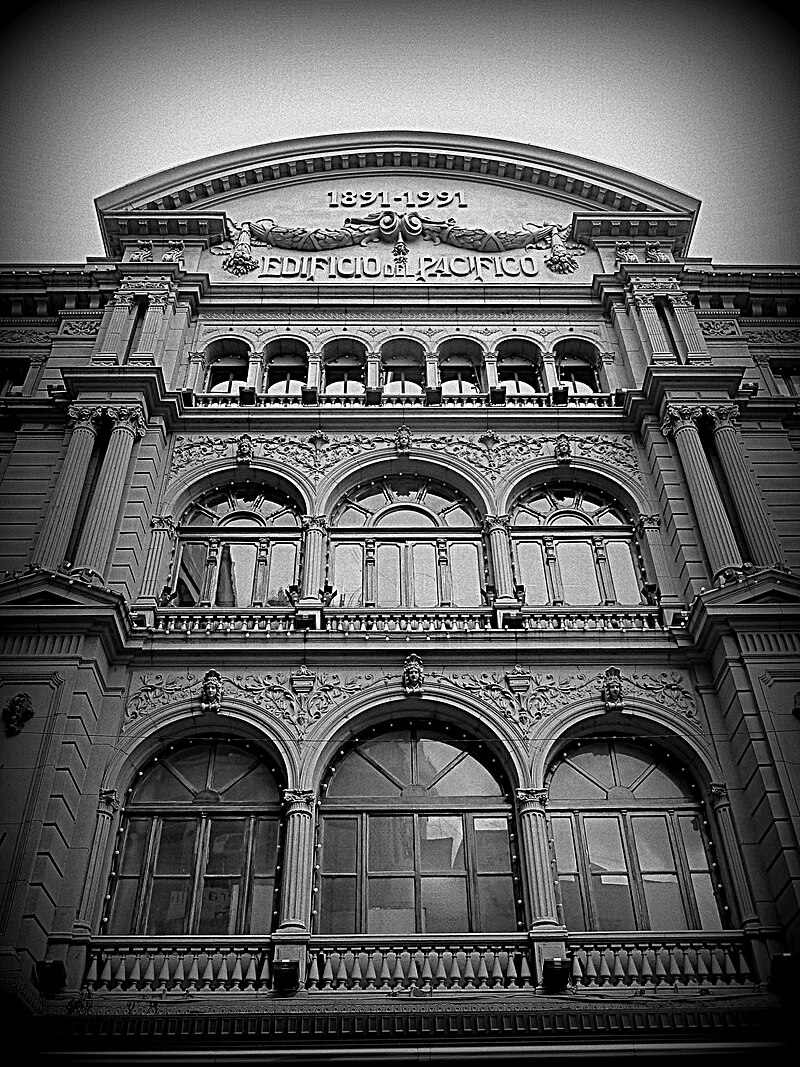
Photo · Wikimedia Commons A pleasant walk down toward Córdoba Avenue brings you to Galerias Pacifico, arguably the most breathtaking shopping arcade in South America. Originally commissioned in eighteen eighty-nine by architects Emilio Agrelo and Roland Le Vacher to house the Argentine Bon Marche, this Beaux-Arts masterpiece later served as offices for the Buenos Aires and Pacific Railway company. Step through the entrance on Florida Street and immediately look up at the central dome to admire the majestic ceiling murals painted by renowned Argentine masters. Take your time walking the cruciform central halls, noticing how natural light highlights the intricate gold leaf detailing and polished marble floors. Browse the curated Argentine leather and fashion boutiques on the main level, where high craftsmanship meets timeless architectural grandeur in a setting that feels more like a museum than a commercial arcade.
Taking subway Line B west brings you to the historic Balvanera neighborhood and the soaring Art Deco arches of Abasto Shopping.
- 1 min · on site
Tango Legends and Art Deco Architecture

Photo: Aleksandrs Timofejev… · CC BY 3.0 · Original file Finally, taking the subway line west brings you to Abasto Shopping, an iconic Art Deco masterpiece that dominates the skyline along Corrientes Avenue. Completed in nineteen thirty-four by architects Delpini, Sulcic, and Bes, this monumental structure served for decades as the city central wholesale fruit and vegetable market. This neighborhood was the heartland of tango legend Carlos Gardel, affectionately known as El Morocho del Abasto, whose voice defined Argentine music, while the market itself was immortalized in the classic nineteen fifty-five film starring Pepe Arias and Tita Merello. Use the main Corrientes Avenue entrance near Carlos Gardel station, and look up to marvel at the soaring reinforced concrete arches that form the cavernous roof. Explore the vibrant multi-level interior, where historic industrial architecture creates an unforgettable setting for modern urban life.


As your journey through these six remarkable places comes to a gentle close, the true beauty of shopping in Buenos Aires remains etched in memory. It is not defined by the tangible possessions you carry home, but by the quiet moments of aesthetic contemplation spent beneath historic glass cupolas and amidst the scent of aged leather and wood. In every arcade, marketplace, and tree-lined avenue, the capital continues to celebrate its past while welcoming the present with unmatched elegance.
Take it further
Open the tour in the appThe tour in the app
Buenos Aires Shopping and Architectural Walking TourThis walking tour guides you through six of Buenos Aires most iconic markets and shopping arcades, tracing a route from Palermo to Retiro and Balvanera. Experience the rich intersection of literary history, historic architecture, antique treasures, and contemporary fashion while walking along broad avenues.
+ Add the tour to your planIf you have the app the tour opens right away; otherwise you go to the store.FAQ
- What is the best way to navigate between these shopping destinations?
- Most destinations are located along convenient pedestrian avenues and public transportation routes, including Line D and Line B of the Buenos Aires Underground, making walking and short subway rides ideal.
- What makes shopping in Buenos Aires distinct from other capitals?
- Shopping in Buenos Aires is deeply integrated into historic architecture, from repurposed nineteenth-century auction houses and Beaux-Arts arcades to Art Deco markets and open-air railway yards.