Morning over the Río de la Plata arrives not with a sudden flash of gold, but as a slow unfolding of slate gray and pale rose across the granite pavers of Buenos Aires. As a curator of urban memory, I have long observed how cities reveal their deepest character not through pristine solitude, but through the accumulated weight of their civic spaces. Before you step into the avenues of this capital, take a moment to listen to the atmosphere itself. Here, architecture is never merely stone, iron, and mortar; it is a repository of political passions, artistic ambition, and national drama. Every portico and facade carries the invisible residue of public assemblies, presidential decrees, and cultural aspirations that have shaped Argentina across more than four centuries.
Consider the underlying pattern of this urban landscape. Founded originally in 1580 by Juan de Garay, who staked out a central square along the dusty banks of the river, Buenos Aires was built upon a grid designed to project order onto an endless horizon. Yet behind that geometric symmetry lies a history marked by dramatic transformations and fierce ideological debates. The monuments standing today are not static artifacts freeze-framed in time; they are living witnesses that have been altered, painted, demolished, and reborn to reflect the evolving identity of a nation continuously redefining itself.
Strata of Power and Memory
Nowhere is this dynamic layering more evident than in the heart of the city at Plaza de Mayo. In the nineteenth century, President Domingo Faustino Sarmiento sought to soften the grim profile of the executive headquarters by landscaping its grounds and ordering its exterior painted a soft pink. Tradition holds that this distinctive tint was chosen to defuse bitter partisan divisions by blending the Federalist red with the Unitarian white, though architectural archives also note that builders mixed cow blood into the whitewash to seal the masonry against the damp river air. Decades later, that same square became the stage where the Mothers of the Plaza de Mayo gathered during the Dirty War, wearing white scarves and bearing photographs of their missing children to challenge silent authority with peaceful persistence.
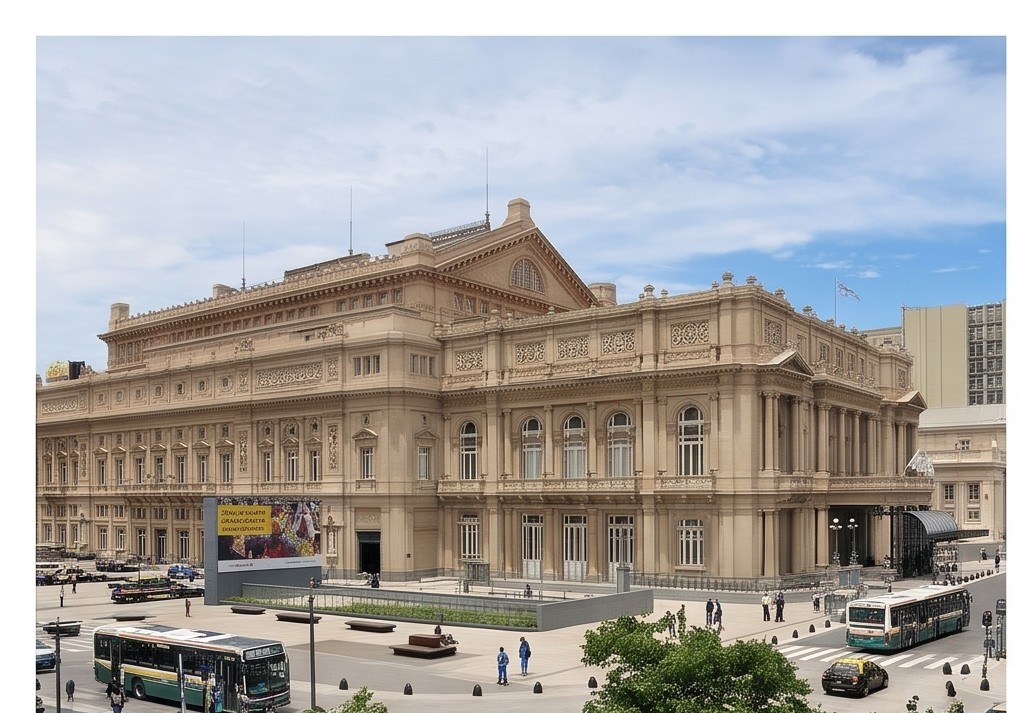
Further along the cultural axis stands the Teatro Colón, a masterwork of acoustic engineering and decorative splendor whose history reflects the resilience of the city. When French statesman Georges Clemenceau visited Buenos Aires during the 1910 Centennial, an anarchist bomb detonated inside the theater during an opera performance. Clemenceau recorded his astonishment not only at the violence, but at the quiet fortitude of the citizens, noting that on the very next evening, society ladies returned to fill every seat in the hall without hesitation. It is this profound composure in the face of history that defines the soul of Buenos Aires.
The Living Collection
As you prepare to explore these places on foot, remember that a city is best understood as a collection of threshold objects. From the colonial arches of the Cabildo to the rotating steel needle of the Puente de la Mujer spanning the modern docks, each landmark invites you to step across time. Look past the surface polish and pay attention to the subtle textures: the weathered brick buried beneath layers of plaster, the echo of footsteps across marble foyers, and the deliberate geometry of wide avenues carved through older neighborhoods. These physical details tell the story of a metropolis that has continuously curated its past while marching toward the future.
Want to walk it yourself? Plan a trip with these places
The walk
On site, play just that chapter
- 1 min · on site
The Epicenter of Civic Memory
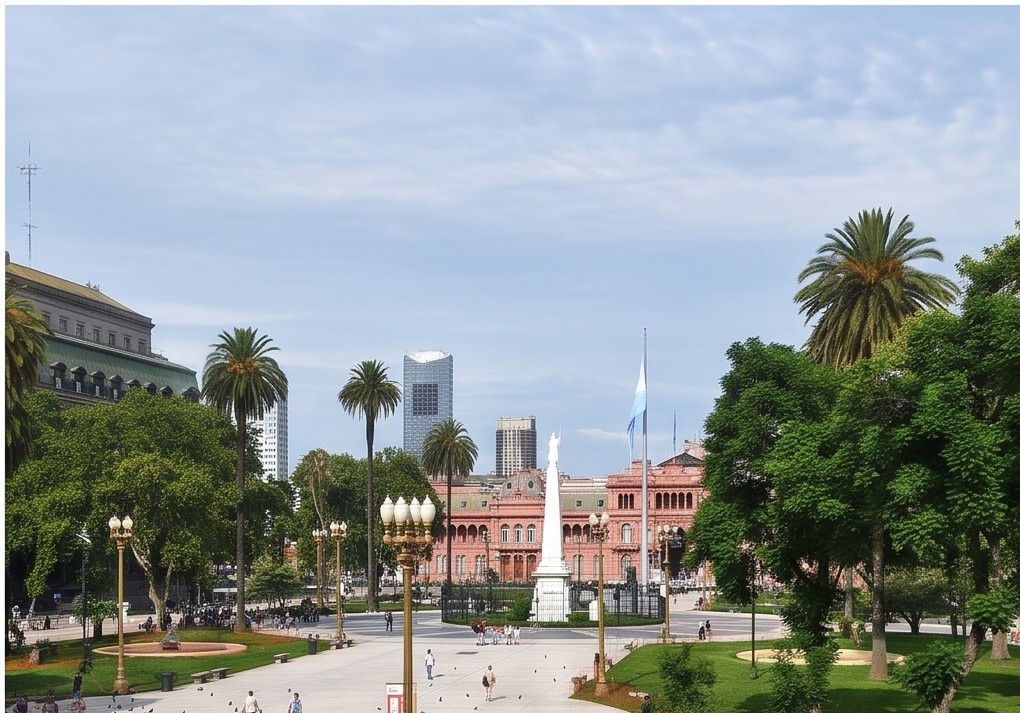
AI-generated image · may differ from the real place Standing at the center of Plaza de Mayo, you occupy the focal point of Argentine history. It was here in 1580 that Juan de Garay established the city's foundation, laying out a central plaza that would witness every momentous transformation of the republic. The modern unified square took shape in 1884 under Mayor Torcuato de Alvear, who demolished the central Recova colonnade that had long divided the Plaza de la Victoria from the Plaza de Armas. At the hub stands the May Pyramid, erected in 1811 to mark the first anniversary of the 1810 May Revolution. As you walk across these cobblestones, consider how this space evolved from a colonial market into a sanctum of public expression. Notice the white headscarves painted on the pavement surrounding the monument, marking where the Mothers of the Plaza de Mayo walked during the Dirty War to demand justice for their missing children.
Now turn your gaze toward the western perimeter of the square, where white whitewashed arches stand quiet against the modern cityscape.
- 1 min · on site
Museo Nacional del Cabildo de Buenos Aires y de la Revolución de Mayo
The Archway of Colonial Governance
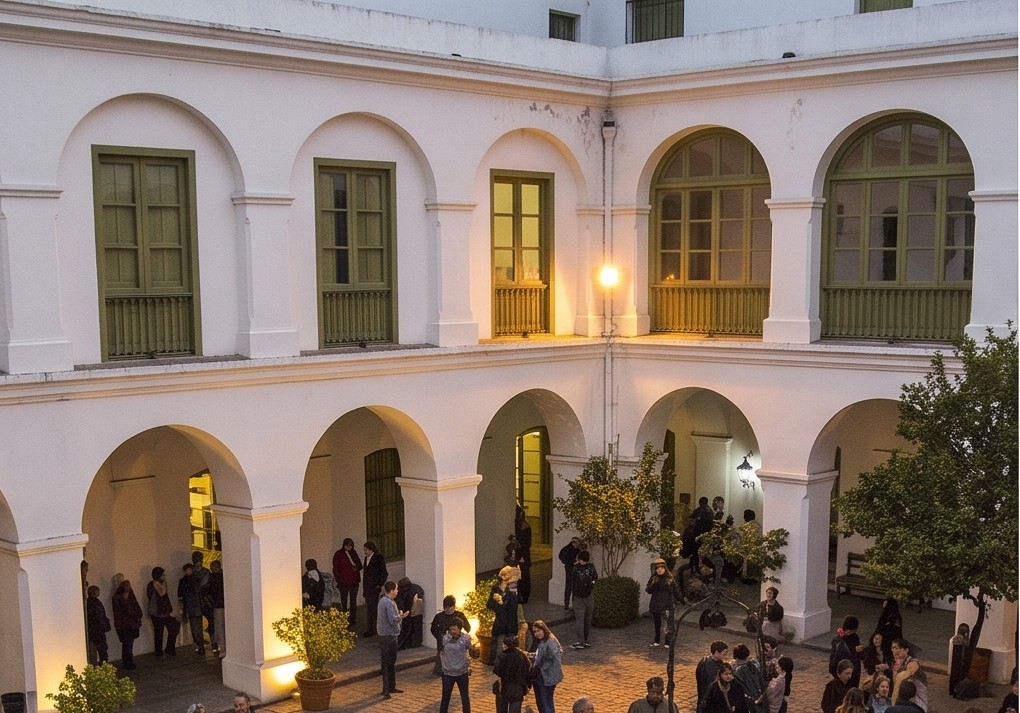
AI-generated image · may differ from the real place Before you stands the Cabildo, the seat of the colonial city council during Spanish rule and the command center of the May Revolution of 1810. Although its original sprawling wings were truncated during the late nineteenth and early twentieth centuries to accommodate broad avenues, its whitewashed double-tiered arcades remain the most evocative architectural survival of colonial Buenos Aires. Step underneath the shaded gallery of the ground floor, where heavy timber beams and ironwork balconies recall an era when citizens gathered here to debate independence. Look up at the central clock tower, rebuilt to mirror its historic proportions. Inside the museum vaults, preserved documents, period artifacts, and colonial portraits detail how a distant river outpost asserted its sovereignty. The serene symmetry of the courtyard behind offers a peaceful sanctuary where historical memory feels almost palpable amidst the bustling financial district.
Cross back across the wide open plaza toward the eastern riverfront, where the distinctive pink masonry of the executive residence awaits.
- 1 min · on site
The Pink Palace of Statecraft
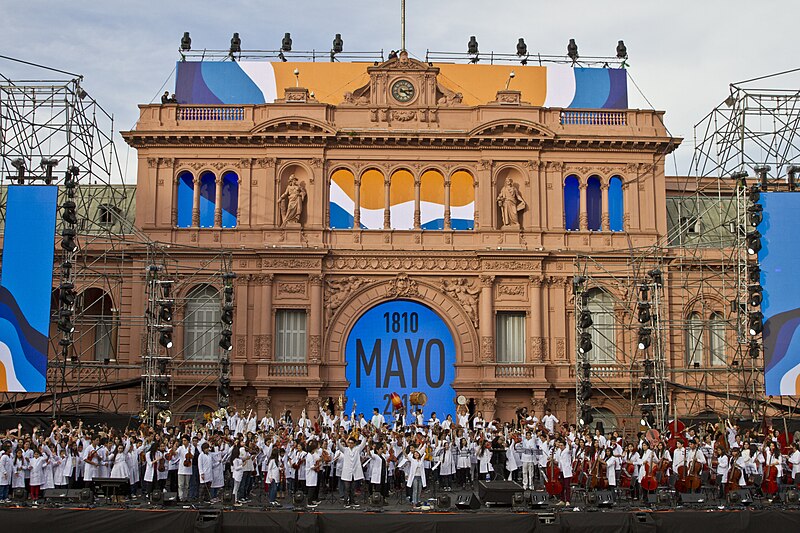
Photo · Wikimedia Commons Bounding the eastern edge of Plaza de Mayo, the Casa Rosada serves as the official seat of the executive branch. This palatial complex occupies the footprint of the 1594 Royal Fort of Don Juan Baltasar de Austria and the subsequent Castle of San Miguel. In 1884, President Julio Roca commissioned Italian architect Francesco Tamburini to join the existing State House with the neighboring Second Empire Central Post Office via a triumphant Italianate arch. The building's iconic baby pink hue stems from President Domingo Sarmiento's nineteenth-century initiative to blend Federalist red and Unitarian white. Stand along Balcarce street and look up toward the grand central balcony, where national leaders have addressed massive crowds during pivotal moments in Argentine politics. Behind the palace, excavated brick vaults of the historic fort and Taylor's nineteenth-century Customs House are now displayed within the museum.
Follow the pedestrian path behind government house toward the revived waterfront docks of Puerto Madero.
- 1 min · on site
The Dancing Axis of Puerto Madero
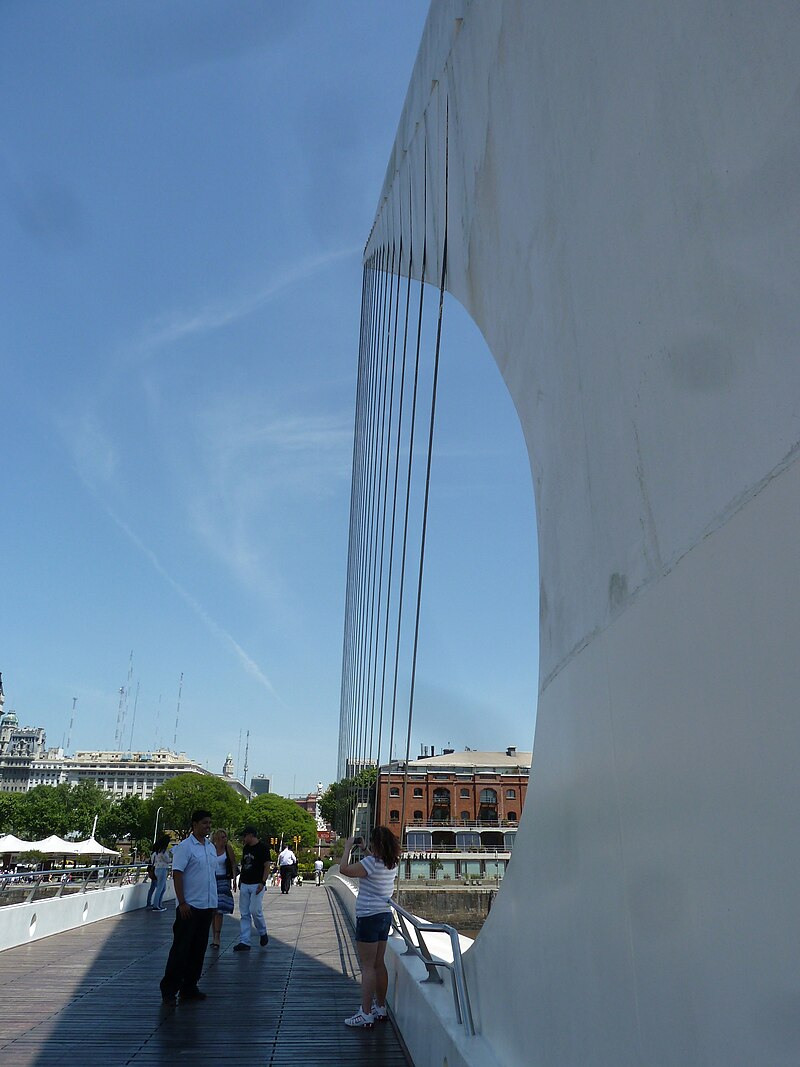
Photo · Wikimedia Commons Spanning Dock 3 in the rejuvenated maritime district of Puerto Madero, the Puente de la Mujer is a striking cantilever spar cable-stayed swing bridge. Designed by Spanish architect Santiago Calatrava, the structure features a white steel needle inclined at a thirty-nine degree angle, suspending a central span that rotates ninety degrees to allow water traffic to pass. Calatrava envisioned the asymmetrical silhouette as an abstract artistic representation of a couple suspended in the posture of the tango. Walk out onto the timber decking of the pedestrian span and notice how the thirty-four meter needle anchors thin steel suspension cables against the sky. Pause at the midpoint to look down at the tranquil water of the basin, contrasting the sleek modern skyline of Puerto Madero with the historic brick warehouses lining the western wharf.
Head west along the broad corridor of Avenida de Mayo, walking toward the grand intersection where the city's highest monument pierces the skyline.
- 1 min · on site
The Geometry of the Four Centenaries
AI-generated image · may differ from the real place Rising sixty-seven meters above the grand intersection of Avenida Corrientes and Avenida 9 de Julio, the Obelisco serves as the definitive geometric marker of Buenos Aires. Designed by modernist architect Alberto Prebisch and constructed in just thirty-one days in 1936, the monument commemorates the fourth centenary of the city's first foundation by Pedro de Mendoza in 1536. Stand safely within the pedestrian plaza in the center of the avenue to appreciate its sleek tapering surfaces clad in White Cordoba stone. Notice how the four faces of the obelisk bear inscriptions honoring key historic dates, including the founding of the city and the first raising of the national flag. As yellow taxis and city buses circle its base along the world's widest avenue, the spire remains an enduring beacon for civic celebrations, cultural gatherings, and public rallies.
Walk two short blocks north along the tree-lined boulevard toward Lavalle Square, where the solemn temple of lyric art comes into view.
- 1 min · on site
The Sovereign Temple of Acoustics
AI-generated image · may differ from the real place Facing Lavalle Square, the Teatro Colón stands among the premier opera houses of the world, renowned for its pristine acoustic quality. Opened on May 25, 1908, with a performance of Verdi's Aida, the present horseshoe-shaped auditorium replaced an earlier 1857 theater built by Charles Pellegrini. The building's twenty-year construction saga involved three legendary architects: Francesco Tamburini, Vittorio Meano, and Julio Dormal, who finished the interior in opulent French decorative style. Step into the majestic main entrance on Libertad street and look up at the marble staircases, stained glass windows, and rich gold leaf detailing. The main hall, seating nearly two thousand five hundred patrons beneath a cupola painted by Raúl Soldi, has hosted legends from Toscanini and Callas to Pavarotti. It remains an international monument where architectural grandeur and acoustic perfection harmonize.
As your footsteps echo across the grand threshold of the Teatro Colón, you leave behind not merely a sequence of stone monuments, but a living museum of civic memory. Buenos Aires curates its identity through these quiet architectural dialogues between past and present. May these historical reflections remain with you long after your journey ends.
Take it further
Open the tour in the appThe tour in the app
Historic Center and Grand Avenues Walking TourThis curated walking tour leads you through the historic heart of Buenos Aires. Starting at Plaza de Mayo, you will explore the colonial Cabildo and presidential Casa Rosada, cross to the modern rotating Puente de la Mujer in Puerto Madero, and trace the grand avenues past the Obelisco to the acoustic masterpiece of Teatro Colón.
+ Add the tour to your planIf you have the app the tour opens right away; otherwise you go to the store.FAQ
- What is the best way to appreciate the architectural evolution of the historic center?
- Begin at Plaza de Mayo to observe how colonial Spanish, nineteenth-century European neoclassicism, and modern architectural styles converge within a single civic footprint.
- Why do the landmarks of Buenos Aires feature such diverse European influences?
- During the late nineteenth century, Argentine leaders commissioned Italian, French, and British architects to design public monuments that reflected the nation's rapid economic boom and European cultural aspirations.