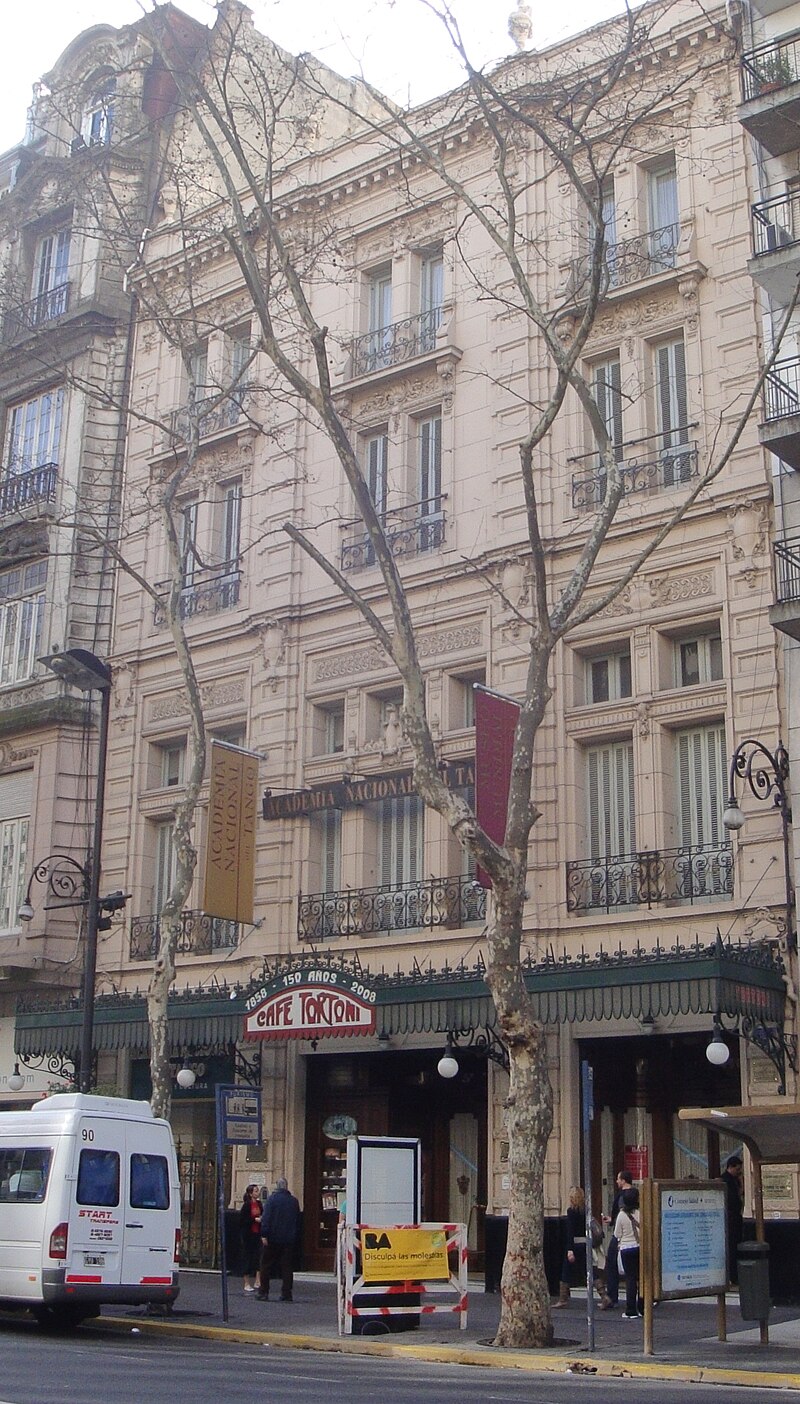
Dawn settles over the broad plane trees of Avenida de Mayo with the gentle gravity of an old memory, casting pale shadows across neoclassical cornices and zinc rooftops that feel transported from a lost Parisian boulevard. To arrive in Buenos Aires is to understand immediately that here, dining has never been a hurried necessity of the body, but rather an enduring civic theater, an intellectual rite practiced across worn wooden chairs and cold marble tables where coffee and wine outlast the afternoon. In the dim corners of historic salons and neighborhood taverns, the ghosts of European exiles and visionary dreamers still linger over porcelain cups, weaving the melancholy cadence of tango into the very fabric of daily sustenance. You do not merely visit these rooms to eat; you enter them to surrender to a deliberate, luminous slowness, allowing the rhythm of conversation to dissolve the passage of hours in the company of ghosts who refuse to leave.
The Vaulted Sanctuary of Ink and Song
At the center of this culinary cartography stands Café Tortoni, first established in eighteen fifty-eight by a French immigrant named Touan and christened in nostalgic tribute to the celebrated literary café on Paris Boulevard des Italiens. When the café moved to its present sanctuary and opened its ornate entrance on Avenida de Mayo, with its facade reimagined by architect Alejandro Christophersen, it became far more than a purveyor of rich hot chocolate and crisp golden churros. Descending into the cool basement salon known as La Peña, established in nineteen twenty-six, one enters the exact subterranean chamber where Jorge Luis Borges whispered verses beside the tragic poet Alfonsina Storni, and where novelist Roberto Arlt sketched the bitter beauty of urban life amid drifting cigarette smoke and jazz melodies. Outside luminaries arrived in reverence, from the Spanish dramatist Federico García Lorca to Albert Einstein and the beloved voice of Carlos Gardel, each finding within these paneled walls an intoxicating refuge where art was inseparable from companionship.
A few streets to the south, beneath the sweeping iron beams of the San Telmo market envisioned in eighteen ninety-seven by architect Juan Antonio Buschiazzo for entrepreneur Antonio Devoto, that same communal soul takes a more boisterous form. Within Buschiazzo Italianate arcade with its noble Tuscan columns, generations of immigrant butchers and greengrocers created an enduring neighborhood world, sheltering venerable institutions like the historic bar San Pedro Telmo alongside stalls heavy with fresh beef and river fish. Here, food reflects the generous alchemy of a country that welcomed impoverished Italian and Spanish newcomers into an unexpected paradise of abundance, transforming rustic comfort foods into monumental feasts intended for grand gatherings of extended families.
The Geography of Shared Hours
As you walk these storied pavements, from the aristocratic avenues of Monserrat to the sunlit cobblestones of San Telmo, remember that every platter set before you is an invitation to communal intimacy. Whether it is a golden milanesa stretching across the entire width of an oval platter, or the savory perfume of an entraña sizzling upon an open grill, the porteño table demands partnership. It asks you to lean forward across the linoleum, to tear bread with your hands, and to listen to the city tell its own endless story through the warmth of its enduring hearths. In this metropolis of passionate talkers, the meal is never over when the plates are cleared; it merely migrates into memory, lingering like the smoke of an evening cigarette beneath the streetlamps.
Want to walk it yourself? Plan a trip with these places
The walk
On site, play just that chapter
- 1 min · on site
Where Shadows of Poets Drink Chocolate
Photo · Wikimedia Commons Cross the threshold of Avenida de Mayo eight twenty-five and you step directly into the gilded memory of nineteenth-century Buenos Aires. Notice the magnificent stained glass skylights and the polished boiserie, where French elegance harmonizes with porteño nostalgia under chandeliers that have cast their amber glow over generations of dreamers. Arrive early in the day, before the afternoon crowds gather, to claim a marble-topped table in the quiet historic salon where the echoes of the literary society La Peña still seem to whisper from the cellar stairs. Order the signature thick hot chocolate accompanied by warm, crisp churros, lightly dusted with sugar. As you dip the fried pastry into the velvety cup, look toward the back parlor to glimpse the vintage billiard tables and dice boards, imagining Jorge Luis Borges and Alfonsina Storni trading verses over these very tiles while tango melodies drifted from below.
Step back out into the morning breeze of Avenida de Mayo and stroll two blocks northward toward the grand plaza, where the welcoming doorway of La Embajada awaits.
- 1 min · on site
The Monumental Feast on the Avenue

Photo: Gastón Cuello · CC BY-SA 4.0 · Original file Standing at Avenida de Mayo six twenty-five, you encounter the true generous heart of the city bodegón tradition, where meals are celebrated as collective jubilation rather than private sustenance. Find a table beneath the high ceilings of this classic dining room, where black and white photographs of old Buenos Aires gaze down upon bustling waiters balancing broad trays with acrobatic grace. Look around at the bustling tables of local families and office colleagues sharing laughter across white paper cloths. You must come with an eager appetite, because the house specialty is the milanesas gigantes, monumental golden cutlets so expansive they drape dramatically over the edges of their oval platters. Crisped to a delicate bronze and crowned with melted cheese, savory ham, and roasted peppers, this dish is unapologetically meant for sharing, embodying that quintessential Argentine philosophy that joy multiplies only when distributed among companions.
Leaving the avenue, turn right onto Chacabuco and walk one short block to Hipólito Yrigoyen, where the discreet, inviting entrance of Elauge Hermanos stands on the eastern pavement.
- 1 min · on site
Smoke and Fire in the Political Heart
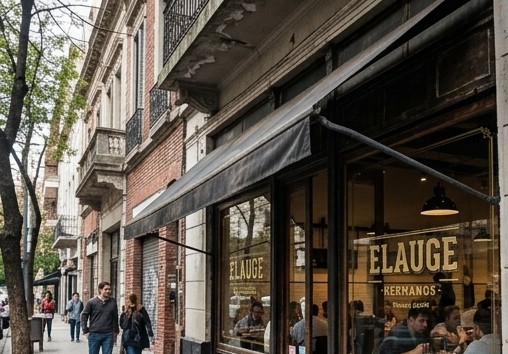
AI-generated image · may differ from the real place Tucked into Hipólito Yrigoyen six forty, Elauge Hermanos is the timeless neighborhood parrilla that feeds the intellect and appetite of the historic center. Come for a weekday lunch, when the dining room swells with passionate chatter from nearby offices, government ministries, and historic printshops, creating an authentic symphony of everyday urban life. Notice how the simple wooden chairs and uncluttered tables keep all attention focused entirely on the craft of the grill. Follow the intoxicating aroma of hardwood smoke toward the back of the room, where you can watch the grill master tending glowing coals with quiet, practiced mastery. Order the thick bife de chorizo alongside a cut of crispy, succulent entraña, each cooked over embers until the exterior forms a caramelized crust while the center remains remarkably tender and juicy. This is meat unadorned by pretension, honoring the primal culinary art of the Argentine plains.
Wander southward along the sidewalk, leaving the administrative center behind as you follow the gentle slope into the bohemian cobblestone avenues of San Telmo until you reach Calle Chile.
- 1 min · on site
Bohemian Alchemy on Calle Chile
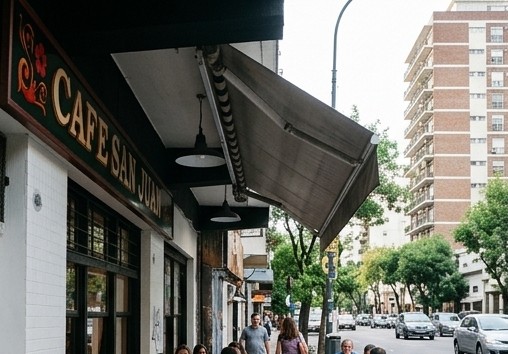
AI-generated image · may differ from the real place Here at Chile four seventy-four, behind a modest, colorful facade, sits Café San Juan, a culinary haven that bridges neighborhood soul with vibrant, modern warmth. Arrive just as the doors open for lunch to beat the eager local rush, securing a coveted perch near the compact open kitchen where copper pans gleam and skilled cooks move in tight, rhythmic harmony. Look closely at the handwritten chalkboard menus and the shelves lined with house preserves and vintage bottles. The atmosphere is intimate and kinetic, buzzing with neighborhood pride and youthful creative energy. Order the house masterpiece, a perfectly fried golden milanesa topped with fresh, creamy burrata that collapses in decadent luxury over the hot, crusty meat. It is a brilliant reinvention of porteño home cooking, proving that respect for heritage does not mean freezing recipes in amber, but infusing them with exuberant contemporary verve.
Stroll two blocks down Calle Chile toward Defensa and turn left, following the murmur of voices until the iron crest of the Mercado de San Telmo comes into view.
- 1 min · on site
The Iron Cathedral of Daily Life
Photo: Bleff · CC BY-SA 3.0 · Original file Pass beneath the grand Italianate arches of Defensa nine sixty-three into the soaring nave of the Mercado de San Telmo, erected in eighteen ninety-seven by architect Juan Antonio Buschiazzo for entrepreneur Antonio Devoto. Look upward at the cathedral-like iron trusses and glass panes that filter the morning sun into radiant dust motes, illuminating an enchanting labyrinth where neighborhood life and architectural history coalesce. Visit on a weekday morning to wander leisurely through its interior passages, drifting past vintage curio stalls piled with antique silver, old seltzer siphons, and worn tango records. Embark on a tasting walk among the traditional market counters, sampling savory empanadas and artisanal cheeses, before pausing beside the historic counter of bar San Pedro Telmo to absorb the timeless cadence of a market that has nourished generations of porteños with unyielding grace.
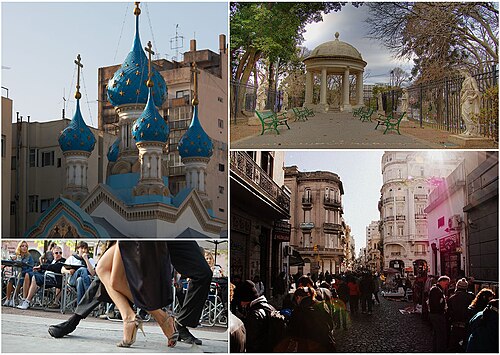


As twilight washes the cobblestones of San Telmo in shades of violet and amber, the city exhales its ancient breath into the cool evening air. The tables we have visited are not mere stops on a map, but anchored vessels in an ocean of time, keeping watch over stories that refuse to fade. In Buenos Aires, every empty glass and breadcrumb left behind is a testament to companionship, a quiet promise that tomorrow the conversation will resume, exactly where it was suspended.
Take it further
Open the tour in the appThe tour in the app
A Literary Feast from Monserrat to San TelmoBegin with morning churros at the legendary Café Tortoni on Avenida de Mayo, savor monumental milanesas and prime grilled steaks in Monserrat, and stroll southward through historic cobblestone lanes to conclude beneath the soaring nineteenth-century iron arches of Mercado de San Telmo.
+ Add the tour to your planIf you have the app the tour opens right away; otherwise you go to the store.FAQ
- What makes dining in Buenos Aires distinct from other Latin American capitals?
- Porteño dining revolves around prolonged conversation and communal tables, where nineteenth-century European café culture seamlessly blends with generous portions of wood-grilled beef and house-made comfort dishes meant for sharing.
- Why are the portions at traditional bodegones so expansive?
- When European immigrants arrived in Argentina during the late nineteenth and early twentieth centuries, they encountered unprecedented agricultural abundance, transforming rustic Mediterranean recipes into monumental feasts designed for large family gatherings.