Morning light breaks across the Arabian Gulf not with a shout, but with a delicate wash of amber and sea foam that softens the entire metropolitan skyline. If your social feed is anything like mine, your mental mood board of Abu Dhabi is probably dominated by gleaming marble atriums, hyper symmetrical architectural pavilions, and high gloss infinity pools engineered for effortless viral loops. We have all grown accustomed to seeing this emirate rendered through a polished lens of futuristic perfection. But if you step away from the highway overpasses and let the algorithm take a backseat, a dramatically different city begins to reveal itself. A quiet movement of travelers, designers, and curious wanderers is gravitating toward the shoreline alleys, working port wharves, and shaded palm groves where daily life moves to an older, tactile rhythm.
There is an unmistakable craving right now for places that resist easy digital replication. We are collectively tired of frictionless spaces that feel designed primarily to be photographed rather than lived in. In the tucked away corners of Abu Dhabi, luxury is not defined by gold leaf or silent elevators. It is found in the pungent tang of sea salt along old wooden boat slips, the morning breeze whipping through tidal mangrove channels, and the earthy aroma of damp clay paths fed by centuries of desert springs. To wander here is to discover that the soul of this desert capital has always resided in its intimate thresholds.
The Texture of Unscripted Spaces
This delicate balance between public grandeur and private serenity is woven into the very fabric of contemporary thought. Consider how we map and experience our world today. When digital cartographers first began chronicling urban streets, innovator John Hanke recognized that a truly human city cannot simply be flattened into panoramic data. Algorithms were programmed to blur the faces of passersby on crowded avenues, preserving personal dignity and quiet mystery amid endless technological surveillance. Abu Dhabi navigates that exact philosophical boundary between monumental statement and personal intimacy. When acclaimed architect David Adjaye designed the celebrated Abrahamic Family House on Saadiyat Island, he deliberately avoided building an intimidating monument. Having previously conceived private studios for fashion icon Alexander McQueen and collaborated with artist Olafur Eliasson on immersive light installations, Adjaye understood that true resonance comes from proportion, natural shade, and human scale. By placing a mosque, a church, and a synagogue side by side around a tranquil courtyard, he created an architectural testament to quiet dialogue.
That same ethos of unforced grace defines the hidden neighborhoods scattered across the city. Whether observing fishermen unloading their morning catch at the working docks or walking alongside local families enjoying the twilight breeze along an old harbor promenade, you sense a metropolis that does not feel compelled to perform. It simply exists, confident in its heritage and generous in its hospitality.
Echoes of Water and Stone
What makes this understated landscape so deeply captivating is that its culture of mindful patience stretches back thousands of years. Long before modern roads connected the coast, the visionary ruler Zayed the Grand directed the expansion of the Al Jahily Falaj within the great oasis of Al Ain. By harnessing gravity to guide mountain groundwater through underground stone aqueducts, he nourished an emerald forest of more than one hundred and forty-seven thousand date palm trees, sustaining ancestral communities in the heart of the desert. That ancient mastery of resource and community remains alive today in the way the emirate honors its tidal mangroves and historic fishing quarters.
As you embark on this audio journey, allow your senses to slow down. Listen closely to the gulls wheeling over the harbor, the rustle of fronds overhead, and the soft splash of tidal water against stone. This is an enduring coastal sanctuary that reveals its deepest secrets only when you take the time to walk, listen, and truly arrive.
Want to walk it yourself? Plan a trip with these places
The walk
On site, play just that chapter
- 1 min · on site
Silver Catch and Sea Spray at Dawn
AI-generated image · may differ from the real place Step off the curb at Mina Port and take a deep breath. Forget polished sterile lobbies; this is raw, sensory Abu Dhabi at full volume. The concrete hall hums with the electric energy of early morning trade. To your left, mountain ranges of crushed ice hold silver kingfish, ruby red snapper, and plump local hamour fresh off the wooden dhows docked just outside along the quay. Watch the auctioneers gesture with quick, practiced fingers as restaurant chefs and neighborhood elders haggle over the prized morning catch. Wander past the front stalls toward the back cleaning stations where master fishmongers wield filleting knives with astonishing speed. The light pouring through the high overhead louvers illuminates clouds of cool sea vapor and flying saltwater spray. There is no curated pretense here, only the genuine maritime backbone of an emirate that has looked to the Gulf for sustenance across generations. Take in the unfiltered rhythm of this working dock.
Leave the bustling harbor breeze behind as we head east across the bridge toward the quiet saltwater channels of Jubail Island.
- 1 min · on site
Suspended Above Tidal Roots

Photo: Travelvlogus · CC BY-SA 4.0 · Original file As you step onto the pale timber boardwalk, the urban hum of the city dissolves into total stillness. You are walking suspended above a lush saltwater forest where twisting grey roots dig deep into the tidal mud. Look down through the clear shallow water to spot tiny fiddle crabs darting between mossy stones and schools of silver fingerlings darting beneath your shadow. Overhead, slender grey herons stand motionless among the emerald foliage, waiting with zen-like patience for the tide to turn. The air here smells of clean salt, warm sunlight, and rich coastal sediment. Make sure to pause at the circular viewing platform where the boardwalk widens over open water; the contrast between wild tangled nature and the distant pale horizon feels surreal. This sanctuary is a living reminder that the desert coast has always possessed its own gentle, resilient wilderness. Take your time along the planks and let the quiet rhythm of the tidal flow reset your senses.
Now let the wild coastal stillness carry you back toward the city as we trace the golden afternoon light along Al Bateen.
- 1 min · on site
Amber Light on Harbor Water

Photo: Kyle Joy P. Canete · CC BY-SA 4.0 · Original file Welcome to the golden hour along Al Bateen, where the city gathers to exhale. As the late afternoon sun dips low over the Arabian Gulf, the waterfront promenade glows in warm tones of honey and copper. To find the best vantage point, walk slowly along the wide palm shaded esplanade toward the marina slips. Notice how the waterfront seamlessly bridges past and present: sleek white yachts rest quietly beside traditional wooden dhows whose weathered teak hulls have weathered decades of salt air. Local runners glide past while friends gather at open air terrace tables, sipping chilled hibiscus iced tea and watching dhows head out toward the open water. Look across the turquoise basin as the water reflects the amber sky; the sea breeze brings a refreshing coolness after the desert heat. Al Bateen has quietly become the favorite neighborhood for those who appreciate understated elegance over loud display. Find a comfortable stone bench and enjoy this effortless slice of daily coastal life.
Leave the ocean behind and journey inland toward the ancient date palms and cool waterways of Al Ain Oasis.
- 1 min · on site
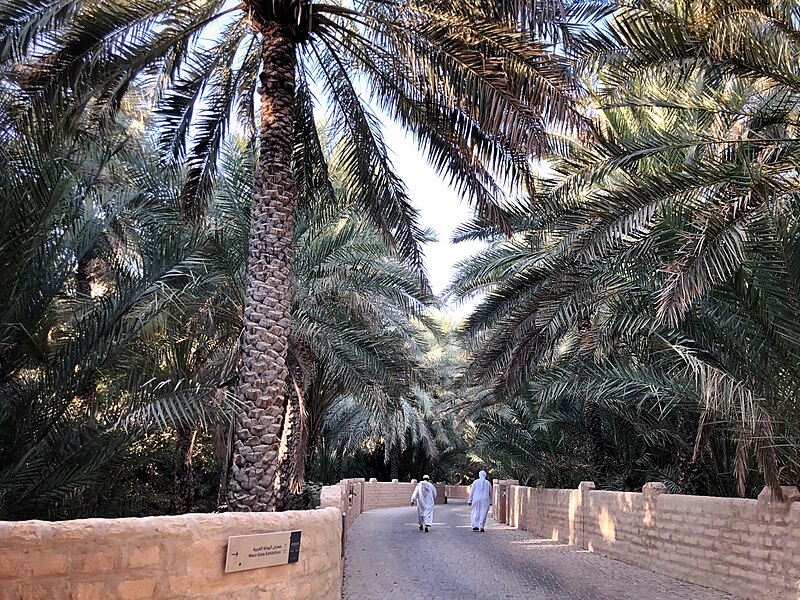
Four Thousand Years of Living Shade
Photo · Wikimedia Commons Step through the modest mudbrick gateway and immediately feel the temperature drop under a vast green canopy. You have entered Al Ain Oasis, where more than one hundred and forty-seven thousand date palm trees rise toward the desert sun. Look down beside your feet to notice the ancient falaj channels, narrow stone troughs carrying crystal clear mountain water throughout the groves using only natural gravity. Listen to the gentle, rhythmic trickle of water echoing against the packed earth walls. Walk along the labyrinth of quiet dirt footpaths, gazing upward at the intricate geometry of palm fronds filtering the sunlight into dancing golden patterns. Notice the heavy clusters of dates hanging overhead, representing one hundred distinct botanical varieties cultivated for millennia. Here, four thousand years of agricultural ingenuity feel as fresh and vital as this morning breeze. Take a slow breath and walk deeper into this serene emerald sanctuary where time seems to stand entirely still.



As the desert twilight settles over the water, take a moment to look back at the ground you have covered today. Beyond the monumental architecture and headline attractions, Abu Dhabi's true luxury is found in these quiet, enduring conversations between land, sea, and community. Keep that quiet rhythm with you wherever your travels lead next.
Take it further
Open the tour in the appThe tour in the app
Hidden Corners and Waterways Walking TrailEscape the glass towers and follow this curated journey through Abu Dhabi's soulful hidden corners. From the salty morning energy of the Mina fish market and the serene tidal boardwalks of Jubail to the golden sunset of Al Bateen and the ancient date palms of Al Ain, discover the authentic textures of the emirate.
+ Add the tour to your planIf you have the app the tour opens right away; otherwise you go to the store.FAQ
- What is the best way to move between these hidden locations?
- The most comfortable way to navigate from Mina Port along the coast to Al Bateen and out to Jubail Island is by hailing a city taxi or using a ride share app. If you plan to visit Al Ain Oasis, consider taking an intercity car journey into the scenic desert interior.
- What should I wear while exploring these traditional spots and nature trails?
- Opt for modest, breathable linen clothing that covers shoulders and knees, especially around local markets and cultural heritage sites. Comfortable flat walking shoes are essential for the dirt pathways inside the oasis and the exposed timber boardwalks along the coast.
- Is it easy to photograph daily life at the fish market and fishing harbors?
- Visitors are welcomed warmly, but it is always courteous to make gentle eye contact and ask for a polite nod of consent before capturing portraits of local fishermen or vendors at their stalls.
This piece was newly written based on the Wikipedia articles ‘David Adjaye’, ‘Al Ain Oasis’ · CC BY-SA 4.0